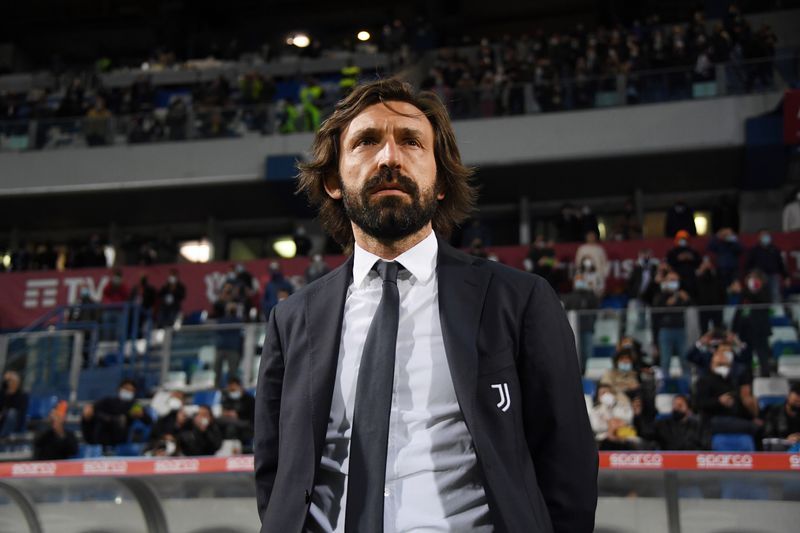
Andrea Pirlo's emergence as the frontrunner to manage Italy's national football team has collided with political disapproval stemming from his lucrative ambassadorial relationship with Fonbet, a Russian sports betting operator. The 47-year-old former midfielder and World Cup champion had positioned himself as the natural successor following Gennaro Gattuso's departure, particularly after Pep Guardiola declined the opportunity to take the helm.
Pirlo's credentials as a playing legend are uncontested, but his commercial entanglement with Moscow-based Fonbet has ignited a diplomatic and ethical quandary within Italian football circles and parliament. The Italian Football Federation's governing bodies, along with prominent members of the national legislature, are now grappling with the reputational consequences of appointing someone with visible ties to a Russian enterprise at a time of geopolitical tensions. Federation officials have refrained from public comment, though insiders indicate that the scrutiny surrounding Pirlo's Russian connections remains unresolved and that decisions have not yet been finalised.
The crux of the controversy centres on Pirlo's signing of an ambassadorship agreement with Fonbet in October, formalised while he was managing United FC in the United Arab Emirates Pro League. The situation intensified dramatically after photographs emerged showing Pirlo attending an event at Moscow's Luzhniki Stadium alongside former Italian international Marco Materazzi, where both men appeared as promotional faces for the bookmaker. The timing of their Moscow visit coincided with ongoing Russian military operations targeting Ukrainian cities, a proximity that critics argue was politically tone-deaf regardless of Pirlo's stated intentions.
Pirlo has defended his participation by characterising his involvement as purely commercial and divorced from any political messaging, yet this explanation has carried limited weight among influential stakeholders. The controversy arrives at an inopportune moment for the Italian Football Federation's newly elected president Giovanni Malago, whose mandate encompasses orchestrating a comprehensive overhaul of Italian football administration following the national team's third successive World Cup qualification failure—a sporting catastrophe that has shaken confidence in the federation's direction and competence.
Despite receiving the endorsement of Paolo Maldini, the federation's recently appointed technical director and another revered figure from Italy's golden era of football, Pirlo's candidacy has fractured political consensus. Lawmakers and senior officials have begun articulating concerns that accepting substantial financial arrangements with Russian gambling companies fundamentally contradicts the ethical standards expected of someone representing the Italian national team on the global stage. This position reflects broader European sensitivities regarding Russia following the 2022 invasion of Ukraine, making any association with Russian commercial entities politically fraught.
Pina Picierno, a vice-president of the European Parliament, articulated this stance bluntly on social media, framing Pirlo's potential appointment as a step backwards for Italian football when the sport required moral and structural transformation. Her criticism extended beyond Pirlo personally, casting doubt on whether his candidacy aligned with the cultural reset that Italian football desperately needed following repeated competitive failures.
Ignazio La Russa, the head of the Italian Senate and a member of Prime Minister Giorgia Meloni's political coalition, adopted a more measured but equally sceptical tone when commenting on Pirlo's prospects. While acknowledging his respect for Malago and Maldini as accomplished figures within football administration, La Russa expressed reservation about Pirlo's coaching credentials, characterising the appointment as a gamble with an uncertain outcome. His hesitation signals that even moderate conservative voices, traditionally supportive of football establishment decisions, are questioning the wisdom of this particular choice.
Carlo Calenda, leading the centrist Azione party, took an uncompromising stance by declaring that any individual promoting or maintaining ties with Russia after 2022 should be disqualified from holding positions of national significance. This statement reflects the hardened European consensus on Russia following the Ukraine invasion, where diplomatic and commercial normalisation carries profound political consequences for anyone seeking public office.
The federation's handling of this appointment reveals the complex intersection between sporting administration and geopolitical reality that increasingly confronts European football. Malago's transition into leadership at the federation now carries the burden of navigating not merely technical football decisions but also ethical considerations that extend beyond the pitch. The appointment decision will communicate Italy's positioning on broader questions of engagement with Russia during a period of continental tension.
For Malaysian and Southeast Asian observers, this situation underscores how geopolitical divisions can unexpectedly reshape sports administration in distant corners of the world. The intersection of commercial sponsorship, national team management, and political accountability demonstrates that football associations cannot maintain isolation from international relations pressures, even when such interference seems incongruous with competitive merit.
The uncertainty surrounding Pirlo's appointment reflects mounting questions about whether former playing excellence adequately prepares individuals for coaching roles requiring diplomatic acumen alongside tactical knowledge. Should the federation ultimately proceed with Pirlo despite political objections, it would signal that football credentials supersede geopolitical sensibilities. Conversely, rejecting his candidacy based on commercial ties would establish precedent that national team positions demand not merely sporting pedigree but also stringent scrutiny of all financial associations.

