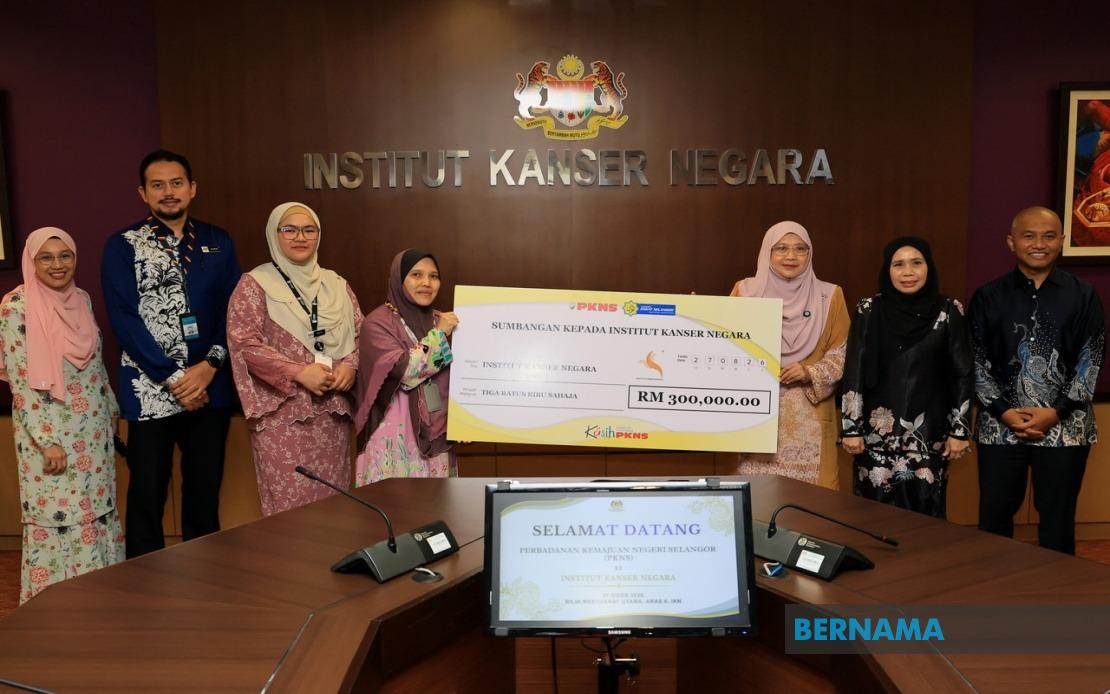
The Selangor State Development Corporation (PKNS) has announced a RM300,000 contribution aimed at alleviating the financial hardship faced by cancer patients receiving treatment at the National Cancer Institute (IKN), with the funds expected to benefit between 50 and 100 individuals undergoing active medical care.
The initiative reflects a broader understanding within PKNS that corporate social responsibility extends far beyond monetary transfers. According to Sapna Turmidi, senior general manager of PKNS Corporate Services, the agency's involvement encompasses emotional encouragement, dignity in care, and tangible recognition of patients' struggles. She emphasised that while PKNS staff may not fully grasp the depth of suffering experienced by those battling cancer, the organisation aims to communicate that patients are not isolated in their journey and that institutional support exists.
The personal tragedy that catalysed this commitment underscores why corporations increasingly engage in healthcare philanthropy. A PKNS employee received a glioma diagnosis in February and succumbed to the disease merely four months later at IKN. This loss prompted senior management to recognise the devastating economic and personal toll that cancer imposes on workers and their families, transforming institutional awareness into concrete action. Such watershed moments often prove more effective than abstract advocacy in driving organisational commitment to social causes.
The funding mechanism employed by PKNS demonstrates sophisticated structuring of corporate charity through zakat frameworks. The allocation operates under corporate social responsibility programmes administered through wakalah zakat—a delegation model in Islamic finance—in partnership with the Selangor Zakat Board (LZS). This approach ensures that assistance reaches specifically identified eligible Muslim cancer patients classified under the asnaf al-Gharimin category, which encompasses those burdened by debt or financial hardship. The initiative coincides with PKNS' 62nd anniversary on August 1, marking the entity's founding in 1964 as Selangor's principal development authority.
From the healthcare provider perspective, IKN director Dr Nur Aslina Bahakodin articulated the substantial financial requirements necessary to sustain support for economically disadvantaged patients. The institute requires between RM1 million and RM2 million annually to ensure that financial barriers do not compromise patient welfare throughout their treatment trajectories. This encompasses not merely pharmaceutical interventions or surgical supplies, but also transportation costs to attend appointments, specialised dietary requirements, and support services for family members managing the caregiving burden.
The financial obstacles confronting cancer patients carry clinical consequences beyond immediate distress. When economic constraints prevent patients from attending follow-up consultations or obtaining ancillary care, treatment continuity deteriorates markedly. Missed appointments compromise oncologists' ability to monitor disease progression, adjust therapeutic protocols appropriately, and intervene when complications emerge. This fragmentation of care directly correlates with poorer survival outcomes and reduced quality of life. By addressing transportation and subsistence costs, PKNS' contribution theoretically preserves treatment adherence and clinical efficacy.
The distribution methodology reflects professional assessment standards within healthcare systems. PKNS funding will flow through IKN's Medical Social Work Unit, which conducts thorough socio-economic evaluations of applicants and their dependents prior to resource allocation. This gatekeeping process ensures that assistance reaches those with genuine financial vulnerability rather than dispersing support indiscriminately. Such targeted approaches maximise impact per dollar spent and maintain institutional integrity in stewardship of philanthropic resources.
Dr Nur Aslina also contextualised rising cancer detection rates within the broader public health environment. She attributed increased case identification partly to expanded awareness initiatives and participation in screening programmes, particularly among women for breast cancer and men for colorectal cancer. Early detection fundamentally reshapes prognosis; patients identified at earlier stages access treatment before disease advancement, substantially improving recovery probabilities. However, this early identification benefit accrues only when patients can afford to follow medical recommendations and complete prescribed interventions without financial catastrophe.
For Malaysian stakeholders, PKNS' initiative illuminates a critical gap in healthcare financing. While public institutions like IKN provide essential oncological services, the ecosystem surrounding treatment—transportation, nutrition, family support during extended hospitalisation—remains inadequately funded through government budgets alone. Corporate contributions and zakat-based assistance partially bridge this chasm, yet Dr Nur Aslina's disclosure that IKN requires RM1-2 million annually suggests these philanthropic channels remain significantly insufficient relative to actual need.
The collaboration between PKNS, LZS, and IKN exemplifies how diverse institutional actors can coordinate to address healthcare inequities. Development corporations possess capital and organisational infrastructure; zakat boards command moral authority and community trust; healthcare providers understand patient vulnerabilities intimately. Synergising these capabilities creates more robust support systems than isolated institutional efforts achieve. For Southeast Asian nations grappling with cancer's rising prevalence and associated economic devastation, such multi-sector models offer replicable templates.
Moving forward, this contribution raises questions about sustainability and scale. If PKNS' RM300,000 represents the agency's annual commitment, the funds will assist perhaps 5-10 percent of Malaysia's annual new cancer cases requiring financial support. Scaling philanthropic responses to match the true magnitude of healthcare need requires either dramatically increased corporate participation or structural reforms in how public health systems fund supportive care services alongside curative medicine.

