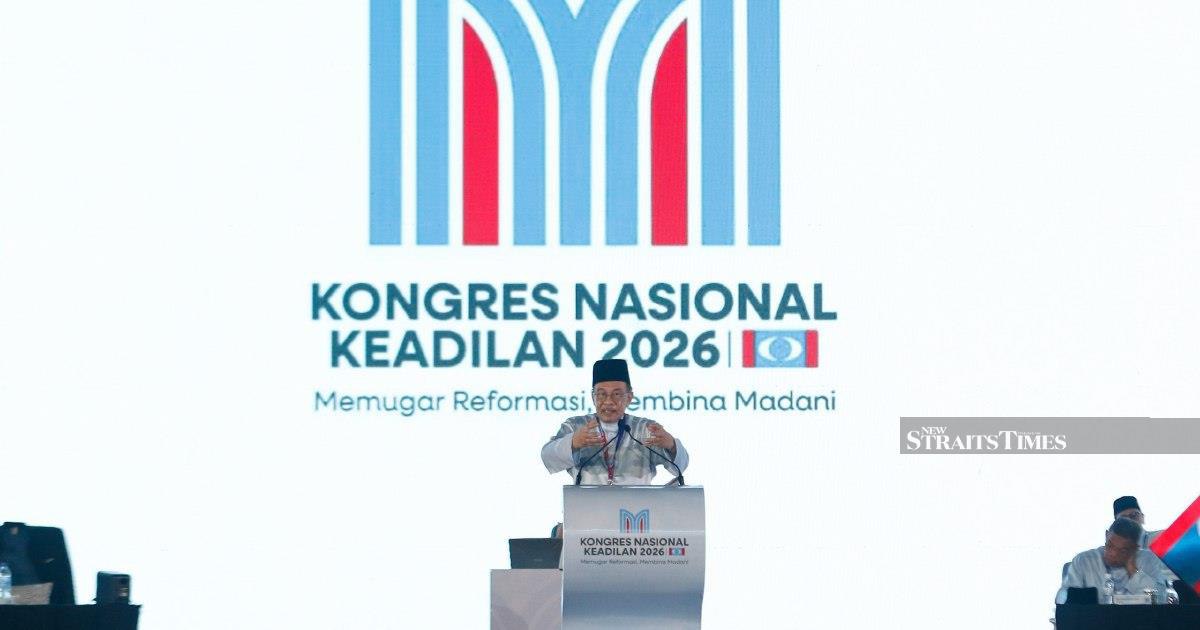
At the PKR Congress held in Ayer Keroh, PKR president Datuk Seri Anwar Ibrahim publicly acknowledged that embezzlement—locally termed 'sakau'—had indeed occurred within Tabung Haji, citing evidence documented by the Royal Commission of Inquiry into the institution. The admission marks a significant moment for the party's engagement with one of Malaysia's most sensitive governance issues affecting millions of Muslim pilgrims and small investors who rely on the institution.
Tabung Haji, formally known as the Pilgrimage Fund Board, has been at the centre of financial controversy for several years. The institution, which manages savings for prospective hajj pilgrims while offering modest investment returns, had faced mounting scrutiny regarding fund management and the handling of accumulated contributions. The RCI was established to investigate allegations of financial impropriety and institutional failures that had eroded public confidence in an organisation traditionally viewed as a trusted custodian of Muslim communities' savings.
Anwar's acknowledgement at the party gathering represents a break from political ambiguity on the matter. Rather than deflecting responsibility or minimising findings, the PKR leader chose to engage directly with documented conclusions from the inquiry. This approach carries implications for how the government may address broader questions of accountability within statutory bodies and financial institutions under state purview, matters that extend beyond Tabung Haji alone.
The embezzlement allegations had troubled the institution for years before the RCI was convened. Multiple reports, parliamentary questions, and investigative journalism had highlighted discrepancies between reported performance and actual fund health. Some pilgrims and contributors reported difficulties accessing their savings, while others questioned the transparency of investment decisions and fee structures. These concerns created a credibility gap that persisted even as Tabung Haji's leadership insisted that the organisation remained solvent and committed to its mandate.
For Malaysian Muslims planning the hajj pilgrimage, Tabung Haji embodies both religious aspiration and practical necessity. Many contributors deposit savings over years or decades, treating the fund as a dedicated savings vehicle for one of Islam's five pillars. The institution's dual role—facilitating pilgrimage logistics while managing investments—added complexity to its operations and created multiple points where mismanagement or corruption could occur. When embezzlement occurs within such a trusted framework, it affects not only financial portfolios but also the spiritual and cultural dimensions of pilgrimage preparation for millions of Malaysians.
The RCI's investigation delved into years of institutional records, financial transactions, and administrative practices. Rather than uncovering a single dramatic scandal, the inquiry appears to have identified patterns of systemic mismanagement and unauthorised fund transfers that accumulated over time. This distinction matters: while headline-grabbing fraud cases capture public attention, structural embezzlement often proves more damaging because it corrodes institutional integrity from within and suggests deeper governance failures.
Anwar's comments at the PKR Congress should be understood within the broader context of the government's stated commitment to anti-corruption efforts. The Pakatan Harapan coalition, which PKR anchors, has repeatedly positioned itself as a force for institutional reform and accountability. Acknowledging findings from an official inquiry aligns with this positioning, though it also raises expectations that substantive action will follow the acknowledgement. Malaysian observers will be watching to see whether admissions translate into prosecutions, structural reforms, and measures to restore stakeholder confidence.
The statement carries particular weight given PKR's recent political trajectory. The party and its alliance partners have grappled with their own credibility challenges in recent years. By confronting uncomfortable truths about Tabung Haji transparently, Anwar may be attempting to reinforce the government's reformist credentials, particularly important as elections approach and political narratives harden around competence and integrity.
Beyond political messaging, the Tabung Haji revelations point to systemic vulnerabilities within Malaysia's statutory bodies and government-linked institutions. Many such organisations operate with limited parliamentary oversight, complex board structures, and opaque decision-making processes. If embezzlement could persist within Tabung Haji—an institution with regular interactions with millions of contributors—it raises questions about governance frameworks across other state agencies handling public funds or community savings.
The RCI findings may also prompt reassessment of how Malaysian institutions manage investments on behalf of stakeholders. Tabung Haji's model of combining savings mobilisation with investment operations, while traditionally accepted, creates potential conflicts of interest. The inquiry's conclusions could catalyse broader discussion about separating custodial functions from investment management, introducing independent oversight, and enhancing transparency in how institutions deploy contributor funds.
Moving forward, addressing the embezzlement findings will require more than acknowledgement. Anwar and the government face pressure to implement the RCI's recommendations, pursue accountability for those responsible, and rebuild institutional mechanisms that prevent recurrence. For the millions of Malaysians whose hajj aspirations centre on Tabung Haji, restoring trust depends not on admissions but on visible, sustained reform that ensures their contributions remain secure and properly managed.
The PKR Congress statement signals that the government recognises the severity of institutional failures documented by the inquiry. Whether this recognition translates into meaningful remedial action—criminal prosecutions, governance overhaul, and investor restitution—will determine whether the acknowledgement represents genuine commitment to accountability or merely political damage control.

