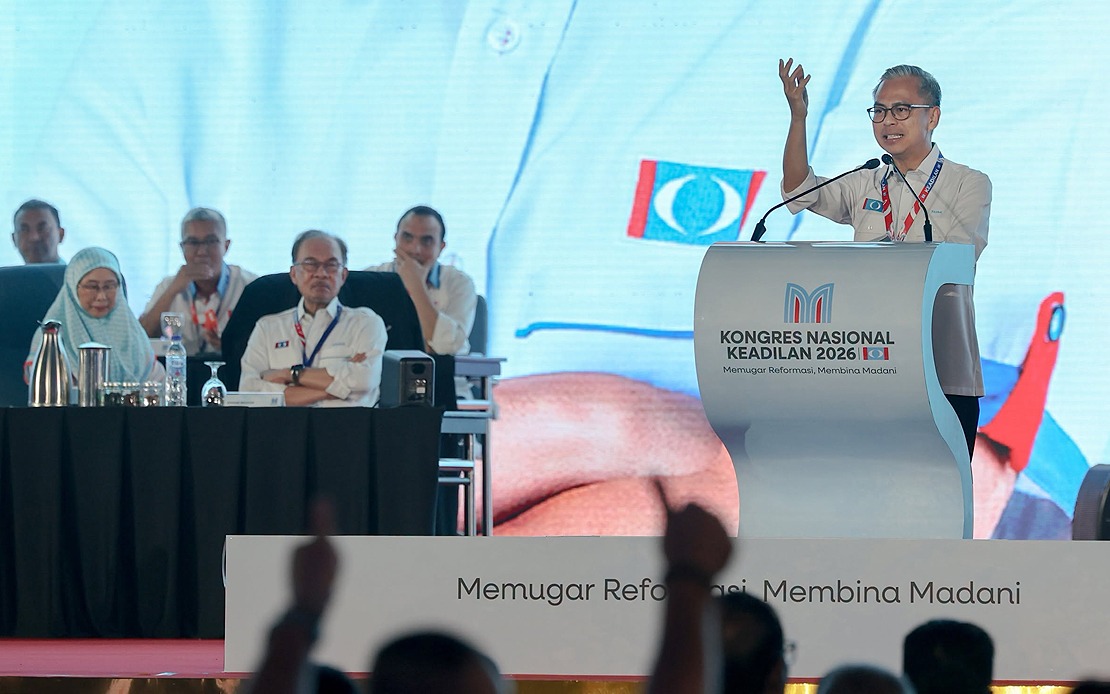
The Parti Keadilan Rakyat concluded its 2026 National Congress in Kuala Lumpur with party leadership emphasizing that the two-day gathering represented far more than ceremonial speeches and formal debate. Instead, PKR Information Chief Datuk Seri Fahmi Fadzil characterized the event as an introspective moment for the party to evaluate its performance, listen directly to grassroots concerns, and reassess both its organizational strengths and areas requiring improvement. The congress served as a mechanism for party members to collectively recommit themselves to the reform agenda that has defined PKR's identity since its founding.
Fahmi underscored that PKR President Datuk Seri Anwar Ibrahim's opening address delivered a central message: the reformasi struggle remains unfinished and demands continued dedication from the party machinery. This framing positions PKR's ongoing work not as a settled accomplishment but as an evolving responsibility that requires sustained effort across political cycles. The emphasis on continuous reform reflects a party attempting to maintain relevance by positioning itself as perpetually responsive to changing social needs rather than resting on historical achievements.
The Information Chief articulated a specific operational framework for translating congress deliberations into action. Party members are expected to return to their respective constituencies with renewed purpose, deliberately engaging with constituents to understand grievances, solicit feedback, and identify practical solutions to everyday problems. This constituent-centered approach represents a deliberate contrast to governance models perceived as top-down or disconnected from community concerns. By framing the post-congress period as requiring intensified grassroots engagement, PKR leadership signals that the party's competitive advantage lies in its capacity to maintain close relationships with voters.
Fahmi emphasized that organizational discipline and coordinated teamwork would be essential during the challenging political period ahead. Rather than minimizing the obstacles facing the party, he acknowledged that political challenges will inevitably continue to emerge. However, he argued that PKR must respond by maintaining principled consistency rather than shifting positions opportunistically. This statement appears partly defensive, suggesting the party anticipates criticism or pressure that might test its stated commitments.
For Malaysian readers and observers of Southeast Asian politics, PKR's emphasis on the ongoing reform agenda carries particular significance. As a coalition partner in the current government, PKR must balance its historical identity as a reformist opposition movement with the realities of exercising executive power. The congress thus functioned as an opportunity for the party to reaffirm its ideological foundations while managing expectations about what reform can realistically accomplish within coalition governance structures.
The party's focus on strengthening its machinery suggests concerns about organizational coherence. In Malaysian political contexts, where party unity can fragment along factional lines, Fahmi's repeated emphasis on disciplined teamwork and organized movement points to potential internal tensions requiring management. The congress appears designed partly to reinforce party cohesion before members dispersed back to their constituencies.
Fahmi's closing remarks indicated that the congress represents a beginning rather than a conclusion to the party's work. The characterization of the congress as merely the opening phase of renewed effort sets expectations that members must sustain momentum through increased activity, rather than allowing the gathering to become a singular event quickly forgotten. This framing creates accountability for translating rhetoric into tangible outcomes that constituents can perceive as improvements in their circumstances.
The emphasis on listening to grassroots voices and understanding people's concerns reflects a strategic positioning that may differentiate PKR from other coalition partners. By explicitly centering constituent welfare and maintaining accessibility to voters, PKR attempts to preserve its reputation as a people-oriented party despite holding ministerial portfolios. This becomes increasingly important as coalition governance requires compromise and sometimes unpopular policy decisions that may create distance between voters and their representatives.
The congress also operated as a space for internal party renewal at a moment when Malaysian politics faces significant transitions. With various electoral cycles and leadership succession questions potentially looming, the gathering provided an opportunity for established party figures like Fahmi to reinforce messaging discipline and organizational messaging to party members. The congress thus served multiple simultaneous functions: reaffirming ideology, reinforcing discipline, resetting constituent relationships, and preparing for future political challenges.

