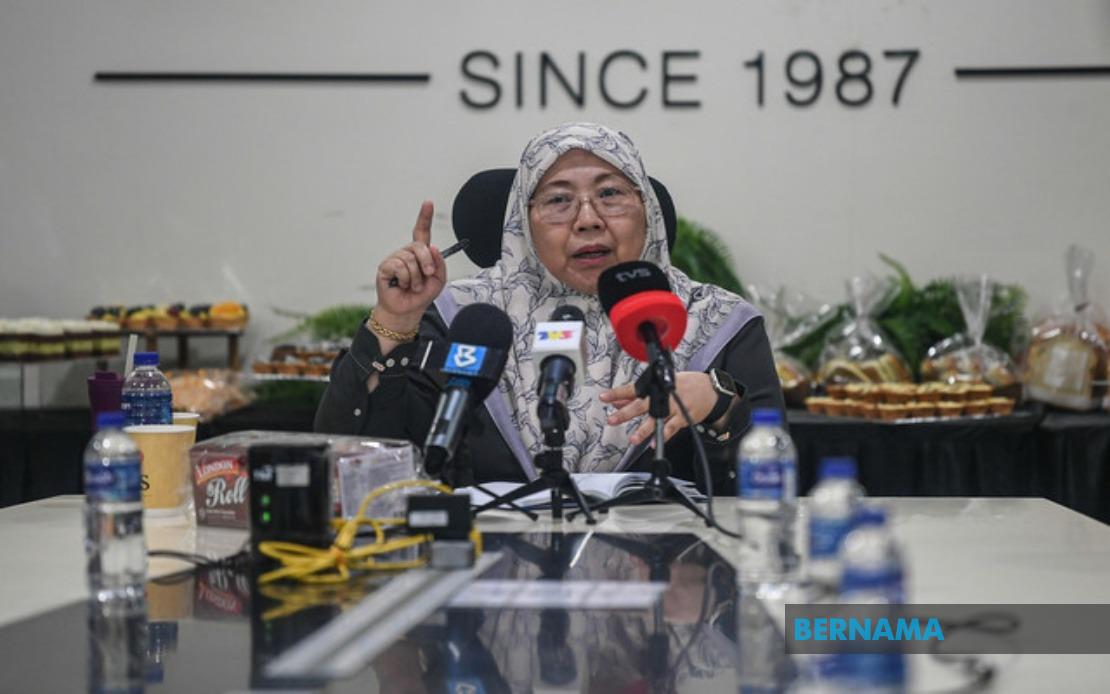
PKR secretary-general Datuk Dr Fuziah Salleh characterised the recent exodus of party members to MIC as an unusual development, suggesting internal party investigations have pinpointed a singular grievance driving the decision. The departures, which saw approximately 200 supporters leave alongside M. Murugan, the former Johor PKR State Leadership Council vice-chairman, occurred on June 28 and represent a notable shift in the party's local support base during a critical election period.
Fuziah's interpretation of the departures underscores a persistent challenge within Malaysia's political landscape: the management of aspirations among party cadres and members. The gap between membership expectations and available party positions creates vulnerabilities that rival organisations can exploit, particularly during competitive electoral cycles. Her acknowledgement that internal findings had identified position-seeking as the primary motivation demonstrates PKR's transparency in acknowledging its organisational difficulties, though it also exposes the party's structural constraints in accommodating ambitious members.
The timing of these defections carries particular significance for Johor's political trajectory. With 56 seats contested across the state's 172 candidates, the competition is intensely fragmented, and every loss of organised membership blocks undermines campaign machinery and grassroots mobilisation capacity. The shift of 200 supporters to MIC, traditionally positioned as a component party within Barisan Nasional, suggests growing cross-coalition mobility that defies simple binary political categorisations in Malaysian electoral dynamics.
Fuziah's measured response—wishing the departing members success in securing prominent positions within MIC—reflected strategic restraint rather than dismissal. This approach avoids inflammatory rhetoric that might accelerate further defections, while simultaneously highlighting that such transactional political movement comes with inherent risks. The positioning suggests PKR may view this as a selective pruning of members driven primarily by ambition rather than ideological realignment, thereby limiting long-term damage to the party's core identity.
The departure also occurs within a wider context of coalition positioning ahead of Johor's polls scheduled for July 11, with early voting on July 7. Pacatan Harapan's consolidation efforts have become increasingly critical as PAS president Tan Sri Abdul Hadi Awang's recent call for voters to reject PH indicates strengthening coordination between PAS and Barisan Nasional—a development that fractures the opposition's unified messaging. This convergence between PAS and BN, whether formal or informal, narrows the political space where PKR operates, making member retention and morale increasingly difficult to manage.
Fuziah's commentary on PAS's positioning reveals strategic calculation about how coalition dynamics might unfold. Her suggestion that PAS's moves could backfire on Perikatan Nasional partners reflects PKR's assessment that overreach by PAS might expose internal tensions within the PN alliance itself. This analysis suggests that Malaysian coalition politics in Johor remains volatile, with partners maintaining divergent electoral calculations despite nominal alignment. The risk for PN is that PAS's independent manoeuvring—attempting to reclaim traditional Malay-Muslim voter segments while simultaneously courting BN elements—sends contradictory signals that confuse rather than consolidate support.
The secretary-general's assertion that the overall situation benefits Pakatan Harapan appears rooted in the theory that visible friction within PN and between PN-BN demonstrates fragility, while PH presents itself as relatively more cohesive. However, this optimism must be tempered against the reality that defections like Murugan's suggest PH's internal cohesion is simultaneously being tested. The ability to retain members facing appointment disappointments remains a fundamental organisational challenge that no coalition rhetoric resolves.
For Malaysian voters deliberating choices in Johor, these political movements highlight a fundamental question about what drives electoral competition: policy and ideology, or positions and patronage. The prominent emphasis on unfulfilled position aspirations as the driver of mass defection invites critical reflection on whether Malaysia's major political parties adequately distinguish themselves through programmatic offerings or whether member recruitment and retention depend disproportionately on promise of office. This distinction matters significantly for how voters evaluate political parties' commitment to substantive governance versus transactional politics.
The defection pattern also reveals strategic vulnerabilities within PKR's Johor structure specifically. If position scarcity represents the primary grievance, then the party's organisational architecture in the state may require restructuring to create meaningful roles and advancement pathways. The loss of a State Leadership Council vice-chairman particularly suggests weakness in the party's mid-tier management, where accumulated experience and organisational knowledge reside. Rebuilding this layer before the election becomes operationally challenging.
Fuziah's urging of Johor voters to assess the political landscape carefully before casting ballots subtly acknowledges that the electoral outcome remains contingent rather than predetermined. For PKR and Pakatan Harapan more broadly, the Johor election represents a crucial test of whether the coalition can maintain momentum in a state where federal government status alone may prove insufficient to overcome localised organisational fragmentation and member dissatisfaction. The convergence of PAS-BN positioning, PN's internal contradictions, and PH's internal defections creates a genuinely competitive three-way contest that will likely determine subsequent national political trajectories.

