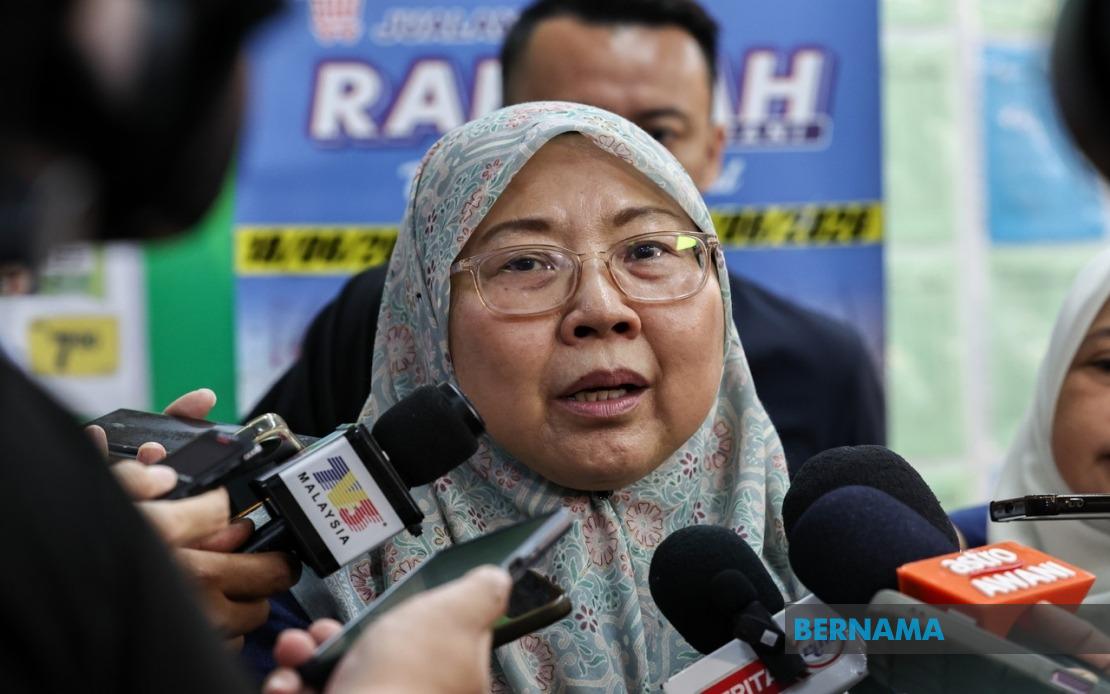
PKR's candidate roster for the imminent state elections in Johor and Negeri Sembilan stands at 99 per cent completion, according to party secretary-general Datuk Dr Fuziah Salleh, signalling the final stretch of campaign preparations ahead of polling days later this year. The timing is critical, as both states are in active transition following their respective dissolusions earlier in June, triggering a rush of political activity across opposition and government-aligned coalitions vying for electoral advantage in strategically important peninsular strongholds.
The party's strategic deployment will see PKR contesting for 20 state seats in Johor and 16 in Negeri Sembilan—a deliberate allocation reflecting the different political terrain and voter demographics across these two states. Johor, Malaysia's second-largest state by population and economic output, presents a more competitive battleground where Barisan Nasional maintains a formidable presence, whilst Negeri Sembilan offers PKR and its Pakatan Harapan allies proportionally stronger footing. The formal unveiling of the complete candidate list is anticipated within days, permitting grassroots machinery sufficient time to mobilise support before nomination periods commence.
A striking commitment underpinning PKR's candidate strategy centres on demographic diversity and generational renewal. Fuziah articulated the party's intention to present what she termed a "balanced combination of old and new faces, including women and young people," reflecting broader modernisation efforts within the coalition. This philosophy represents a calculated response to evolving voter preferences, particularly among younger cohorts and urban constituencies, where established political brands increasingly face skepticism. However, the secretary-general deliberately withheld specific numerical breakdowns regarding the proportion of debut candidates, suggesting internal negotiations remain fluid or that disclosure might invite comparison with rival parties' selections.
Intra-coalition tensions have surfaced, most notably concerning Puteri Wangsa constituency in Johor, where Amanah Johor continues asserting historical claims contradicting PKR's current designation of the seat. Vice chairman Dr Zuhan Zain's reluctance to yield reflects deeper questions about seat allocation mechanisms within Pakatan Harapan and the durability of agreements struck across coalition partners. Fuziah's response—deferring the dispute to "top leadership"—indicates the matter has escalated beyond state-level resolution, underscoring how ambitious state elections can destabilise fragile coalition dynamics. This particular disagreement carries wider implications, suggesting that similar territorial disputes may simmer within other constituencies, potentially complicating unified campaign messaging.
The constitutional and procedural timelines provide a tight framework within which parties must execute mobilisation strategies. The Election Commission has designated June 27 as nomination day for Johor's contest, with voting scheduled for July 11 following the State Legislative Assembly's June 1 dissolution. For Negeri Sembilan, the calendar stretches further: nomination falls on July 18 with early voting on July 28, and the general election pencilled for August 1. This staggered schedule offers PKR differing windows for regional campaign intensity and potentially allows lessons learned in Johor to inform subsequent messaging in Negeri Sembilan, though it also fragments national political attention and risks voter fatigue.
The electoral mathematics in Johor present formidable obstacles for opposition consolidation. Prior to dissolution, Barisan Nasional commanded 40 of 56 seats, whilst Pakatan Harapan held merely 12, with Perikatan Nasional claiming three and independent MUDA retaining one. This 2-to-1 advantage for the government coalition reflects deeply entrenched organisational superiority and rural voter allegiance, factors unlikely to shift dramatically regardless of candidate calibre. For PKR and its partners, reclaiming meaningful influence requires either unprecedented swing voting or successful coalition-building with Perikatan Nasional and MUDA—scenarios complicated by ideological divergence and resource competition.
Negeri Sembilan presents marginally better prospects for Pakatan Harapan's ambitions. The pre-dissolution composition saw PH controlling 17 of 36 seats, compared to Barisan Nasional's 14 and Perikatan Nasional's five. This fractionalised landscape creates theoretical pathways to majority formation through combinations excluding dominant federal partners, yet necessitates negotiation and compromise that can hollow out policy differentiation. PKR's sixteen-seat allocation within this 36-seat legislature represents substantial responsibility; the party's performance will substantially determine whether Pakatan Harapan retains or expands its state government position.
Parallel disciplinary processes within PKR add underlying complexity to the candidate finalisation process. Subang MP Wong Chen's recent defiance, wherein he challenged the party to expel him following formal investigation, has been escalated to PKR's Disciplinary Board. Whilst this matter may seem peripheral to candidate selection, internal disciplinary outcomes can influence morale among rank-and-file members and signal whether the party maintains coherent internal governance standards. The manner in which PKR resolves Wong Chen's case will communicate either institutional strength or vulnerability heading into competitive campaigns.
For Malaysian voters and political analysts, PKR's candidate announcements merit scrutiny beyond surface-level composition metrics. The substantive question concerns whether demographic diversification translates into substantive policy differentiation or merely cosmetic modernisation. Johor and Negeri Sembilan elections will test whether opposition coalitions can leverage candidate freshness and demographic representation into electoral momentum, or whether established governance brands and resource disparities perpetuate existing power distributions. PKR's final candidate roster, when revealed within days, will constitute the tangible expression of these strategic calculations and ideological commitments.
Broader Southeast Asian political trends underscore why these Malaysian state elections warrant regional attention. Across the region, opposition coalitions struggle with internal cohesion, seat allocation disputes, and demographic renewal simultaneously—dynamics evident in Thailand's recent political realignments, Indonesia's complex multi-party negotiations, and Singapore's constrained opposition coordination. PKR's approach to balancing coalition demands with party-specific candidate preferences offers instructive parallels for other regional actors navigating similar tensions between unity and autonomy, between maintaining traditional voter bases and attracting emerging demographics.