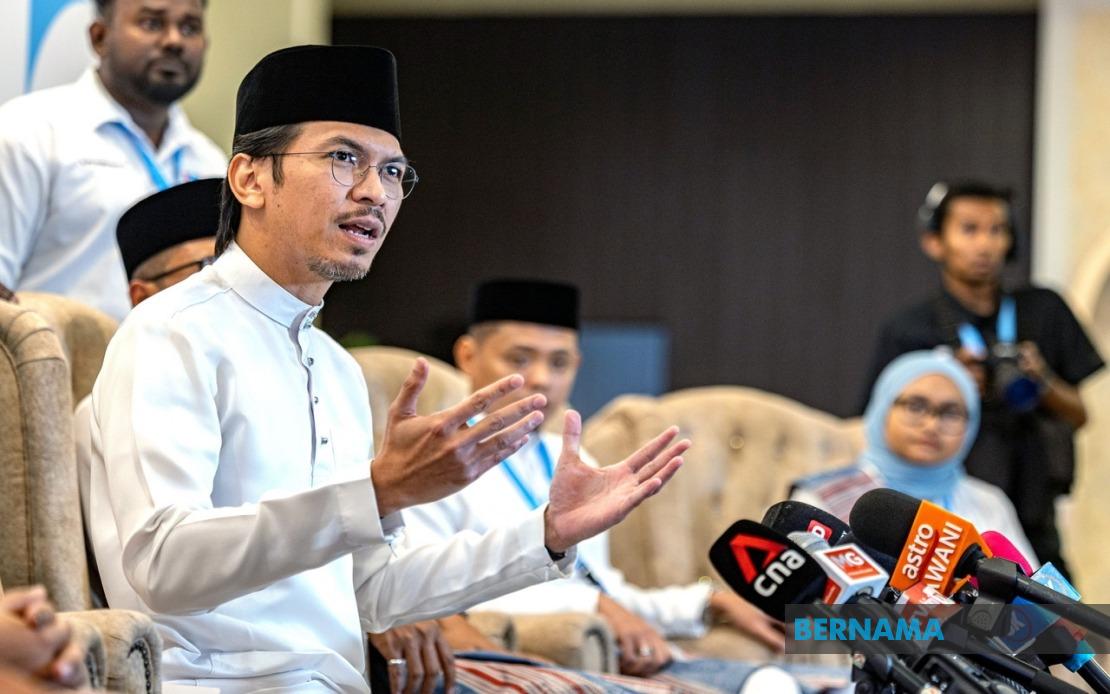
The Parti Keadilan Rakyat (PKR) has moved to reassure its base that recent member departures represent a minor issue with no bearing on the party's institutional strength or operational effectiveness. Speaking at the 2026 Angkatan Muda Keadilan (AMK) National Congress in Melaka on August 14, party youth wing chief Muhammad Kamil Ahmad Munim characterised the exodus as statistically negligible and pointed to continued party activity and delegate engagement as evidence of broader organisational health.
The statement represents a direct response to claims made by Parti Bersama Malaysia co-founder Datuk Seri Rafizi Ramli, who suggested that approximately 25 per cent of his newly formed party's membership comprises individuals who previously held PKR membership. This assertion had raised questions about the scale of defection from the coalition partner, particularly given Bersama's emergence as a political alternative. Muhammad Kamil's comments, delivered during a press briefing at the Melaka International Trade Centre, sought to contextualise and minimise the significance of such movements.
While acknowledging that some members have indeed departed, citing diminished confidence in party direction, Muhammad Kamil emphasised that the AMK respects such decisions as expressions of personal political choice. He declined to provide specific figures regarding the number of departing members, instead referring to internal reports and metrics that, in his assessment, point to numbers too small to warrant concern. This measured acknowledgement—neither denying departures nor quantifying them precisely—reflects a delicate balance between transparency and damage control.
The timing of these remarks carries particular weight given PKR's ongoing preparation for both state-level elections and the broader general election cycle. The party's performance and cohesion during this period will substantially influence its electoral prospects across Malaysia. Departures to competing political formations represent not merely a loss of individual members but potential erosion of grassroots networks and volunteer capacity crucial for campaign operations. The youth wing's insistence that such movements pose no operational impediment thus serves an important morale function within the party structure.
Muhammad Kamil pointed to robust delegate attendance at the congress as tangible evidence of member commitment to PKR's continued political project. High turnout at party gatherings is conventionally interpreted as reflecting both confidence in leadership and determination to remain engaged within an organisation. In the Malaysian political context, where internal party stability frequently comes under scrutiny following leadership transitions or strategic shifts, such visible shows of support carry symbolic significance beyond their immediate procedural purpose.
The question of PKR deputy president Nurul Izzah Anwar's current leave status, which had potentially raised questions about leadership continuity, was also addressed in Muhammad Kamil's remarks. He stressed that her absence has not materially disrupted party momentum or decision-making processes. This assertion rests on the claim that responsibilities have been clearly redistributed across the leadership structure, with vice-president Datuk Seri Saifuddin Nasution Abdullah and PKR election director Datuk Seri Amirudin Shari assuming expanded roles during the interim period.
The structural approach to managing leadership absences—through explicit delineation of interim responsibilities rather than concentration of power—appears designed to project institutional resilience and prevent the formation of power vacuums that might encourage further defections or internal factionalisation. In Malaysian party politics, periods of uncertainty around leadership availability often trigger speculation about shifting power balances and emerging rivalries. By publicly articulating that the division of duties remains clear and functional, party management attempts to forestall such narratives.
State and branch-level party leadership has reportedly communicated explanations regarding the leadership adjustments to grassroots members, with Muhammad Kamil indicating that these explanations have been received positively by the rank and file. This two-way communication flow—from national leadership down to regional and local structures—reflects standard practice for managing internal party politics during periods of transition or uncertainty. Grassroots acceptance of leadership decisions, when it occurs, can significantly reduce the likelihood of cascading defections driven by perceptions of instability.
The broader context of these developments involves Malaysia's coalition dynamics and the particular positioning of PKR within competing political structures. As one of the larger component parties in government coalitions, PKR's internal stability carries implications extending beyond its own organisational boundaries. Significant departures or factional conflict within PKR could destabilise broader coalition arrangements and affect legislative arithmetic in Parliament and state assemblies. This reality underscores why party officials invest considerable effort in projecting institutional cohesion during periods when some members are departing.
The emergence of Parti Bersama Malaysia and its apparent capacity to attract PKR defectors represents a specific challenge to the coalition ecosystem. Unlike opposition parties, which have historically served as alternative destinations for disaffected coalition members, Bersama operates nominally within government framework whilst offering a distinct political positioning. The claimed presence of 25 per cent former PKR members within Bersama suggests that some disaffection with PKR's current trajectory exists among sufficiently motivated party members to motivate a switch to a new political entity.
Moving forward, PKR's focus, according to Muhammad Kamil, remains centred on organisational strengthening and preparation for forthcoming electoral contests. This emphasis on forward momentum rather than defensive reflection about departures reflects a common political strategy whereby leadership attempts to shift public and internal discourse toward future prospects rather than past losses. The success of this approach depends substantially on whether party machinery can demonstrate tangible progress in electoral preparation and whether defection numbers can indeed be kept within boundaries that pose no threat to campaign operations.
For Malaysian observers monitoring PKR's trajectory, the coming months will prove instructive in determining whether Muhammad Kamil's assessment of member departures as truly insignificant withstands scrutiny. The party's performance in state elections and general election preparations will provide empirical measures of whether organisational capacity and member engagement remain undiminished despite recent defections. Until such tests arrive, party leadership's assertions of stability and momentum represent positions staked rather than facts conclusively demonstrated.

