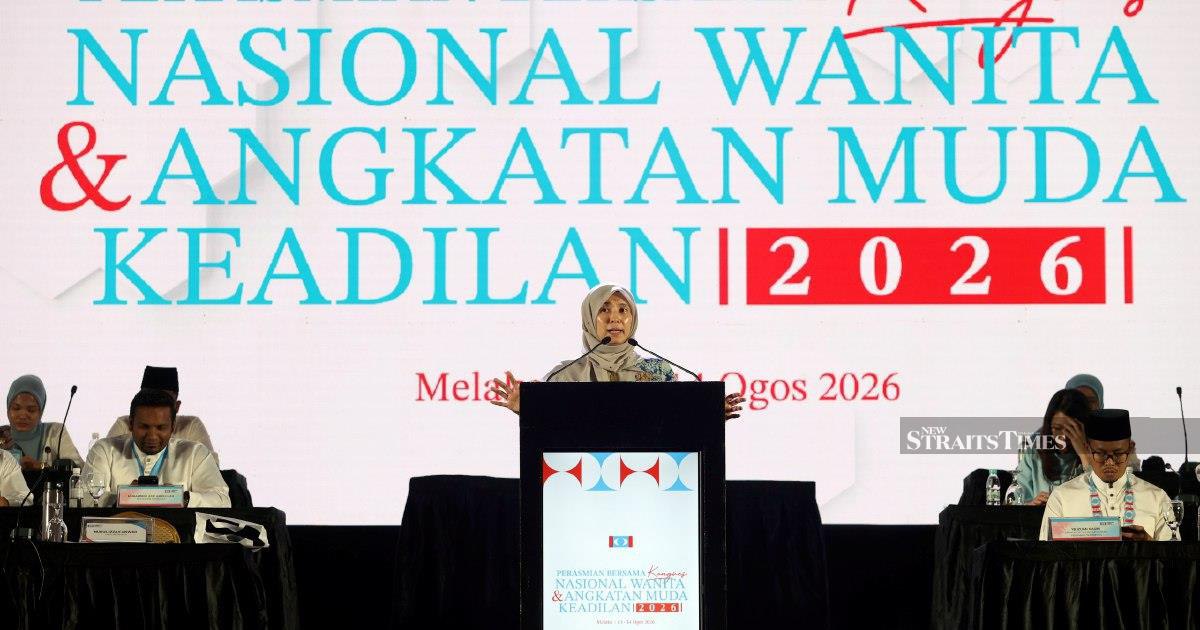
PKR's deputy president Nurul Izzah Anwar has called on the party to articulate clear ethical boundaries that cannot be crossed, even in pursuit of political objectives. Speaking at Ayer Keroh, she emphasised that the pursuit of governance must be accompanied by unwavering principles, particularly regarding corrupt practices and the misuse of governmental authority.
The remarks come at a time when Malaysian political coalitions continue navigating complex power-sharing arrangements, often requiring delicate negotiations and compromises. Nurul Izzah's intervention signals growing concern within PKR that the party must distinguish between acceptable political flexibility and the dangerous erosion of moral standards that can occur when expediency overtakes principle.
Her comments reflect a broader challenge facing Malaysia's reform-oriented parties, which have positioned themselves as alternatives to entrenched political establishments. PKR, in particular, has built much of its political credibility on promises of accountability and transparency. However, the party's participation in various coalitions—including the current Madani administration—has occasionally created tensions between idealistic supporters and pragmatic decision-making.
The concept of "red lines" that Nurul Izzah invoked represents a critical safeguard mechanism. In political discourse, red lines typically denote non-negotiable principles that define the acceptable limits of compromise. By explicitly establishing these boundaries around corruption and abuse of power, PKR would be creating a framework within which coalition partners and internal factions must operate.
Such declarations carry particular weight in Malaysia's political context, where accusations of corruption have dominated public discourse for years. The 1Malaysia Development Berhad scandal, various state-level governance failures, and ongoing investigations into several high-profile figures have made anti-corruption sentiment a powerful political force. Any major party that fails to consistently demonstrate commitment to clean governance risks losing credibility with an increasingly vigilant electorate.
Nurul Izzah's intervention also addresses an internal party dynamic. PKR comprises diverse factions with varying ideological orientations and political priorities. By calling for clearly defined ethical parameters, she is essentially arguing that internal disagreements on strategy should never extend to fundamental questions of integrity. This serves as a unifying principle that can hold the party together despite tactical differences.
The timing of these remarks merits attention, coming as Malaysia's political landscape remains fluid. Coalition dynamics continue evolving, with various blocs testing their negotiating positions ahead of potential restructuring. In such environments, maintaining clear ethical standards becomes even more critical, as the temptation to make questionable deals in exchange for political advantage intensifies.
International observers have frequently noted that Malaysia's democratic institutions, while functioning, have been tested by waves of political scandal and uncertainty. The country's recent history of leadership transitions, coalition realignments, and high-profile corruption cases has prompted serious questions about institutional resilience. Statements from senior figures like Nurul Izzah suggesting deliberate ethical guardrails contribute to broader discussions about strengthening Malaysia's governance architecture.
Regionally, PKR's positioning is significant. As Southeast Asia navigates questions about democratic consolidation and anti-corruption frameworks, Malaysian parties' commitment to clean governance influences regional perceptions of democratic credentials. Countries throughout the region face similar pressures balancing pragmatic coalition-building with maintaining institutional integrity.
The challenge for PKR will involve translating Nurul Izzah's call into concrete mechanisms. Establishing red lines requires not merely rhetorical commitment but enforceable procedures—from party disciplinary mechanisms to leadership accountability structures. Without institutional teeth, such declarations risk becoming merely aspirational rather than transformative.
Moving forward, PKR faces the difficult task of operationalising these principles within the constraints of governing coalitions. Political partners may not always share identical anti-corruption thresholds, creating potential friction. Successfully navigating these tensions while maintaining PKR's distinct identity will determine whether the party successfully distinguishes itself as genuinely reform-oriented or merely another faction engaged in conventional political calculation.
Nurul Izzah's message ultimately reflects recognition that sustainable political success requires moral foundations. Whether PKR can translate this recognition into systemic changes that genuinely constrain the party's capacity to engage in wrongdoing will likely influence not only PKR's future trajectory but also broader conversations about democratic governance across Southeast Asia.

