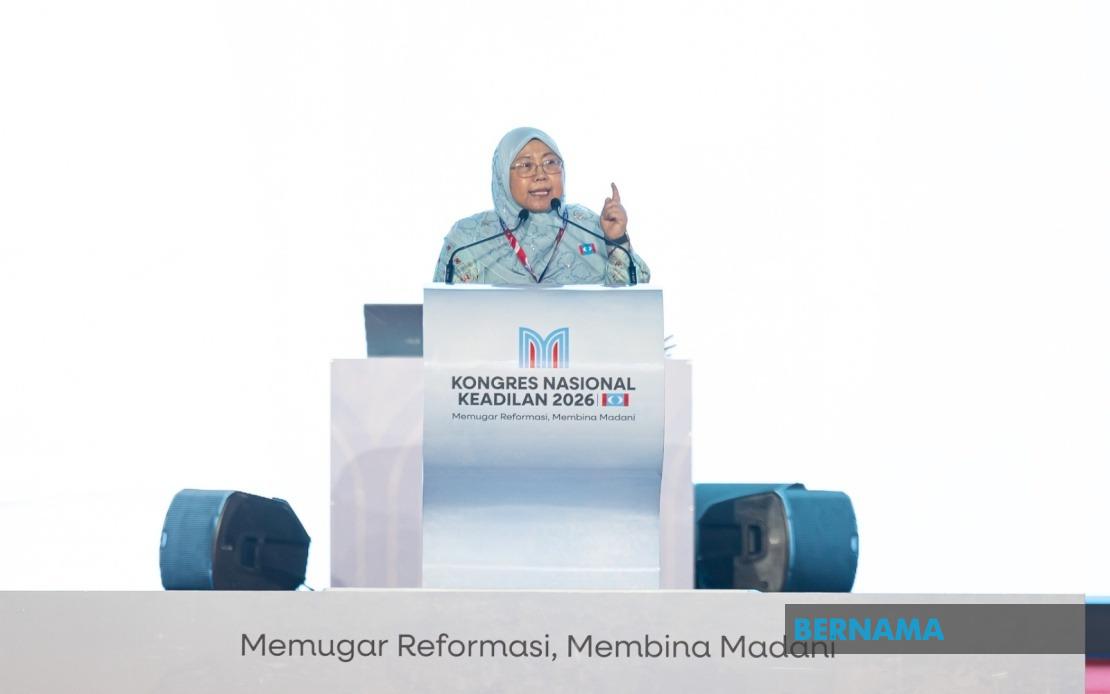
The opposition People's Justice Party (PKR) faces a critical moment of self-reflection, with its leadership calling for members and delegates to abandon blame and recrimination in favour of strategic rebuilding. Speaking at the 2026 PKR National Congress in Melaka this week, Secretary-General Senator Datuk Dr Fuziah Salleh set a clear tone: the gathering should function as a catalyst for internal renewal, not as a venue for settling scores over the party's recent electoral reverses and mounting organisational pressures.
Fuziah's remarks carry particular weight given PKR's position within Malaysia's fractured opposition landscape. The party has struggled to consolidate its position following disappointing results in recent electoral contests, a reality that has tested party cohesion and member morale. Her intervention suggests the leadership recognizes a genuine risk of internal fragmentation if the congress devolves into recrimination and factional positioning. By framing the gathering around restoration rather than retribution, she appears to be attempting to redirect potentially destructive energy toward constructive purposes that could benefit the party's long-term trajectory.
The secretary-general drew a deliberate historical parallel to fortify her argument. She reminded delegates of PKR's darkest chapter following the 2004 General Election, when the party held merely a single parliamentary seat—a nadir from which it nonetheless recovered through persistent organisational work and sustained outreach efforts. This historical reference serves multiple purposes: it demonstrates that contemporary challenges, while real, are not unprecedented; it illustrates that recovery is achievable through discipline and renewed commitment; and it implicitly warns against fatalism or surrender at a moment when the party might otherwise despair.
The framing of this historical comparison is strategically significant for Southeast Asian politics more broadly. PKR's experience reflects broader patterns affecting opposition parties across the region, many of which struggle with coherence and electoral performance amid fragmented political environments. For Malaysian readers and observers, the parallel to 2004 resonates because it reminds party members and supporters that even severe electoral setbacks need not be terminal, provided the organisation commits to regeneration rather than recrimination.
Central to Fuziah's message is the party congress theme, "Memugar Reformasi, Membina MADANI"—a Malay formulation emphasising revival and reconstruction. The term "memugar" carries deliberate connotations of restoration and renewal, distinct from wholesale renovation or ideological reinvention. This linguistic choice suggests PKR leadership is not advocating abandonment of the party's foundational principles rooted in the Reformasi movement, but rather a recommitment to those principles adapted to contemporary circumstances. The implication is that PKR's troubles stem not from outdated ideology but from implementation failures or organisational drift—a distinction with significant implications for how the party might approach its renewal.
The presence of nearly 2,600 delegates and more than 2,000 observers indicates substantial engagement across the party structure. The additional attendance of 26 diplomatic representatives from 19 countries, including six ambassadors, underscores PKR's international dimension and the foreign policy interests observers maintain in Malaysian opposition politics. This diplomatic presence also signals that international actors view PKR as a consequential political force meriting close attention, despite recent setbacks.
Fuziah's emphasis on distinguishing between learning from experience and allowing that experience to embitter or divide the membership reflects sophisticated political management. She explicitly cautioned against using the congress as a platform for finger-pointing or retaliation, suggesting that such impulses are present within party ranks and pose genuine risks. Her intervention attempts to channel potentially destructive emotions—frustration, disappointment, resentment toward leadership or party associates—into productive reflection and strategic adjustment.
The challenge for PKR, as Fuziah's speech implicitly acknowledges, lies in translating these exhortations toward unity into concrete organisational outcomes. Opposition parties in Malaysia face persistent structural disadvantages, including unequal media access, administrative incumbency benefits favouring the ruling coalition, and gerrymandered electoral boundaries. Against these headwinds, maintaining membership morale and cohesion requires not merely rhetoric but demonstrated progress and strategic success. The National Congress must therefore generate not just unity but credible direction for the party's future electoral and policy work.
The emphasis on reviving rather than reinventing Reformasi reflects deeper questions about PKR's identity and purpose. Founded in the wake of Anwar Ibrahim's sacking and the social upheaval of the late 1990s, the party has always embodied competing impulses: grassroots reform advocacy alongside elite political manoeuvring; anti-establishment messaging alongside pragmatic coalition participation. Fuziah's framing suggests the party seeks to recalibrate these elements by reconnecting with foundational anti-corruption and pro-democracy commitments whilst navigating practical coalition politics.
For Malaysian politics more broadly, PKR's internal reckoning matters significantly. As the only substantial opposition party capable of competing nationwide, its coherence or fragmentation affects the broader political balance. A PKR that successfully renews its organisational discipline and ideological clarity could strengthen opposition capacity to challenge incumbent frameworks. Conversely, a party consumed by internal factionalisation would reinforce ruling coalition dominance and reduce political contestation.
Fuziah's call for mature engagement also reflects awareness that Malaysian political culture, particularly within opposition movements, can veer toward personalised conflict and zero-sum factional struggle. Her speech attempts to establish norms favouring institutional rather than personal dynamics, ideology rather than personality-based alignment. Whether the congress achieves this remains to be seen, but her framing establishes the leadership's expectations and attempts to delegitimise destructive factional behaviour.
Ultimately, the 2026 PKR National Congress represents a potential inflection point. The party can emerge either renewed and strategically focused or fractured and adrift. Fuziah's speech attempts to create psychological and rhetorical conditions favouring renewal, but transformation will require sustained follow-through from party structures, disciplined messaging, and measurable organisational improvements. For Malaysian observers and opposition supporters, the congress outcomes carry implications extending well beyond party internal affairs into the shape of Malaysian democracy itself.

