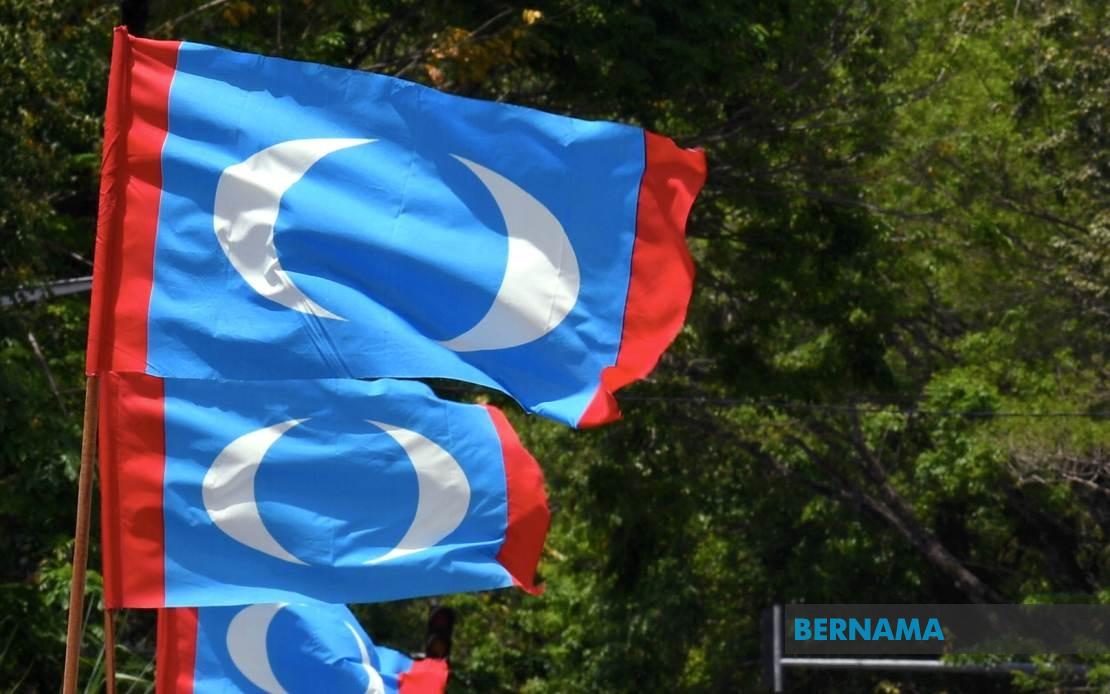
The People's Justice Party (PKR) must demonstrate courage in examining its recent electoral performance rather than deflecting blame onto voters, according to the leadership of its youth wing Angkatan Muda Keadilan (AMK). Speaking at the party's national congress in Melaka, AMK chief Muhammad Kamil Ahmad Munim articulated a forthright critique of how the party should approach its setbacks in the recent round of state elections, emphasizing that introspection—not finger-pointing—represents the path forward for Malaysia's ruling coalition.
Muhammad Kamil's intervention at the AMK National Congress held at the Melaka International Trade Centre reflects growing recognition within PKR that electoral losses demand honest reckoning. He argued that while victories naturally reinforce organizational confidence, defeats should serve as catalysts for deeper examination of what the party is doing wrong and why segments of the electorate remain unconvinced by its political platform and leadership. The youth leader's remarks suggest a faction within PKR willing to challenge complacency and demand accountability from senior party structures.
Central to Muhammad Kamil's message was a reframing of the relationship between political parties and voters. He stressed that voters owe no allegiance to any party; rather, it falls to parties to earn electoral support through substantive policy and demonstrated competence. This principle carries particular weight in Malaysia's fractured political landscape, where voter loyalty has become increasingly transactional and communities swing between competing coalitions based on perceived performance and trust. The assertion that "the people do not owe any party their votes" constitutes a direct challenge to narratives of entitlement that sometimes emerge when parties lose ground.
Beyond procedural reform, Muhammad Kamil identified a substantive strategic vulnerability facing PKR under Prime Minister Datuk Seri Anwar Ibrahim's leadership. He pointed to the effectiveness of narratives—propagated by rival political factions—that frame Malay interests and Islam's institutional position as being threatened under the current administration. These narratives have proven potent in mobilizing voters, particularly in traditional strongholds, and represent a significant messaging challenge for the ruling coalition. The youth leader's acknowledgment of this problem signals that PKR is grappling with a credibility gap on issues fundamental to the Malay-Muslim electorate.
The core of Muhammad Kamil's policy intervention centres on what he termed the need for a "politics of confidence" as an antidote to the opposition's "politics of fear." This framing recognizes that simply dismissing opposition attacks as baseless proves insufficient; instead, PKR must proactively articulate how Malay interests remain protected and Islam's institutional role remains guaranteed within a framework of inclusive, plural democracy. The challenge here is formidable: the party must persuade voters that religious and ethnic protections can coexist with commitments to equal citizenship and non-discrimination. This requires nuanced messaging that avoids appearing to concede legitimacy to polarizing narratives while remaining responsive to genuine community concerns.
The implicit diagnosis in Muhammad Kamil's remarks is that PKR has allowed opposition forces to control the narrative terrain on identity issues that carry decisive electoral weight in Malaysia. When the ruling party fails to offer compelling counter-narratives, political space opens for competitors to fill the void with messaging rooted in anxiety and suspicion. This dynamic has played out repeatedly in Malaysian politics, where parties successfully exploiting identity-based anxieties have accumulated disproportionate electoral influence. PKR's apparent recognition of this vulnerability suggests the party may be preparing shifts in its communication strategy and possibly its policy positioning on sensitive issues.
The challenge facing PKR extends beyond communication to the deeper question of whether the party can genuinely represent Malay-Muslim interests while maintaining its commitment to pluralism and the multiethnic character of the current coalition. This tension has plagued the Pakatan Harapan alliance since its initial 2018 victory and contributed to its 2020 collapse. Muhammad Kamil's framing implies that the solution lies not in abandoning either principle but in articulating how they reinforce rather than contradict one another—a formulation that requires sophisticated political argumentation and sustained organizational effort to embed across grassroots membership.
The timing of these remarks, delivered specifically through the youth wing rather than senior party leadership, carries significance for Malaysia's political trajectory. Youth structures often serve as incubators for critical thinking within established parties, testing ideas and articulating positions that senior leadership may later adopt or reject. Muhammad Kamil's call for self-reflection rather than blame externalization suggests generational pressure within PKR toward greater organizational accountability and strategic adaptation. This pattern, if it gains traction among younger party cadres, could force meaningful reassessment of how PKR approaches the next electoral cycle.
For the broader Pakatan Harapan coalition, Muhammad Kamil's intervention underscores internal awareness that current political positioning is insufficient to reverse recent electoral losses. The repeated defections of Malay-Muslim voters toward opposition and fringe Islamist parties indicate that merely holding office while maintaining the current political strategy will likely yield continued erosion. Whether PKR's youth wing can influence senior leadership toward the substantive recalibration the young chief advocate remains uncertain, but his public articulation of these concerns signals that critical voices within the party recognize the gap between current performance and the electoral recovery required to consolidate support beyond the next general election.

