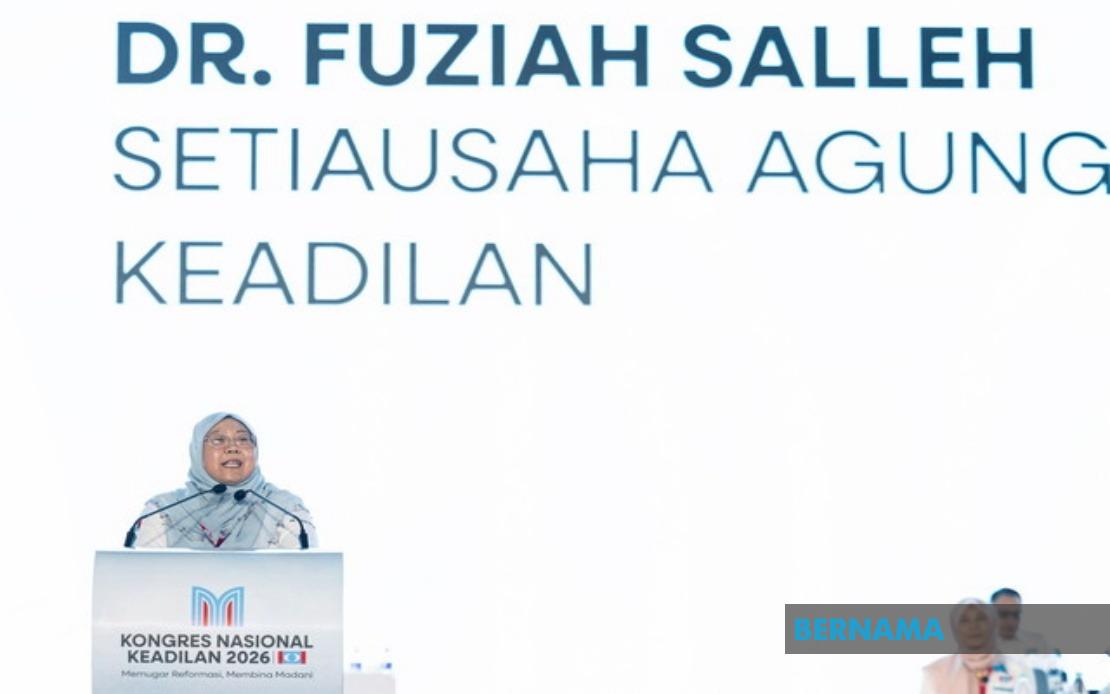
The Parti Keadilan Rakyat must elevate its strategic communication and intellectual framework around the MADANI Economy if it hopes to convert political promises into substantive improvements in citizens' lives, the party's secretary-general Datuk Dr Fuziah Salleh argued during the PKR National Congress 2026 in Melaka on August 16. Speaking at the party's culminating session, Fuziah underscored the gap between ideological commitment and practical execution, emphasising that mere ideological agreement among delegates was insufficient without corresponding action from party machinery and elected officials across all organisational tiers.
Fuziah's intervention addresses an ongoing tension within Malaysia's governing coalition: the challenge of translating broad policy frameworks into visible, measurable outcomes that resonate with ordinary voters. The MADANI Economy represents the Pakatan Harapan administration's attempt to chart a development path emphasising inclusivity, sustainability, and social welfare. However, public perception of whether this agenda is genuinely materialising remains mixed, particularly among voters in economically vulnerable communities who form PKR's traditional base. By calling for strengthened thinking and communication around this framework, Fuziah implicitly acknowledged that the party risked losing credibility if its grand narrative did not manifest in tangible policies and resource allocation.
The secretary-general articulated a demanding vision of internal party discipline and intellectual coherence. She stressed that PKR's leadership—from national figures down to grassroots organisers—must assume greater responsibility in converting the party's political philosophy into operational strategy. This requirement for heightened discipline reflects broader challenges within Malaysian coalition governance, where multiple parties with distinct ideological emphases must coordinate effectively. Fuziah's framing suggested that PKR itself bore responsibility for ensuring its own members understood and championed the MADANI framework, rather than assuming external communication alone would secure public backing.
Crucially, Fuziah positioned the MADANI Economy as inseparable from institutional reform. She characterised the implementation process as demanding, resource-intensive, and fundamentally dependent upon sustained commitment from both party structures and government machinery. Her comment that the party needed "sufficient ammunition" to "win the war" employed military metaphor to convey the scale of challenge involved. This candid acknowledgment that success was far from guaranteed represented a departure from typical political rhetoric, suggesting internal PKR discussions have grappled seriously with implementation obstacles and the real possibility of falling short of stated ambitions.
The party's professed commitment to encompassing all socioeconomic segments, regardless of ethnic or religious background, formed another pillar of Fuziah's address. She explicitly rejected frameworks that disaggregated rights and benefits along communal lines, instead asserting that PKR's mission centred on championing the economically disadvantaged regardless of their demographic characteristics. This positioning carries significance in Malaysia's complex political ecology, where ethnicity-based politics remains deeply entrenched. PKR's theoretical multiethnic orientation and economic-class focused messaging differentiate it from components of the coalition more explicitly rooted in communal representation, though translating this principle into campaign messaging and resource allocation remains contested within party ranks.
Fuziah's insistence on inclusive, non-communal framing reflects PKR's strategic positioning as a reformist force transcending traditional Malaysian political divides. However, the party faces persistent accusations that its egalitarian rhetoric inadequately translates into concrete measures benefiting all communities equitably. By raising this theme at the national congress, Fuziah signalled that PKR's leadership recognises the disconnect between stated principles and public perception, and that the party must undertake deliberate effort to align rhetoric, policy, and visible outcomes.
The broader context of Fuziah's remarks involves Malaysia's economic management amid persistent inflation, cost-of-living pressures, and uneven distribution of development benefits across regions and communities. The MADANI Economy framework was conceived partly as response to public discontent with inequality and perceived governance failures under previous administrations. Yet evaluating whether the current government's policies substantively advance this agenda remains contested among economists, civil society observers, and voters themselves. Fuziah's call for strengthened communication suggests PKR's leadership recognises this narrative deficit and perceives it as strategically damaging heading toward eventual electoral contests.
Implementation of institutional reforms—the bedrock upon which the MADANI agenda theoretically rests—requires coordination across multiple government agencies, ministries, and subnational authorities. PKR's control of certain state governments and ministerial portfolios places the party in position to pioneer MADANI-aligned policies, yet results to date have proven mixed and frequently frustrated by competing interests within the coalition or bureaucratic resistance. Fuziah's emphasis on discipline and commitment implicitly acknowledges these obstacles and calls upon party members to persist despite institutional friction.
The secretary-general's remarks also contained implicit criticism of party-internal scepticism or insufficient dedication to the MADANI framework. By calling upon delegates to genuinely internalise the framework as their own ideological position, she suggested some party members had not yet achieved authentic conviction about the agenda. This diagnosis points to recruitment and ideological training challenges within PKR, where rapid expansion and coalition politics sometimes favour pragmatic accommodation over coherent intellectual commitment. Her call for reshaped thinking and communication patterns represented an attempt to close this gap between formal endorsement and operational dedication.
Looking forward, PKR faces the challenge of operationalising MADANI principles in ways that visibly improve citizens' circumstances, particularly among lower-income households disproportionately affected by price inflation and reduced public services. The party's ability to demonstrate concrete improvements in healthcare access, education quality, wage levels, or housing affordability will largely determine whether the MADANI narrative gains traction or remains perceived as political marketing divorced from reality. Fuziah's insistence upon discipline, commitment, and reformed thinking suggested PKR's leadership understands this stakes and recognises that rhetorical refinement alone cannot substitute for substantive policy delivery and visible resource reallocation toward disadvantaged communities.

