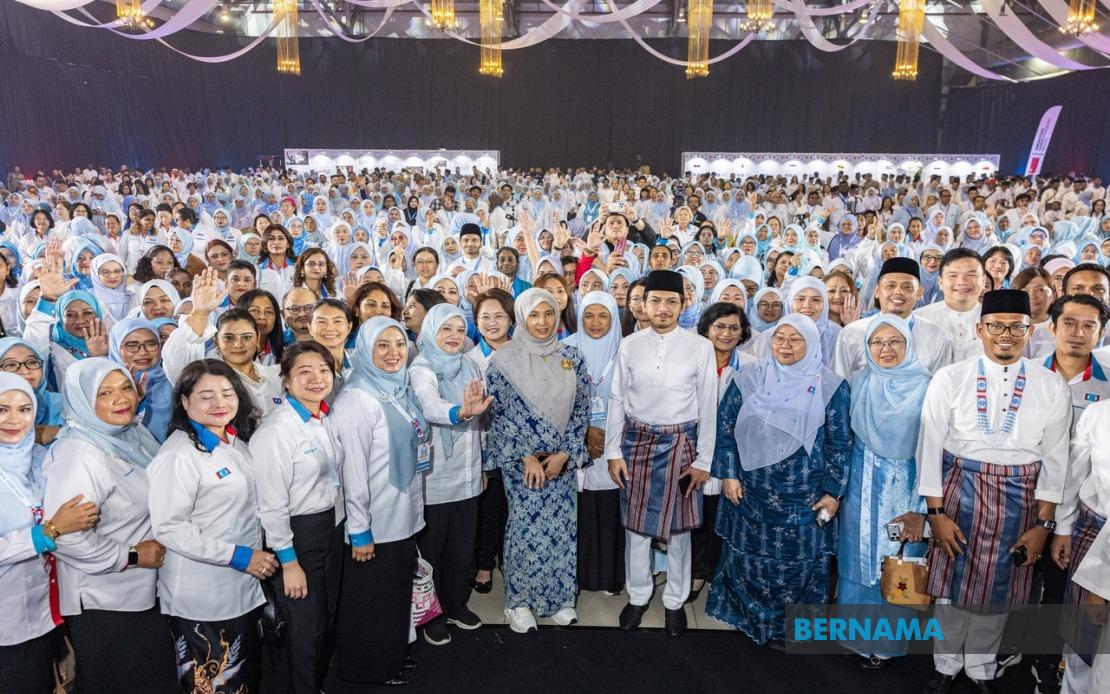
During the 2026 Angkatan Muda Keadilan National Congress held in Melaka this week, the youth wing's leader Muhammad Kamil Abdul Munim delivered a sobering assessment of his party's position: popularity alone does not guarantee political success. Speaking at the Melaka International Trade Centre in Ayer Keroh, the AMK chief highlighted a critical weakness that has become apparent through recent electoral contests in Sabah, Johor and Negeri Sembilan—that PKR's organisational machinery at the grassroots level remains underdeveloped and unable to convert voter enthusiasm into concrete poll victories.
The challenge facing Parti Keadilan Rakyat is distinctly modern. For more than two decades, the party has benefited from cyclical waves of reform sentiment and public discontent with incumbent administrations. Muhammad Kamil acknowledged this historical pattern, noting that since 1998, PKR has entered elections riding these crests of popular support, with ordinary citizens voluntarily becoming part of the party's operational structure. This organic mobilisation worked effectively for an opposition movement. However, the dynamics have shifted fundamentally now that PKR forms part of the governing coalition, responsible for delivering concrete policy outcomes rather than simply offering an alternative vision.
The transition from opposition to government imposes different strategic demands on any political party. Opposition movements can unite disparate groups around shared grievances and aspirational messaging. Governing coalitions must demonstrate competence, manage competing interests within the alliance, and address the mundane realities of administration. Muhammad Kamil implicitly recognised that PKR has not fully adapted its organisational model to this new reality. The party requires what he termed a renewal of approach, strategy and political activities—essentially a structural overhaul that transforms the movement from a loosely coordinated coalition of reform advocates into a disciplined, hierarchical, and systematically organized political machine.
This diagnosis resonated with other party leaders attending the congress. Wanita PKR chief Fadhlina Sidek framed the gathering as an opportunity for institutional self-examination. She urged delegates to move beyond defensive posturing about recent electoral disappointments and instead undertake honest reflection about organisational weaknesses. Fadhlina's intervention suggested that PKR's difficulties extend beyond messaging into fundamental questions about how the party recruits, trains, deploys and motivates its activists. She called for the congress to generate concrete action agendas rather than symbolic gestures—a pointed reminder that internal talk sessions must produce tangible reforms in party operations.
The broader Malaysian political context amplifies these concerns for PKR. The party operates within a complex coalition involving Pakatan Harapan allies and the Perikatan Nasional arrangement that stabilises the current Anwar Ibrahim administration. In this environment, PKR must compete for voter attention not merely against Umno-led opposition forces but also against its own coalition partners who draw from overlapping demographic bases. A weakened grassroots structure means PKR loses ground to Amanah, DAP, and even to Umno in constituencies where party presence and local organising capability determine election outcomes.
Muhammad Kamil's call for stronger narrative development addresses a related problem. Narrative in politics functions as the interpretive framework through which voters understand party identity, leadership legitimacy and policy direction. PKR's founding narrative centred on reformasi—challenging authoritarian governance and demanding institutional accountability. That narrative remains relevant but has become somewhat diffuse now that the party holds governmental power and must balance reform ambitions against coalition management and budgetary constraints. The youth wing chief is essentially arguing that PKR needs to articulate a coherent story about what it represents in government, why voters should trust its stewardship, and how it differs from coalition partners or opposition alternatives.
The generational dimension embedded in this congress deserves attention. Angkatan Muda Keadilan represents the party's younger membership base, individuals who may not have directly experienced the 1998 Reformasi movement that founded PKR. For these activists, the party's founding mythology carries less immediate emotional resonance. They evaluate PKR through contemporary performance metrics—economic management, delivery of campaign promises, anti-corruption record, and local constituency service. When Muhammad Kamil urges renewal rather than relying on historical narratives, he implicitly signals that the party must demonstrate why young Malaysians should dedicate energy to PKR's political project.
The specific mention of Sabah, Johor and Negeri Sembilan elections carries significant weight. These contests revealed that PKR struggled to translate perceived popularity into seats. Such failures typically indicate problems with candidate selection, campaign resource allocation, voter persuasion messaging, or local organisational capacity. The pattern suggests PKR's central leadership may not be effectively translating strategic decisions into coordinated implementation across diverse constituencies. This organisational fragmentation becomes increasingly costly as Malaysian electoral boundaries shift and demographic change reshapes competitive dynamics in key regions.
Fadhlina Sidek's emphasis on grassroots input into party direction reinforces democratic principles while also suggesting that top-down directives have not produced desired results. By inviting delegates to generate recommendations through congress debates, she creates space for frontline activists to surface operational problems that headquarters may not fully appreciate. This bottom-up approach could yield valuable intelligence about voter sentiment, competitor strength, and local organisational capacity that formal party structures might overlook. However, it requires that party leadership genuinely implement recommendations rather than treating grassroots input as symbolic consultation.
The timing of these strategic discussions matters considerably. Malaysia's electoral calendar creates urgency around organisational renewal. The next general election could occur within the coming two to three years, and state elections may precede federal polling. This compressed timeframe means PKR cannot afford extended periods for structural experimentation or gradual capacity building. The party requires rapid improvements in messaging consistency, activist mobilisation, and campaign coordination. Whether the 2026 AMK congress generates sufficient momentum for such acceleration remains uncertain, but the frank acknowledgment of weaknesses at least establishes a baseline for assessment.
PKR's position within Malaysian politics remains significant but increasingly contested. The party claims to represent multi-ethnic reform-minded voters, but this constituency has become more fragmented and demanding. Younger voters question whether PKR delivers on reform promises, while older supporters worry about institutional decay and administrative competence. Concurrently, Umno has recovered ground through anti-establishment messaging, while Perikatan parties mobilise voters dissatisfied with coalition governance. In this crowded marketplace, PKR's path forward demands both renewed organisational discipline and communication clarity about what distinguishes the party from competitors offering ostensibly similar reform narratives.
Muhammad Kamil's message essentially amounts to this: the party must stop relying on goodwill momentum and build durable institutional capacity for electoral competition. This represents both an indictment of recent performance and a recognition that PKR's future depends on organisational maturation. Whether the party leadership genuinely commits resources to such transformation, or whether the congress represents another cycle of rhetorical renewal without structural change, will determine PKR's trajectory in Malaysian politics.

