Parti Keadilan Rakyat (PKR) is moving to enhance how it communicates government initiatives and policies to the public, recognising that existing efforts have failed to adequately showcase the tangible benefits of its administration to ordinary Malaysians. The overhaul comes after delegates at the PKR National Congress 2026, held at the Melaka International Trade and Exhibition Centre in Ayer Keroh on August 15, raised multiple proposals aimed at improving the party's information dissemination capabilities. This strategic recalibration signals growing awareness within the coalition that economic improvements at the national level have not translated into messaging that resonates at the household level, a critical vulnerability in the run-up to the next general election.
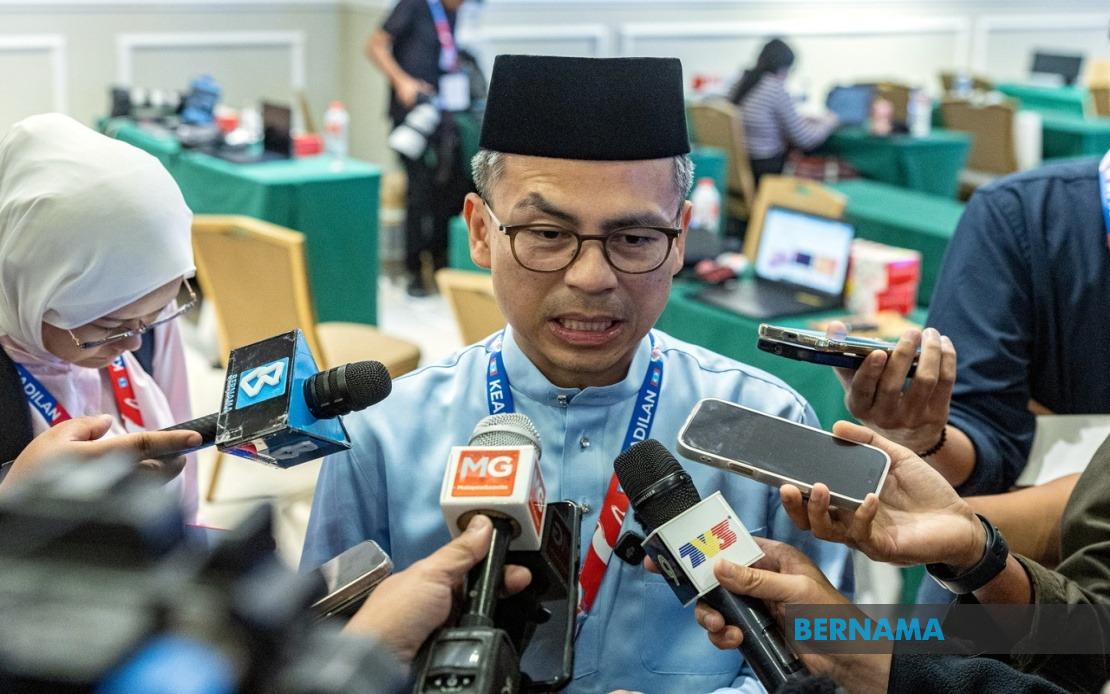
Datak Seri Fahmi Fadzil, who holds dual positions as PKR Information Chief and Communications Minister, has emerged as the point person championing this communications overhaul. Speaking to reporters after visiting the media room during the congress, Fahmi acknowledged a fundamental challenge facing the government: despite genuine achievements in macroeconomic management, these successes remain largely invisible or unconvincing to ordinary Malaysians navigating daily economic pressures. This candid admission reflects frustration within the ruling coalition that its narrative control has proven insufficient, even as the government pursues substantive economic policies.
The proposals emerging from the congress indicate that PKR recognises the need for more formalised mechanisms to disseminate political messages through grassroots channels. Fahmi pointed out that while informal networks for information sharing have existed historically, they lack the structural rigour necessary to ensure coherent messaging cascades from federal policymakers down through parliamentary representatives to branch-level activists. By establishing clearer communication protocols, PKR hopes to transform its party machinery into a more efficient vehicle for public engagement, converting policy announcements into locally relevant narratives that address constituent concerns.
A particularly noteworthy aspect of Fahmi's remarks was his acknowledgment that branch leaders have expressed willingness to assume greater responsibility in information dissemination efforts. This suggests PKR intends to empower its ground-level organisations to become active participants in shaping and communicating the government's policy narrative, rather than passive recipients of top-down messaging. Such devolution of communication responsibilities could enhance the authenticity and contextual relevance of government messages, since local leaders typically understand community-specific concerns better than Putrajaya-based officials.
The communications overhaul also reflects a broader strategic calculation within PKR and the Pakatan Harapan coalition. With growing public dissatisfaction over cost-of-living pressures despite economic growth, the government faces a credibility gap that transcends mere spin. Fahmi's role as both Communications Minister and PKR Information Chief positions him as instrumental in bridging this divide, lending weight to Pakatan Harapan's communication efforts across both governmental and party channels. This dual mandate underscores the seriousness with which party leadership views the communication challenge.
The congress discussions revealed that current government communication strategies have not adequately addressed the persistence of household-level economic anxiety. While macroeconomic indicators may show stability or growth, inflation, employment uncertainty, and access to affordable housing remain pressing concerns for Malaysian families. PKR's recognition of this disconnect suggests the party understands that superior economic statistics alone cannot sustain public confidence without credible messaging that connects national-level achievements to tangible improvements in daily life.
Fahmi indicated that the PKR Central Leadership Council (MPP) has adopted a receptive stance toward the proposals emerging from delegates, signalling top-level commitment to transforming the party's communication apparatus. He noted that the council plans to initiate changes within its own leadership structures first, suggesting a readiness to lead by example in implementing new communication protocols. This phased approach, beginning with internal reorganisation before external rollout, indicates thoughtful planning rather than reactive crisis management.
The timing of this communications initiative carries political significance. As Malaysia approaches the next general election cycle, the effectiveness of government messaging will increasingly influence voter behaviour. PKR's emphasis on strengthening information dissemination suggests the party recognises that maintaining its coalition's electoral viability depends not only on policy performance but on convincingly communicating that performance to the electorate. The congress proposals, therefore, should be read as part of a broader electoral strategy aimed at consolidating Pakatan Harapan's political support.
Looking forward, Fahmi indicated that detailed proposals related to information dissemination would be formally presented during the congress's winding-up session. These proposals, once formalised, are expected to establish clearer protocols for how parliamentary representatives and lower-level party structures engage with federal communications priorities, ensuring greater coherence in how PKR and the government present themselves to the public. The implementation of these protocols could reshape how Malaysian political communication operates, creating tighter integration between party machinery and governmental messaging.
For Malaysia's broader political landscape, PKR's communications overhaul underscores a fundamental challenge facing all governing parties: demonstrating relevance to ordinary citizens whose economic circumstances may differ significantly from national-level statistics. The party's willingness to acknowledge this challenge and commit resources to addressing it suggests growing political maturity within Pakatan Harapan. However, the success of these communication initiatives will ultimately depend on whether they can authentically connect government achievements to meaningful improvements in household welfare, rather than simply amplifying existing messaging with greater frequency or sophistication.

