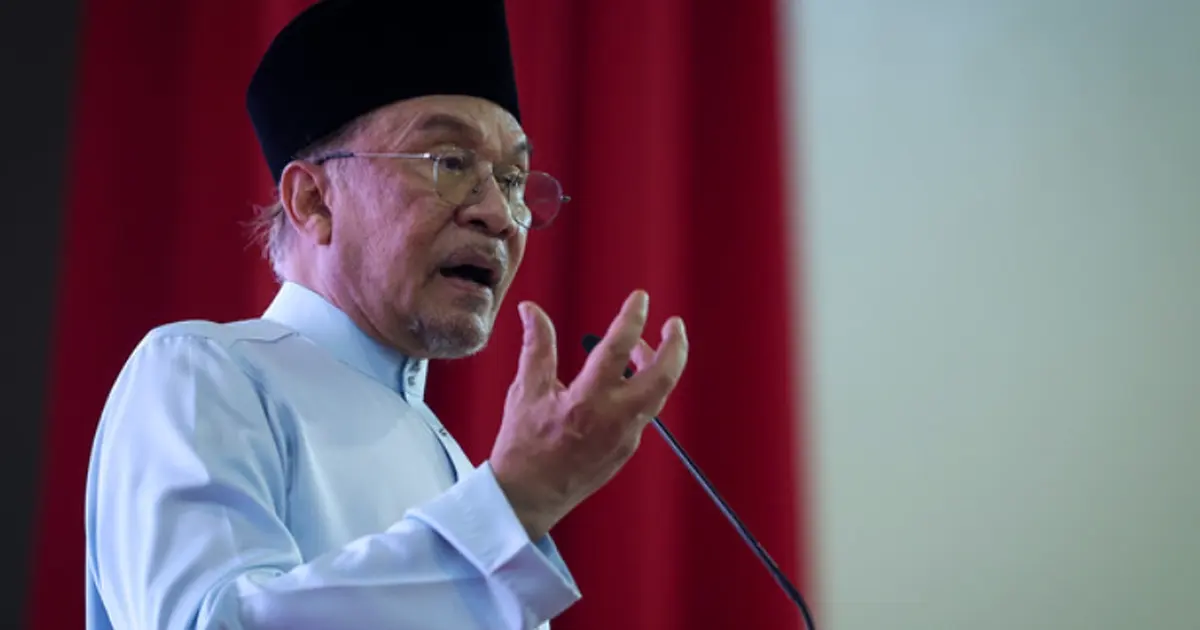
Prime Minister Anwar Ibrahim extended a lifeline to Umno when the party faced its gravest political crisis in decades following the 2023 general election, yet the party has repaid that generosity with betrayal, according to PKR Youth leader Huraimi Husri. The Federal Territory chapter representative contends that history should record Anwar as a friend who stepped forward when Umno's position appeared untenable, rather than as a rival seeking to exploit the party's vulnerability.
The post-GE15 political landscape presented Malaysia with unprecedented challenges. Umno emerged from the election significantly weakened, facing potential exclusion from government for the first time in nearly seven decades. The party's credibility had been eroded by internal divisions, while younger voters increasingly turned away from Malaysia's oldest political establishment. In this moment of institutional fragility, Anwar's decision to include Umno in the unity government coalition proved strategically crucial, offering the party a pathway to relevance and allowing it to retain ministerial positions that might otherwise have been lost entirely.
Huraimi Husri's statement reflects frustration within PKR ranks over what party members perceive as Umno's reluctance to acknowledge the political debt incurred through this rescue. In the months following the unity government's formation, various tensions have emerged between PKR and Umno, with both parties competing for influence within the coalition while managing their distinct electoral interests. From PKR's perspective, the party sacrificed political capital and potential electoral advantages by choosing cooperation over confrontation, only to encounter what it views as insufficient reciprocal loyalty from its coalition partner.
This accusation carries weight within Malaysian political circles given the historical antagonism between these two parties. For decades, PKR's founding narrative has been intertwined with resistance to Umno-led governance, making cooperation inherently uncomfortable for significant segments of each party's membership. That Anwar chose coalition over confrontation represented a strategic pivot rooted in national interest rather than party advantage, according to this interpretation. The decision prioritized governmental stability and institutional continuity over partisan gain during a period when Malaysian democracy itself faced questions about legitimacy and representation.
The unity government structure itself has proven complex to navigate. Umno, despite its electoral losses, retained considerable infrastructure and member loyalty in key constituencies, making its participation essential for stable governance. However, this structural importance has sometimes translated into Umno adopting assertive positions within coalition negotiations, occasionally creating friction with PKR despite their shared governmental responsibilities. For PKR Youth's Huraimi Husri, such assertiveness constitutes ingratitude toward a party that chose inclusion over victory.
The timing of Huraimi's comments reflects broader currents within Malaysian politics as the unity government approaches its midterm and various parties contemplate positioning for the next general election. PKR faces a delicate balancing act: maintaining coalition cohesion while differentiating itself electorally and preserving its institutional credibility with voters who originally supported it as an alternative force. Umno, conversely, must demonstrate that coalition participation yields tangible benefits for its members and supporters while managing the expectations of party stalwarts who prefer opposition to compromise.
For Malaysian voters and regional observers, this intra-coalition tension illustrates the complexities of consensus-based governance in a competitive multiparty democracy. The unity government represents a genuine departure from Malaysia's historical dominance by single-party coalitions, yet it introduces friction points that earlier administrations could suppress through overwhelming electoral mandates. Every decision becomes subject to negotiations between parties with distinct ideological traditions, membership profiles, and electoral calculations, slowing governance but also requiring genuine accommodation of diverse interests.
The question of whether Anwar should be remembered primarily as Umno's savior or as a leader pursuing national stability ultimately reflects different interpretations of recent Malaysian political history. PKR Youth's perspective emphasizes sacrifice and generosity; Umno's likely counter-narrative would stress the mutual benefits of cooperation and its own continued indispensability to government formation. Both interpretations contain validity, yet neither captures the full complexity of how political necessity compels former adversaries to work together.
Looking forward, the durability of the unity government will depend partly on whether its constituent parties can develop genuine appreciation for the mutual compromises undergirding the arrangement, or whether resentment over perceived imbalances eventually proves corrosive. Huraimi Husri's public statement suggests that at least within PKR's youth wing, frustration is mounting, indicating that internal party pressure may intensify debates about coalition continuation. For Malaysia's political stability, such tensions require careful management lest they destabilize what remains the nation's most experimental and genuinely representative governmental arrangement in recent memory.

