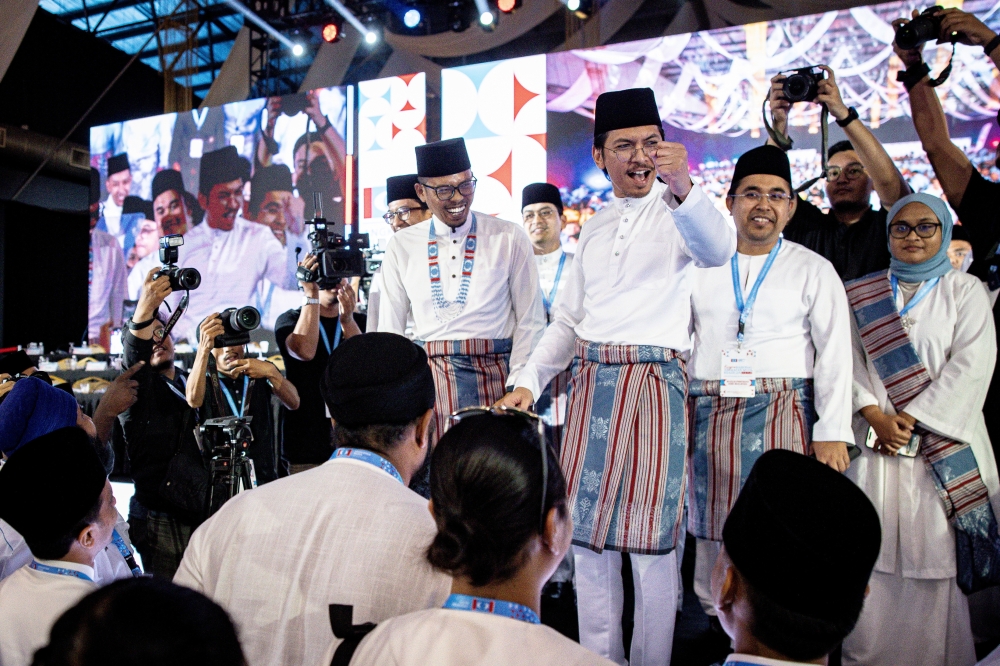
The youth wing of Parti Keadilan Rakyat has thrown its weight behind Prime Minister Datuk Seri Anwar Ibrahim's initiative to dismantle the Universities and University Colleges Act, signalling the government's commitment to liberalising higher education governance in Malaysia. The move represents a significant moment for campus politics, as the party actively encourages student mobilisation to press for deeper institutional reforms beyond the simple repeal of existing legislation.
The UUCA, a colonial-era statute that has long restricted academic freedoms and student assembly rights, has drawn sustained criticism from civil society groups, student bodies, and international observers who view it as incompatible with democratic principles. Its continued enforcement has essentially criminalised political organising on campuses, limited student union activities, and granted authorities expansive powers to control discourse. The proposed repeal, therefore, carries symbolic weight as an acknowledgement that Malaysia's university system requires fundamental restructuring to align with contemporary standards of institutional autonomy and student participation.
PKR Youth's explicit endorsement goes beyond mere parliamentary arithmetic, framing the repeal as a gateway to systemic change rather than an isolated legislative adjustment. The youth movement has urged students to seize this window of opportunity to articulate demands for comprehensive reform, including the restoration of student unions with genuine autonomy, enhanced institutional governance structures that incorporate student representation, and clearer protections for academic expression. This positioning suggests the party views higher education liberalisation as both a justice issue and a political opportunity to consolidate support among the younger electorate.
The timing of PKR Youth's statement carries strategic significance within Malaysia's broader political landscape. Higher education has emerged as a constituency issue, particularly among urban voters aged 18 to 35, many of whom experienced restrictions firsthand during their studies. By actively mobilising student networks rather than leaving the UUCA repeal to legislative process alone, PKR Youth seeks to translate policy change into tangible political capital and grassroots momentum. This approach reflects an understanding that student activism, when directed constructively, strengthens democratic engagement and party legitimacy.
Malaysian universities have operated under exceptional constraints compared to regional peers. The UUCA's provisions on unlawful assemblies, restrictions on outside political speakers, and broad enforcement discretion have created a chilling effect on campus organising. Students at institutions across the country report self-censorship, administrative pressure, and surveillance concerns that inhibit political participation and free intellectual exchange. The repeal would remove the statutory basis for many of these restrictions, though implementation details remain crucial—successful reform will depend on parallel changes to institutional regulations and administrative culture.
The call for student activism also reflects recognition that legislative change alone cannot transform campus climates. Universities themselves maintain separate rules, guidelines, and administrative practices that restrict student organising even where law permits it. Therefore, PKR Youth's emphasis on mobilising students suggests the party understands that the battle for campus liberalisation extends beyond parliament into institutional negotiations, student union registration processes, and administrative interpretation of academic freedom principles. Students leveraging renewed political support can demand accountability from university leadership and push for implementation of reform commitments.
Regionally, Malaysia's higher education liberalisation sits within a broader Asia-Pacific conversation about university autonomy and democratic space. Countries including Thailand, Hong Kong, and Myanmar have grappled with similar tensions between state control and academic freedom, with varying outcomes depending on political will and institutional resistance. Malaysia's move towards UUCA repeal positions it as potentially more progressive on this dimension, though outcomes will depend on implementation rigour and whether successor regulations adequately protect freedoms the original statute restricted.
The political economy of this position also merits attention. Anwar Ibrahim's government has staked considerable credibility on institutional reform and democratic renewal, making higher education a tangible arena where such commitments can be demonstrated. However, implementation will require coordination between federal education authorities, university boards of governors, and institutional administrations—all of which may harbour varying degrees of resistance to expanded student participation and campus political activity. PKR Youth's mobilisation strategy partly addresses this coordination challenge by building external pressure on institutions to embrace reform.
Student responses to PKR Youth's call will shape the trajectory of campus politics over coming months. If university students organise effectively around specific reform demands—including student union restoration, institutional governance restructuring, and explicit academic freedom protections—they can transform the UUCA repeal from an abstract legislative victory into tangible institutional change. Conversely, if mobilisation remains limited, universities may implement minimal changes, allowing restrictive administrative practices to persist beneath a facade of liberalisation.
Longer-term implications extend beyond immediate campus governance. Younger Malaysians' experience of universities as either spaces for genuine intellectual exploration and political engagement or as restricted environments subject to administrative control will shape their democratic dispositions and civic participation in adulthood. By encouraging student activism around educational reform, PKR Youth implicitly acknowledges this formative function and positions educational liberalisation as foundational to broader democratic deepening. Whether this translates into sustained institutional change will depend on whether student momentum translates into sustained organising beyond the immediate post-repeal period.

