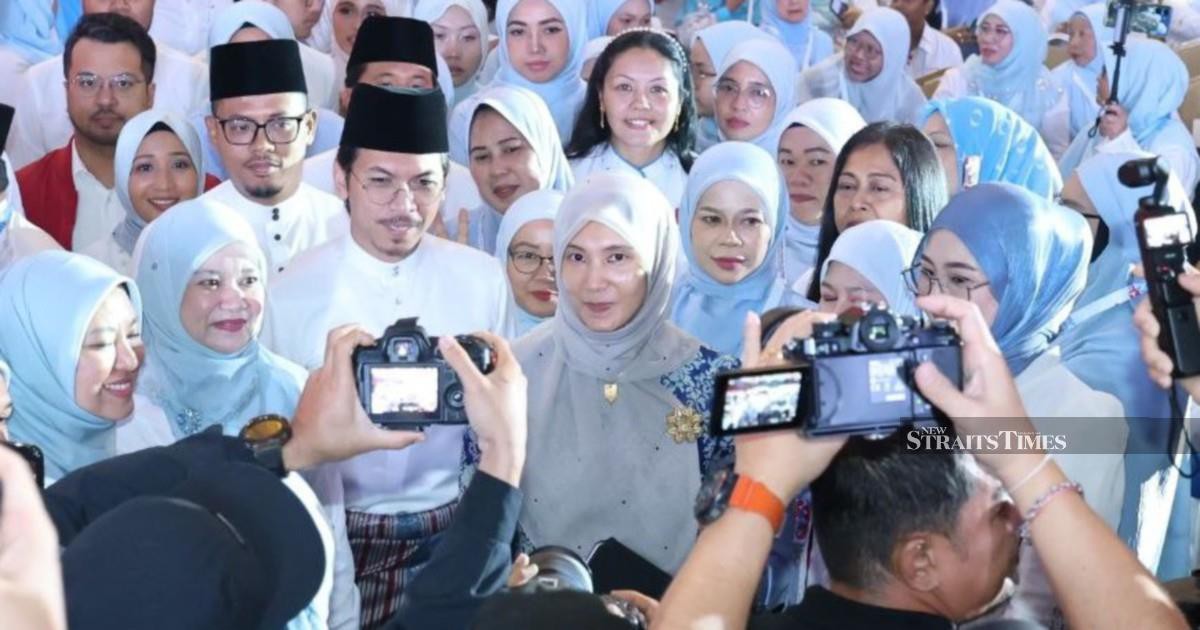
PKR deputy president Nurul Izzah Anwar has delivered a pointed message to party members: institutional fragmentation poses an existential threat to the party's political viability and must be actively countered through unified leadership and disciplined organizational culture.
Speaking at an event in Ayer Keroh, Anwar underscored the fundamental principle that political parties derive their strength from coherent structures and aligned decision-making processes. Her intervention reflects growing concerns within PKR about the emergence of distinct power networks that operate according to separate agendas, potentially undermining the party's capacity to function as a unified political force in increasingly competitive electoral environments.
The deputy president's warning addresses a long-standing vulnerability in Malaysian opposition politics: the tendency for charismatic personalities to cultivate personal followings that operate independently of formal party apparatus. This dynamic, while occasionally providing short-term tactical flexibility, ultimately corrodes institutional legitimacy and weakens party discipline at critical moments. For PKR specifically, such factionalism has historically complicated internal decision-making and created confusion among grassroots members about which leaders speak with genuine authority.
Anwar's intervention carries particular significance given PKR's trajectory since 2018. The party has attempted to position itself as Malaysia's primary progressive political vehicle, yet this ambition requires demonstrating organizational maturity and internal coherence that rival factions inevitably undermine. External observers and potential coalition partners scrutinize whether PKR can maintain organizational discipline across diverse membership bases spread across multiple states with distinct political dynamics and power structures.
The notion of a "party within a party" resonates powerfully in Malaysian politics, where personality-driven leadership and informal networks have repeatedly destabilized coalition governments. This phenomenon typically manifests as groups of parliamentarians or senior members operating according to unstated understandings that override formal party mechanisms. Such parallel structures create ambiguity about policy direction, resource allocation, and strategic priorities, ultimately rendering the parent organization less effective in opposition or governance roles.
PKR's diversity across different geographic and demographic constituencies has historically been both strength and vulnerability. While representing varied interests can broaden electoral appeal, it simultaneously creates numerous potential flashpoints where local power structures and personal loyalties might supersede party unity. Managing these tensions requires constant reinforcement of institutional values and transparent processes that prevent any individual or faction from monopolizing influence or resources.
The timing of Anwar's statement suggests she perceives current risks of organizational erosion that demand immediate clarification. Party leaders periodically issue such warnings when nascent factionalism threatens to crystallize into permanent organizational divisions, or when influential figures signal independence from collective decision-making. By framing the issue in terms of institutional survival rather than personal grievance, Anwar frames unity as fundamental to the party's political viability rather than merely a preference.
For Malaysian voters and analysts tracking opposition politics, this represents a critical test of whether PKR possesses the organizational maturity required for larger governance responsibilities. Opposition coalitions typically face dissolution when member parties cannot maintain internal discipline or when leaders pursue separate agendas using party machinery. PKR's ability to navigate these internal dynamics will directly influence its credibility as a potential governing partner and its competitive position against UMNO-led coalitions that, despite their own divisions, maintain stronger institutional hierarchies.
The institutional challenge Anwar identifies extends beyond personality clashes to fundamental questions about how PKR distributes power and resources, makes strategic decisions, and manages succession planning. Parties that permit competing centres of authority typically struggle with strategic coherence precisely when they need strongest unity—during electoral campaigns, coalition negotiations, or policy crises. PKR's regional variations mean that without strong central coordination, different state chapters might pursue divergent strategies that create national-level confusion.
Nurul Izzah's intervention also reflects her own positioning within PKR's leadership structure. As deputy president, she represents institutional continuity and formal authority structures, positioning herself implicitly against those who might exercise power through informal networks or personality-based followings. Her warning can thus be read simultaneously as institutional advice and as assertion that formal party mechanisms must be respected and strengthened against alternative power configurations.
The broader implication for Malaysia's political landscape involves whether opposition parties can demonstrate governance capability through organizational discipline. Voters increasingly expect political parties to function as coherent organizations with transparent decision-making rather than loose coalitions of personality-driven factions. PKR's response to factionalism tendencies will therefore carry weight beyond internal party matters, influencing voter perceptions of opposition fitness for government.
Moving forward, PKR faces the practical challenge of translating Anwar's warning into concrete institutional mechanisms that prevent factional consolidation while respecting diversity of opinion. This typically involves clarifying role boundaries between different leadership levels, establishing transparent resource allocation processes, and developing mechanisms for resolving internal disputes before they crystallize into organized factions with independent identities.

