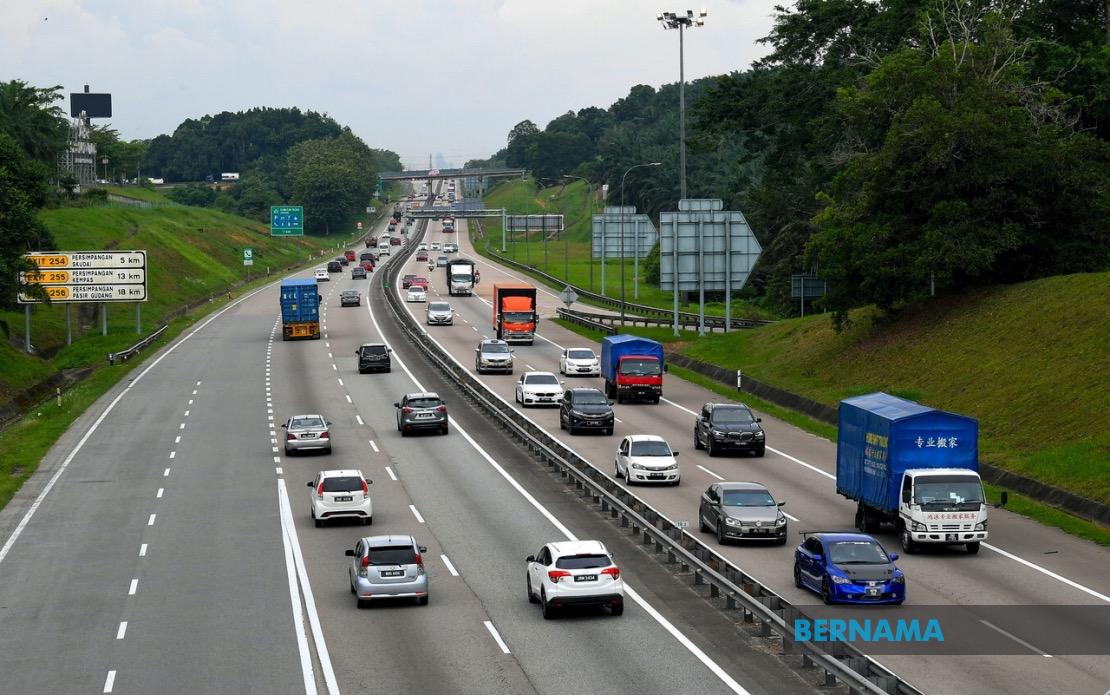
Malaysia's largest highway operator, PLUS Malaysia Berhad, is preparing for one of its busiest periods of the year as the country celebrates National Day alongside the start of school holidays. The company forecasts traffic volumes reaching 2.2 million vehicles per day during peak travel windows spanning August 28 to 31 and September 4 to 7, a significant increase from typical daily throughput. This dual-event convergence has prompted PLUS to mobilize comprehensive traffic management strategies across its extensive network, signalling the scale of preparation required to maintain highway efficiency during this high-demand period.
Recognizing that advance planning by motorists can substantially reduce congestion, PLUS has actively promoted its MyPLUS-TTA digital travel schedule feature available through the PLUS App. This tool provides real-time travel time recommendations, enabling drivers to stagger their journeys and avoid clustering during traditionally congested windows. By spreading demand across broader time windows rather than concentrating it during conventional peak hours, the system allows traffic to flow more smoothly across multiple sections simultaneously. The mechanism represents a shift toward data-driven traffic distribution, where technology replaces traditional assumptions about optimal departure times with personalized scheduling recommendations.
The PLUS App functionality extends well beyond journey timing advice. Motorists gain access to live traffic condition updates, enabling them to adjust routes dynamically based on developing bottlenecks. The application integrates emergency assistance features, providing rapid connection to SOS services for accident or breakdown situations. Toll rate estimation allows drivers to anticipate costs before committing to specific routes, while location services highlight rest and service areas alongside recently expanded electric vehicle charging infrastructure. This integrated information ecosystem aims to reduce travel uncertainty, a key factor that often prompts drivers to depart earlier than necessary, inadvertently amplifying congestion.
Operational readiness forms the backbone of PLUS's holiday strategy. The company has committed to substantially increasing personnel deployment across toll plazas and rest areas, ensuring adequate staffing for processing the predicted traffic surge. PLUSRonda patrol operations have been intensified to provide faster incident response, with mobile units positioned to rapidly clear accidents and breakdowns that might otherwise cascade into broader delays. The Traffic Monitoring Centre maintains continuous surveillance of network conditions, enabling real-time coordination among deployed personnel and partner agencies to contain disruptions before they metastasize into widespread gridlock.
A particularly significant tool in PLUS's congestion management arsenal involves Smart Lane activation at 33 strategically identified locations. These specialized lanes employ dynamic lane management, adjusting flow patterns in response to real-time traffic conditions. During periods of uneven demand across parallel lanes, Smart Lanes can be opened to provide additional capacity exactly where congestion threatens to develop. However, the system requires driver compliance; motorists must attentively monitor Smart Lane indicators and reduce speeds appropriately when utilizing these sections. Critically, PLUS warns against emergency lane misuse outside Smart Lane zones, where unauthorized lane occupancy constitutes a traffic violation subject to enforcement action.
The operational partnership orchestrating holiday traffic management extends beyond PLUS itself. The Royal Malaysia Police, Road Transport Department, Malaysian Highway Authority, and related government agencies coordinate with PLUS through established protocols designed to ensure rapid incident response. This inter-agency framework addresses situations exceeding PLUS's singular responsibility, such as criminal activity, vehicle defect enforcement, and structural highway hazards. The collaborative structure reflects recognition that highway safety and efficiency transcends any single operator's capacity, requiring coordinated government intervention.
Facility enhancement complements technological and personnel deployment. PLUS has upgraded maintenance standards at rest and service areas, prioritizing hygiene and comfort across bathrooms, prayer facilities, and general spaces. For Muslim travelers observing religious obligations, improved prayer area conditions acknowledge Malaysia's demographic composition and cultural needs. These facility improvements address a frequently overlooked dimension of highway travel experience; rest areas experiencing deteriorating conditions discourage usage, leading drivers to extend driving periods beyond safe fatigue thresholds. By prioritizing cleanliness and functionality, PLUS indirectly contributes to road safety by facilitating driver rest.
Pre-journey vehicle preparation represents another dimension of PLUS's advisory framework. The company explicitly reminds motorists to verify mechanical condition before departure, reducing the likelihood of breakdown-induced delays. Payment system maintenance similarly receives emphasis; drivers should confirm Touch 'n Go card balances, e-wallet sufficiency, and JustGO app payment linkage before highway entry. These preparatory reminders appear mundane but address common trip disruptions. A driver discovering depleted payment capacity at a toll plaza creates bottlenecks affecting hundreds of vehicles behind, illustrating how individual unpreparedness multiplies systemically.
Driving behavior receives sustained attention within PLUS's safety messaging. Adherence to posted speed limits, maintenance of appropriate following distances, and abstention from mobile phone usage represent conventional safety principles; however, their reiteration during peak holiday travel acknowledges increased enforcement likelihood and heightened accident risk during congested conditions. PLUS specifically emphasizes fatigue prevention, recommending rest area utilization before drowsiness compromises reaction time. This messaging reflects data indicating that fatigue-related accidents spike during extended holiday periods when drivers undertake longer-than-usual journeys while managing travel logistics and familial coordination.
For motorists experiencing difficulties, PLUS maintains PLUSLine at 180088-0000, providing real-time assistance for breakdowns, accidents, and navigation queries. The company simultaneously updates traffic information across its mobile application and official social media channels, ensuring information accessibility across varied technological preferences. This multi-channel information distribution recognizes that not all motorists possess equivalent digital literacy or device access; redundant information sources maximize the proportion of highway users receiving current traffic updates.
The convergence of National Day celebrations and school holidays creates a predictable yet challenging traffic management scenario. PLUS's comprehensive approach—integrating technology, personnel deployment, inter-agency coordination, facility enhancement, and behavioral messaging—demonstrates the institutional sophistication required to manage modern highway systems during extreme demand periods. For Malaysian motorists, awareness of these preparations and cooperation with PLUS recommendations directly contributes to improved travel experiences. The operator's proactive communication strategy aims to transform the holiday period from a period of inevitable congestion into a manageable traffic situation where technology and planning distribute demand more effectively than passive acceptance of gridlock.

