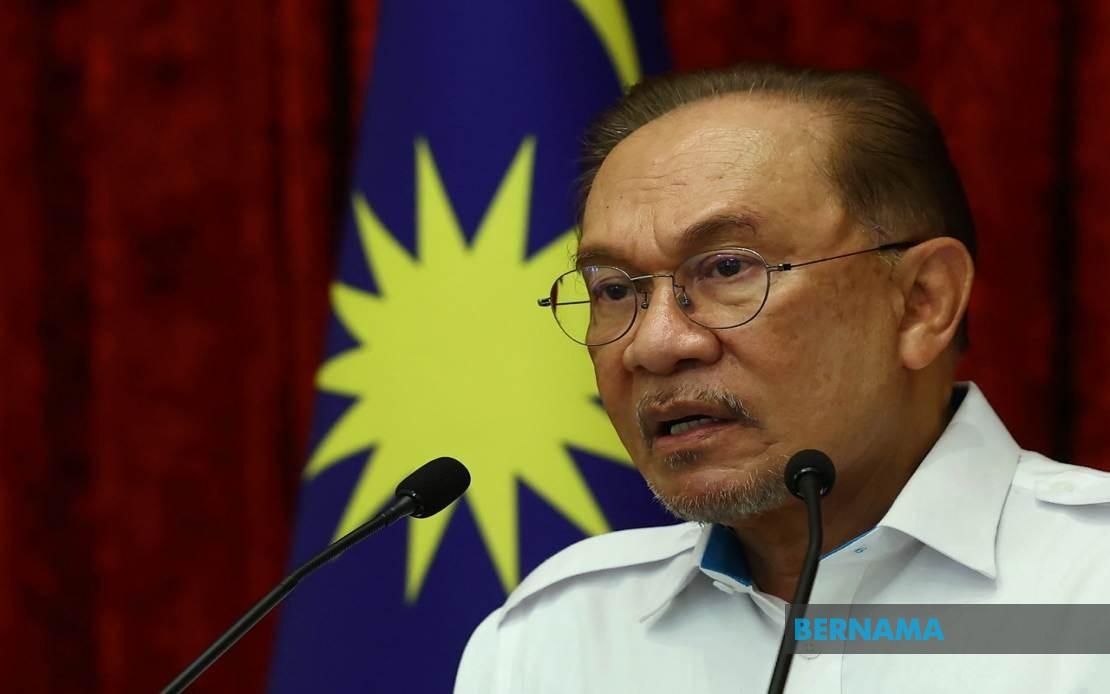
Prime Minister Datuk Seri Anwar Ibrahim has expressed regret at being unable to participate in today's special parliamentary session examining the findings of the Royal Commission of Inquiry into Tabung Haji, the mandatory pilgrimage fund that serves millions of Malaysian Muslims. Through his senior press secretary Tunku Nashrul Abaidah, the Prime Minister conveyed his hope that the debate would proceed without impediment and reiterated his commitment to safeguarding public confidence in this crucial institution despite his physical absence from the chamber.
The absence underscores the serious nature of the medical procedure the Prime Minister recently underwent. According to Datuk Dr Asri Ranga Abdullah Ramaiah, the head of his medical team, Anwar successfully completed an elective laparoscopic surgical intervention to address a para-umbilical hernia—a relatively common condition involving tissue protrusion near the navel. The minimally invasive approach typically allows for faster recovery compared to traditional open surgery, though it still requires a period of healing and supervised rehabilitation.
The timing of this surgical procedure coincides with a sensitive moment in Malaysia's political calendar. The RCI report on Tabung Haji has generated considerable public interest and concern, particularly given longstanding questions about the fund's governance and investment practices. The institution manages billions of ringgit entrusted by Malaysian Muslims preparing for or returning from the Hajj pilgrimage, making any inquiry into its operations a matter of significant national importance. Parliamentary scrutiny of the RCI findings represents an opportunity for lawmakers to examine the fund's stewardship and consider recommendations for strengthening oversight mechanisms.
Despite his hospitalization and recovery phase, the Prime Minister indicated through his office that he intends to remain closely engaged with the parliamentary debate. This commitment signals his personal investment in the outcome and his determination not to allow his temporary incapacity to diminish his oversight of major policy matters. The statement suggested that while physical presence may be impossible, monitoring the proceedings represents his way of ensuring that institutional safeguards remain robust and that the trust Malaysians have placed in Tabung Haji governance continues to receive appropriate attention.
Anwar's health condition, which prompted the medical procedure, has evidently required him to step back from his full schedule of duties. The Prime Minister's office confirmed that his condition is improving steadily, with his medical team continuing to supervise physiotherapy sessions designed to expedite recovery. At 79 years of age, as marked by his birthday yesterday, the pace of recovery and rehabilitation becomes particularly important both for the individual and for continuity of government leadership during what remains a complex political period.
The special parliamentary sitting itself represents an important institutional moment. The RCI's investigation into Tabung Haji followed years of debate about the fund's investment decisions, particularly regarding substantial losses incurred in previous years and questions about transparency in its operations. Members of Parliament use such sittings to interrogate official inquiries and place recommendations before government for consideration, making the debate a critical juncture in the accountability process. While the Prime Minister cannot be physically present to guide proceedings, his signal that he will monitor them closely suggests he remains engaged with the broader reform agenda affecting the institution.
The arrangement of parliamentary business around the Prime Minister's medical requirements reflects the practical realities of governing a nation while managing personal health challenges. Malaysia's constitutional framework provides for situations where the Prime Minister requires temporary absences, and parliamentary procedures accommodate such circumstances. The fact that the sitting proceeded despite Anwar's inability to attend demonstrates that institutional functions continue uninterrupted, though the Prime Minister's input during such critical debates is typically valued.
On a personal level, Anwar's statement included gratitude toward those who have offered prayers and well-wishes during this period. This acknowledgment carries particular resonance given Malaysia's Muslim-majority population and the cultural and spiritual dimensions of public wellbeing. The birthday greetings he received yesterday from supporters and well-wishers appear to have reinforced his resolve to maintain engagement with national matters even while prioritizing recovery.
The RCI report on Tabung Haji will now proceed through parliamentary examination without the Prime Minister's physical participation, yet with his commitment to remain informed and engaged. This situation encapsulates the broader challenge facing senior government figures: maintaining effective oversight of critical institutions and reform processes while attending to personal health needs. For Malaysian stakeholders interested in Tabung Haji's future governance and the implementation of RCI recommendations, today's debate represents a crucial opportunity to ensure parliamentary scrutiny occurs regardless of the Prime Minister's temporary absence from the chamber.
The coming weeks will likely reveal both the substance of parliamentary recommendations and the timeline for the Prime Minister's return to fuller duties. In the interim, his stated commitment to follow the debate closely suggests that while he cannot occupy his seat in the Dewan Rakyat today, his attention remains fixed on ensuring that this vital institution serving millions of Malaysian pilgrims receives the oversight and reform attention its importance demands.

