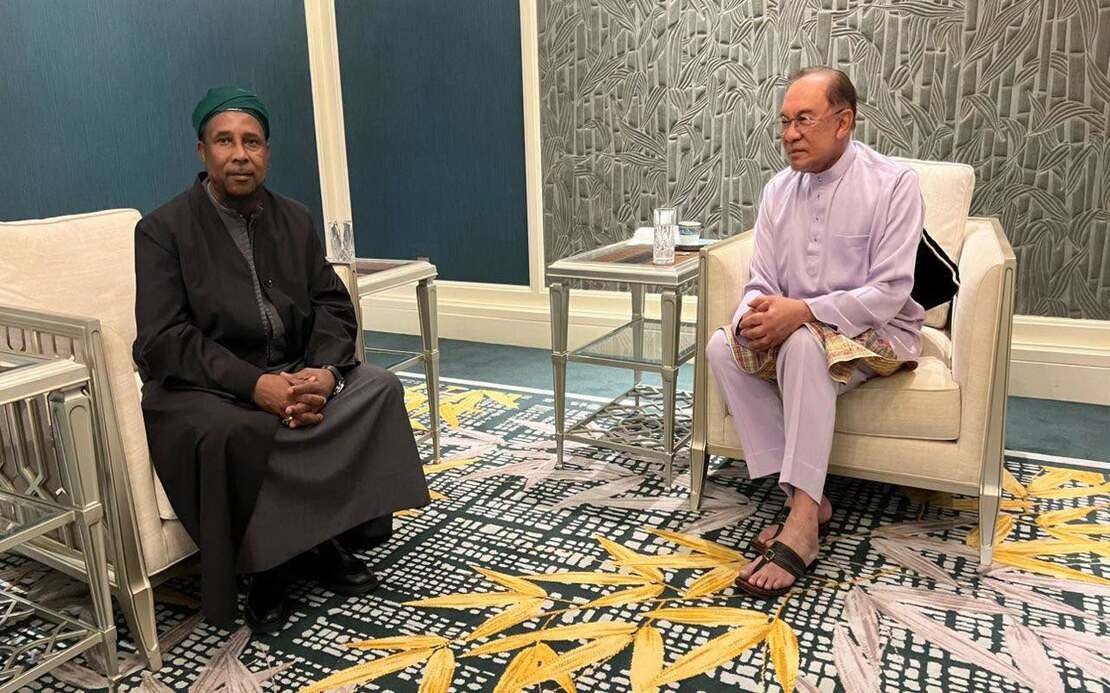
Prime Minister Datuk Seri Anwar Ibrahim concluded a significant religious and scholarly exchange on June 26 when he received Gambian Islamic scholar Sheikh Muhammad Haydara Al-Jilani at an official farewell meeting in Kuala Lumpur. The encounter marked the end of an intensive month-long visit during which the prominent cleric had traversed the country delivering lectures, conducting dhikr sessions, and facilitating knowledge exchanges with Malaysian Muslim communities and institutions.
The timing of the meeting held particular spiritual significance, as it occurred on the Day of Ashura, observed during the Islamic month of Muharram. This convergence of events allowed the Prime Minister to request the visiting scholar's special intercessions for the nation. According to Anwar's account shared on his official Facebook platform, the discussion centred on seeking blessings for Malaysia's continued development, internal stability, and divine protection over its diverse population.
Sheikh Muhammad Haydara's extended sojourn represents a deliberate engagement between Malaysia's leadership and international Islamic thought leaders. The Gambian scholar's itinerary encompassed multiple locations throughout the Malaysian peninsula and potentially beyond, suggesting a structured dakwah initiative aimed at enriching the country's Islamic educational and spiritual landscape. Such visits underscore the Malaysian government's commitment to fostering interfaith understanding and deepening connections within the global Muslim community.
The nature of the programmes conducted by Sheikh Muhammad Haydara—combining scholarly lectures with devotional dhikr gatherings—reflects a holistic approach to Islamic engagement that addresses both intellectual and spiritual dimensions of faith practice. These sessions likely attracted diverse audiences, from students and academics interested in Islamic jurisprudence and theology to practitioners seeking spiritual nourishment and community connection. The breadth of venues selected for these programmes suggests intentional efforts to reach audiences across different socioeconomic strata and geographic regions.
For Malaysia, hosting international Islamic scholars carries strategic importance beyond religious considerations. Such engagements enhance the country's reputation as a moderate, progressive Islamic nation capable of attracting intellectual discourse at the highest levels. They also reinforce Malaysia's position within global Islamic networks and demonstrate openness to diverse theological perspectives within orthodox Islam. Gambia's representation through Sheikh Muhammad Haydara strengthens ties between Malaysia and the West African Islamic tradition, contributing to South-South cooperation in religious and educational spheres.
Anwar's personal involvement in this farewell meeting underscores the significance accorded to such engagements at the highest governmental level. The Prime Minister's explicit mention of seeking prayers for national prosperity and peace reflects the integration of spiritual concerns within his administration's broader governance framework. This approach appeals to Malaysia's predominantly Muslim electorate while signalling respect for Islamic scholarship and traditional forms of religious authority.
The Day of Ashura context adds another layer of meaning to the proceedings. Commemorated with varying traditions across different Islamic schools, this day holds particular importance in the Islamic calendar and provides a symbolic backdrop for seeking collective blessings and renewal of spiritual commitments. The confluence of an international scholar's departure with this sacred date appears deliberately constructed to maximise the spiritual and symbolic value of the encounter.
Such scholarly exchange programmes serve multiple functions within Malaysia's soft power strategy. They position the country as a centre of Islamic learning and dialogue, attract international visitors interested in Muslim-majority nations with stable governance and multicultural frameworks, and contribute to the intellectual capital of local institutions through exposure to diverse Islamic intellectual traditions. The involvement of someone of Sheikh Muhammad Haydara's apparent standing suggests these were not peripheral activities but substantive engagements with serious educational content.
Looking forward, the impact of this month-long visit may extend well beyond the formal meetings and public programmes. Participants in the scholar's sessions will carry forward knowledge and spiritual experiences gained, potentially influencing their own teaching, writing, and community engagement. The relationships forged between international and Malaysian Islamic figures create networks that facilitate ongoing dialogue and cooperation. Future invitations, publications, and collaborations often emerge from such initial encounters.
The visit also illustrates Malaysia's pragmatic approach to religious engagement in an increasingly complex geopolitical environment. By welcoming respected international Islamic voices and creating platforms for their teachings, the government demonstrates confidence in Malaysia's Islamic institutions and theological frameworks. This openness contrasts sharply with more restrictive approaches and positions Malaysia as a destination for serious Islamic scholarship and interfaith dialogue. The prime ministerial reception accorded to Sheikh Muhammad Haydara signals institutional support for such initiatives at the highest levels.

