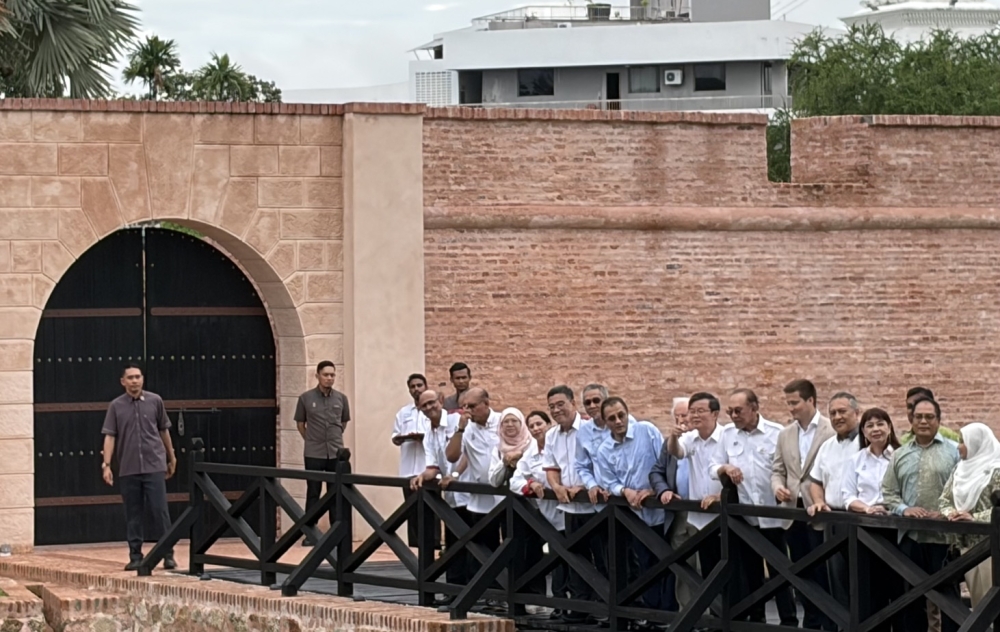
Prime Minister Datuk Seri Anwar Ibrahim has made a forceful case for fundamentally reconsidering how Malaysia understands and presents its own past, asserting that the country's established historical narrative requires substantial reconstruction. Speaking in George Town, Anwar suggested that Malaysia's collective memory of its development as a nation has been shaped by particular interpretations that may not fully encompass the contributions and experiences of all communities. His remarks reflect a growing recognition among policymakers that national histories are not fixed, unchangeable facts but rather evolving accounts that can be refined as new perspectives emerge and as societies mature in their understanding of their own complexity.
The Prime Minister's intervention into historical discourse carries particular weight given Malaysia's multicultural fabric and the sensitivities surrounding how different communities view pivotal moments in the nation's formation and early independence. Anwar's suggestion that reconstruction is necessary indicates an acknowledgment that Malaysia's current historical framework may have gaps or emphases that warrant reconsideration. This is not a unique position globally—many nations have undertaken similar exercises to incorporate previously marginalized voices or to correct factual inaccuracies—but it represents a significant statement from Malaysia's political leadership at a time when questions of national identity and unity remain contested.
The concept of reconstructing national history raises complex questions about who determines what constitutes an accurate historical record and what standards should guide such work. In Malaysia's context, this touches on fundamental matters including the role of various communities in nation-building, the accuracy of accounts surrounding independence negotiations, the development of the social contract embedded in the Federal Constitution, and the treatment of indigenous perspectives on territory and sovereignty. Any serious historical reconstruction would need to engage with archival research, scholarly expertise, and genuine consultation across communities rather than imposing a predetermined narrative.
Anwar's comments also arrive amid ongoing debates in Malaysia about education and curriculum, where history textbooks remain a crucial vehicle for transmitting national understanding to younger generations. If the government moves toward reconstructing historical narratives, questions will inevitably arise about how these changes would be reflected in schools, universities, and public discourse. The implications for how Malaysian students learn about their nation's past could be substantial, particularly if the process results in greater representation of diverse perspectives that have previously received less emphasis in mainstream accounts.
The timing of Anwar's remarks suggests an administration willing to engage with difficult historical questions as part of a broader project of national renewal and reconciliation. His framing positions historical reconstruction not as a challenge to national cohesion but rather as a necessary step toward achieving it—the argument being that a more honest and inclusive understanding of the past could strengthen rather than weaken Malaysian unity. This represents a different approach from historical narratives that treat the established account as beyond question or revision.
Regionally, Malaysia's approach to historical reconstruction carries implications beyond its borders. Southeast Asia has seen other nations grapple with similar questions about how to present contested histories in ways that promote national healing and forward progress. Thailand's experiences with sensitive historical questions, Indonesia's treatment of the transition from Suharto's era, and Myanmar's ongoing struggles with historical memory all offer lessons about the possibilities and pitfalls of revisiting national narratives. Malaysia's approach could influence how other ASEAN nations consider their own historical accounts.
The practical implementation of historical reconstruction would require establishing credible mechanisms for determining which aspects of the current narrative require revision. Academic institutions, heritage organizations, and diverse community representatives would likely need to participate meaningfully in such a process. The work would be lengthy and sometimes contentious, as different groups may have divergent views about what corrections or additions are most important. Ensuring that such a process remains grounded in evidence and scholarly standards rather than serving narrow political interests will be crucial to its success and legitimacy.
Anwar's advocacy for historical reconstruction also connects to broader questions about how Malaysia positions itself internationally and how it understands its role in regional and global contexts. A nation confident in its historical understanding, even one that acknowledges complexity and diversity, projects stability and thoughtfulness. Conversely, if historical questions remain unresolved or feel artificially constrained, they can fester as sources of tension. By addressing historical narratives proactively, Anwar appears to be signaling that Malaysia under his leadership is willing to engage with difficult questions rather than avoid them.
For Malaysian civil society, academics, and intellectuals, Anwar's comments may open space for more candid discussions about historical interpretation that might previously have felt constrained. Museum curators, university researchers, and cultural organizations could be emboldened to present more nuanced accounts if they perceive political space for doing so. However, they will likely remain attentive to the fine line between offering fresh perspectives and straying into territory that provokes backlash from those invested in established narratives.
The challenges ahead for any serious historical reconstruction effort are substantial. Malaysia's diversity means that different communities may prioritize different historical episodes or interpret shared events through distinct lenses. Translating broad political statements about reconstruction into specific scholarly and pedagogical changes requires sustained commitment and resources. Moreover, historical work that touches on sensitive communal issues demands careful handling to prevent misuse for divisive purposes. Yet the recognition that reconstruction is needed, particularly from the nation's highest leadership, represents an important acknowledgment that Malaysia's historical self-understanding is not settled and can evolve as the country matures.

