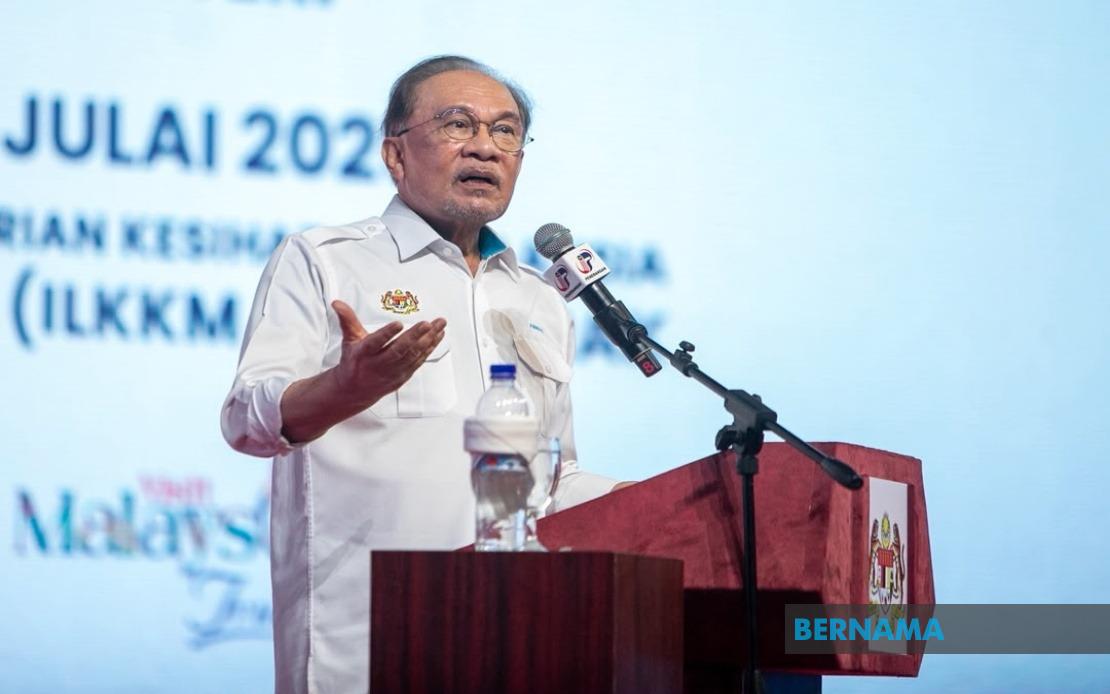
Prime Minister Datuk Seri Anwar Ibrahim has appealed to Malaysia's younger generation to develop a deeper appreciation for the country's independence heritage and recognise the profound sacrifices made by previous generations of freedom fighters. His remarks came during the official launch of the 2026 National Month and Fly the Jalur Gemilang Campaign in Ipoh, where he underscored the significance of understanding what independence truly means beyond mere celebration.
Anwar's message centred on bridging the gap between contemporary Malaysian youth and the historical realities that shaped the nation. He emphasised that the struggle for independence demanded enormous personal costs from those who fought for it, involving years of hardship, bloodshed, and unwavering commitment to a vision of a free Malaysia. By connecting younger citizens to this legacy, the Prime Minister sought to foster a sense of responsibility and gratitude for the freedoms and opportunities available today.
The Prime Minister articulated a three-part approach to reinvigorating national consciousness among Malaysians. First, he stressed the necessity of revisiting historical records and narratives that document the independence movement, ensuring that future generations possess accurate knowledge of how Malaysia achieved sovereignty. Second, he linked this historical awareness to contemporary patriotic expression through the symbolic act of flying the national flag, positioning Jalur Gemilang not merely as a decorative emblem but as a tangible representation of national unity and shared identity. Third, he called for forward momentum, urging Malaysians to leverage this historical understanding to build an even stronger and more prosperous future.
Anwar's comments reflect broader concerns within Malaysia's political leadership about generational disconnect from national history. As demographics shift and fewer citizens possess direct memories of the colonial period or immediate post-independence era, government officials increasingly worry that younger Malaysians may take their freedoms for granted without comprehending the immense struggles required to secure them. This anxiety is not unique to Malaysia; many nations with relatively recent independence experiences grapple with similar challenges in transmitting historical memory across generations.
The emphasis on blood, sweat and tears served as a rhetorical device to convey the totality of sacrifice involved in the independence struggle. The Prime Minister's language deliberately evoked emotional resonance, moving beyond abstract historical facts to highlight the personal and collective suffering endured by independence fighters and their families. This approach recognises that younger Malaysians may respond more effectively to narratives that humanise history rather than present it as a series of dates and institutional developments.
The campaign launch itself represents an official initiative to institutionalise national pride and historical awareness. By designating 2026 as a focal point for renewed emphasis on independence, the government signals its commitment to making national identity a central concern in public discourse. The timing of such initiatives often corresponds with milestone anniversaries or moments when political leaders perceive a need to strengthen social cohesion and national unity.
Several senior government officials participated in the Ipoh launch, including Communications Minister Datuk Seri Fahmi Fadzil, National Unity Minister Datuk Aaron Ago Dagang, and Perak Menteri Besar Datuk Seri Saarani Mohamad. This multi-ministerial attendance underscores the whole-of-government approach to promoting national consciousness, suggesting that historical education and patriotic sentiment are treated as interconnected components of broader governance objectives.
For Malaysian readers, the Prime Minister's message carries implications for how national identity is constructed and transmitted in schools, media, and public discourse. Educational curricula, in particular, play a crucial role in determining whether younger Malaysians develop genuine understanding of independence history or merely retain superficial knowledge suitable for examinations. The government's emphasis on appreciation rather than mere celebration suggests a recognition that passive flag-waving, without contextual knowledge, fails to achieve the deeper objective of fostering engaged citizenship.
The regional context adds another dimension to these concerns. Across Southeast Asia, post-independence nations face similar challenges in maintaining robust connections to founding narratives while navigating contemporary globalisation and rapid social change. Malaysia's approach, emphasising historical consciousness as a foundation for future development, mirrors strategies employed by neighbouring countries seeking to balance modernisation with traditional values and national pride.
Anwar's exhortation to address the younger generation directly, referring to them as children and appealing to their sense of responsibility, adopts a familial and mentoring tone. This approach acknowledges that generational transmission of values requires not merely institutional effort but also personal connection between leaders and youth, creating spaces where younger Malaysians feel genuinely heard and valued within national conversations about identity and purpose.
The integration of flag-flying as a symbolic practice alongside historical education reflects a recognition that national consciousness operates across multiple registers—intellectual, emotional, and performative. By linking the Jalur Gemilang to broader themes of unity and sacrifice, government messaging positions patriotic expression as a meaningful activity rooted in historical understanding rather than hollow ritualism.
Moving forward, the success of initiatives like the 2026 National Month campaign will likely depend on whether accompanying educational materials, media coverage, and public programming substantively engage younger Malaysians with independence history. Generic appeals to appreciation, without specific information about independence fighters, key events, and contemporary relevance, risk failing to bridge the generational gap that officials seek to narrow.

