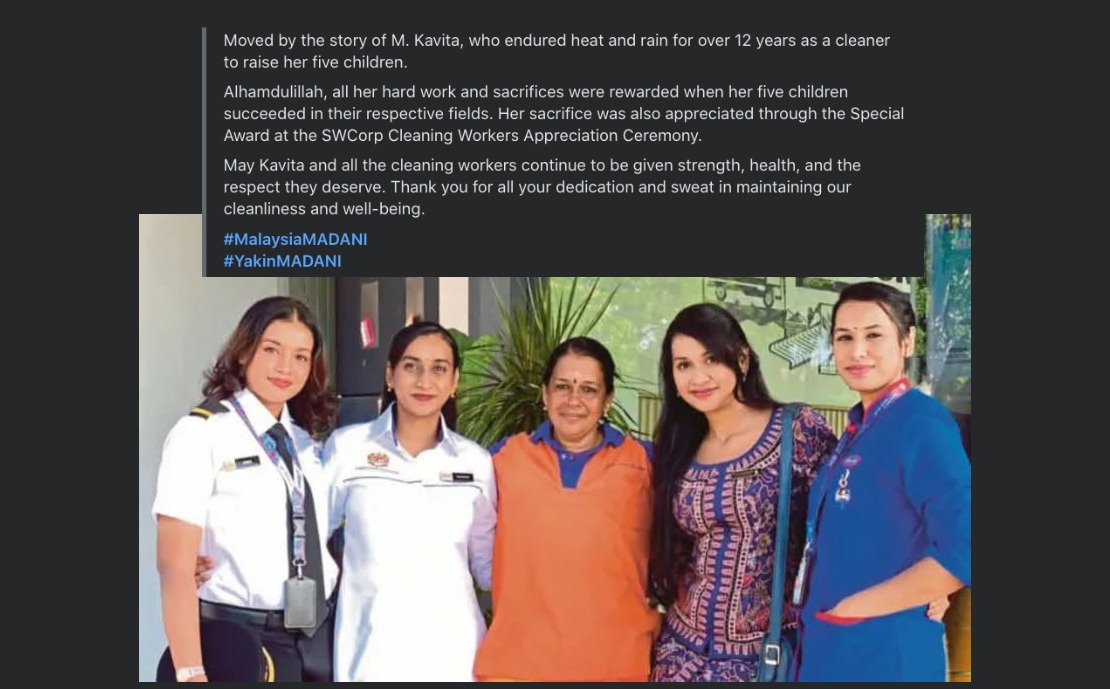
Prime Minister Datuk Seri Anwar Ibrahim has paid public tribute to M. Kavita, a street sweeper whose determination to build a better future for her family despite working in difficult conditions has become an inspiration across Malaysia. In a heartfelt Facebook post, Anwar acknowledged the 12-plus years Kavita invested in her work as a cleaning professional, juggling the physical demands of her job with the responsibility of nurturing five children, all of whom have now achieved success in their chosen careers.
The Prime Minister's recognition comes at a moment when society increasingly overlooks the contribution of essential workers who maintain public cleanliness and health. Anwar's tribute serves as a reminder of the crucial role these workers play in preserving the sanitation and wellbeing of communities across the nation. His words extended beyond Kavita to encompass all cleaning and sanitation workers, emphasising their deserving status in society and calling for continued appreciation of their relentless labour.
Kavita's story gained widespread attention on social media following an emotional celebration last month when her four daughters surprised her at her workplace to mark her 50th birthday. The moment became particularly poignant when the daughters revealed themselves in their professional uniforms, representing their respective occupations as a pilot, cabin crew member, and staff nurse. This public display of familial pride and achievement resonated powerfully with Malaysians, highlighting how parental dedication can translate into tangible success for the next generation.
The recognition extended beyond the Prime Minister's acknowledgement when Kavita received a Special Award at SWCorp's Cleaning Workers' Day Appreciation ceremony, further validating her contributions and those of her colleagues in the sanitation sector. This official recognition by a government-linked entity underscores growing efforts to elevate the status of blue-collar workers in the national consciousness, moving beyond token gestures toward substantive appreciation.
Kavita's journey as an SWM Environment employee in Seremban exemplifies the reality faced by countless Malaysian workers who maintain essential services while operating on limited financial resources. Her ability to support five children through secondary and tertiary education, enabling them to pursue professional careers, demonstrates financial prudence, determination, and an unwavering commitment to breaking cycles of poverty. This achievement becomes even more remarkable when considering the additional burden of performing physically demanding work in Malaysia's tropical climate, where sanitation workers often labour in heat, humidity, and sometimes hazardous conditions.
The viral nature of Kavita's story on social media reveals how Malaysians, despite the nation's development trajectory, retain strong values around family responsibility and filial piety. The emotional response to her daughters' surprise birthday gesture suggests that many citizens recognise and empathise with the sacrifices required to navigate upward mobility in a developing economy. Such stories provide valuable counter-narratives to prevailing discourse around privilege and inherited advantage.
From a policy perspective, Anwar's public acknowledgement of Kavita raises questions about labour conditions, wages, and benefits for Malaysia's cleaning and sanitation workforce. While emotional recognition holds value, sustained improvement in this sector requires attention to compensation structures, occupational safety, and career development pathways. The Prime Minister's tribute implicitly suggests government commitment to improving the standing of these workers, though practical implementation through legislative and administrative measures remains crucial.
The achievement also reflects broader patterns in Malaysian society regarding social mobility and educational advancement. Kavita's daughters' progression into professional fields traditionally associated with higher socioeconomic status demonstrates that educational attainment and career success remain accessible pathways for determined families, even those facing significant economic constraints. However, this positive narrative should not obscure systemic challenges that make such achievements remarkable rather than routine for children of workers in low-income sectors.
Anwar's tribute carries additional significance given Malaysia's ongoing dialogue about social inequality and inclusive development. By elevating Kavita's story within political discourse, the Prime Minister signals recognition that national progress encompasses not only macroeconomic indicators but also the lived experiences and achievements of ordinary citizens. Such visibility can potentially influence public attitudes toward sanitation and cleaning workers, traditionally regarded as among society's least visible professionals despite their indispensable role.
The emphasis on strength, health, and deserved respect in Anwar's message addresses intangible aspects of worker wellbeing often neglected in policy discussions. Physical demands of sanitation work, exposure to health hazards, and social stigma associated with manual labour present genuine challenges that formal recognition alone cannot resolve. Yet public acknowledgement from the nation's highest office may contribute to gradual shifts in how such workers perceive their social standing and dignity within the broader community.

