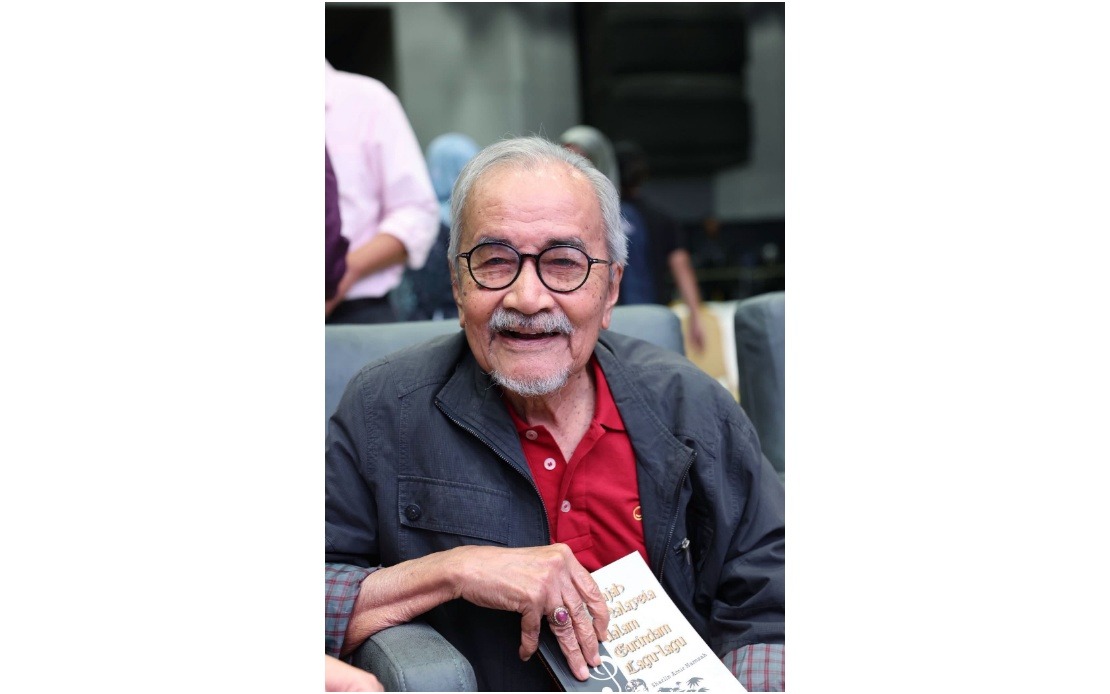
Prime Minister Datuk Seri Anwar Ibrahim has paid public tribute to Datuk Rahim Razali, the acclaimed Malaysian filmmaker and cultural luminary, on his 87th birthday today, underscoring the veteran entertainer's outsized influence on the country's creative industries. Through a social media message, Anwar characterised Rahim as a foundational figure whose artistic legacy continues to shape how Malaysia's cultural narrative unfolds, both domestically and internationally.
Rahim Razali's career spans more than six decades of prolific work across multiple creative disciplines. Born on July 3, 1939 in Batu Gajah, Perak, he has established himself as a multifaceted creative professional, working as an actor, film director, scriptwriter, sports journalist, and broadcaster. This breadth of experience reflects the versatility demanded of artists during Malaysia's earlier decades, when the entertainment industry was smaller and creators often wore many professional hats simultaneously.
The Prime Minister's tribute emphasised Rahim's particular strength in crafting narratives that engage with fundamental human concerns—examining values, preserving cultural memory, and reinforcing national identity through storytelling. Anwar specifically noted that Rahim's filmography showcases timeless works that resonate across generational boundaries, a quality that distinguishes enduring art from ephemeral entertainment. This thematic consistency has allowed Rahim's output to remain relevant even as Malaysian society has modernised considerably since the 1960s.
Among Rahim's most celebrated directorial efforts is Matinya Seorang Patriot, a film that exemplifies his interest in exploring patriotism and sacrifice through the lens of individual human experience. The film's central concern with mortality and duty reflects Rahim's broader artistic preoccupation with the intersection between personal conscience and collective responsibility—themes that held particular resonance during Malaysia's post-independence period and continue to merit artistic examination today.
Rahim's achievements have been formally recognised by the Malaysian film industry itself. He has received multiple accolades at the Malaysian Film Festival, including Best Director and Best Male Actor awards, honours that validate his contributions across both creative and interpretive dimensions. These recognitions place him among Malaysia's most decorated film professionals, a status that reflects both technical excellence and the cultural significance attributed to his work by peers and critics.
The Prime Minister's public acknowledgement of Rahim's milestone birthday serves a broader symbolic function beyond mere courtesy. Official recognition of veteran cultural figures by political leadership reinforces the state's commitment to valuing artistic contributions to national development and identity formation. In Malaysia's context, where cultural production has frequently been instrumentalised for nation-building purposes, honouring figures like Rahim affirms the legitimacy of culture work as a serious and necessary dimension of national life.
Rahim Razali's longevity in a notoriously competitive and economically precarious industry is itself noteworthy. Few entertainment professionals sustain creative careers spanning more than sixty years, and fewer still maintain the critical and cultural respect that Rahim has commanded. His persistence through various technological and commercial transformations in cinema and broadcasting—from the early days of Malaysian film production through the emergence of television and digital platforms—demonstrates both professional adaptability and enduring artistic credibility.
Anwar's prayer for Rahim's continued good health and strength carries particular weight given the advanced age at which many artists face declining creative capacity. The Prime Minister's explicit wish that Rahim continue contributing to national cultural life suggests an understanding that the veteran filmmaker's work remains valued and relevant, rather than consigned to historical archives. This framing encourages current and future generations of Malaysian artists to view longevity and sustained engagement as worthy aspirations.
The tribute also implicitly acknowledges the role of Malaysian cinema and the broader arts in international cultural exchange. Films exploring national identity, human values, and historical consciousness serve diplomatic functions, communicating Malaysian perspectives and sensibilities to global audiences. Rahim's international festival participation and recognition have positioned Malaysian cinema on the global stage during periods when the country's cultural export capacity was less developed than today's media infrastructure allows.
For younger Malaysian filmmakers and artists currently navigating an industry transformed by digital technology and streaming platforms, Rahim Razali represents a continuity of artistic purpose across technological disruption. His career demonstrates that thematic depth and commitment to meaningful storytelling endure regardless of the technical apparatus through which audiences access creative work. This continuity matters particularly in Southeast Asia, where questions of cultural preservation, national identity, and artistic autonomy remain contested in the context of globalisation.
Rahim's example also underscores the value of creative professionals who resist narrow specialisation, instead developing sophisticated understanding across multiple disciplines. His background in journalism informed his screenwriting; his directorial expertise deepened his performances as an actor; his broadcasters' instinct for audience communication shaped his narrative structures. This integrative approach to cultural work contrasts with increasingly compartmentalised creative industries where specialists rarely venture beyond designated domains.
As Malaysia continues developing its creative economy as a strategic national priority, figures like Rahim Razali offer both inspiration and instructive precedent. His career emerged during periods of economic constraint and limited infrastructure, yet produced works of enduring cultural significance. Contemporary Malaysian artists benefit from vastly superior technical resources, larger markets, and greater institutional support—conditions that should theoretically enable even more substantial contributions to global culture. Rahim's example suggests that such infrastructure matters less than artistic vision, intellectual rigour, and sustained commitment to meaningful expression.

