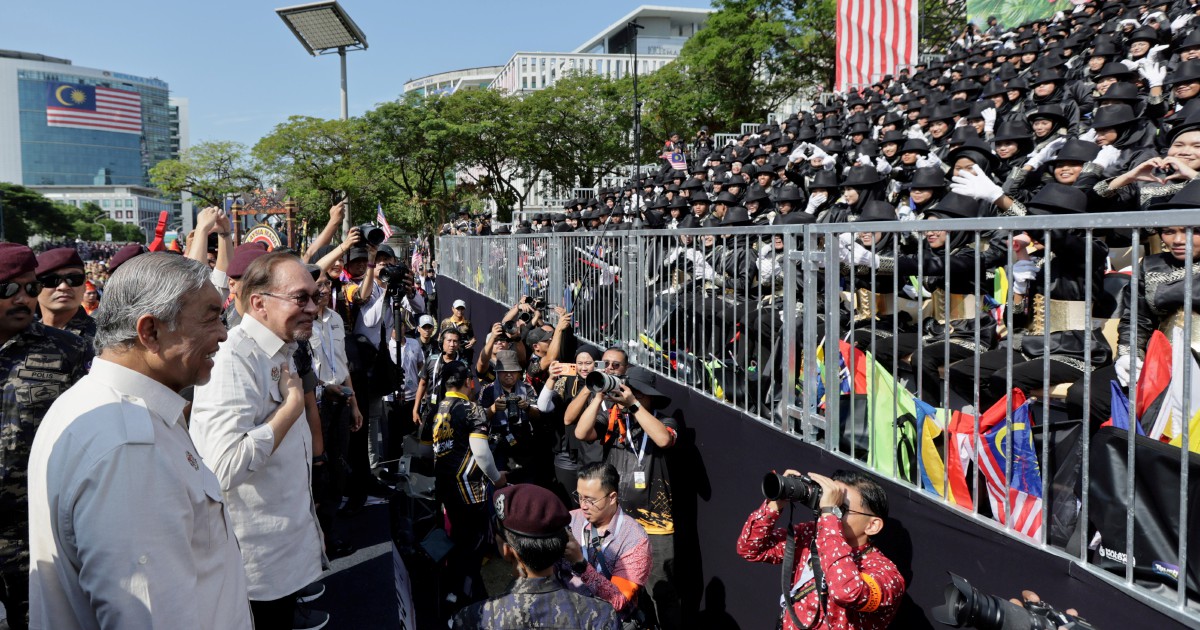
Prime Minister Datuk Seri Anwar Ibrahim stepped away from the formal ceremonies of Malaysia's National Day celebrations to engage directly with gathered crowds at Dataran Putrajaya, creating informal moments that reflected his commitment to public engagement. The spontaneous walkabout saw the premier pausing frequently to exchange greetings and embrace children who had lined up to observe the parade festivities, transforming what could have been a purely ceremonial occasion into a more personal interaction with ordinary Malaysians.
The interaction highlighted an approach to political engagement that emphasises accessibility and human connection. By deviating from the typical protocol associated with state functions, Anwar demonstrated willingness to step beyond the formal arrangements and orchestrated elements of official ceremonies. This style of public connection has become increasingly significant in modern political communications, where audiences expect leaders to move beyond scripted appearances and demonstrate genuine rapport with citizens across different backgrounds and age groups.
For the children present at the parade, the opportunity to meet the Prime Minister directly represented a memorable moment in their civic experience. Such encounters shape how younger generations perceive their relationship with government and national leadership. The informal nature of these interactions—characterised by embraces rather than ceremonial handshakes—conveyed a sense of approachability that can influence public perception of political institutions and the individuals who lead them.
The National Day parade at Dataran Putrajaya serves as one of Malaysia's most significant annual civic events, bringing together citizens from diverse communities to celebrate national identity and unity. The prime minister's active participation in both the formal proceedings and the subsequent public engagement underscores the importance national leadership places on marking this occasion. Such events provide opportunities to reinforce messages of national cohesion and shared values, particularly following periods when public attention may have focused on divisive political or social issues.
Public walkabouts following major state functions have evolved into important components of political communication strategies across democratic systems. They allow leaders to demonstrate responsiveness to citizens and create visual narratives of connection that resonate with broader audiences. In Malaysia's context, where diverse populations inhabit urban centres and regional areas, such moments of visible interaction help bridge the perceived distance between federal government institutions and ordinary people navigating their daily lives far removed from Putrajaya's corridors of power.
The warm reception Anwar received during his walkabout reflects broader sentiment toward his tenure as Prime Minister. Since assuming office in November 2022, he has navigated a complex political landscape while attempting to stabilise Malaysia's economy and address accumulated governance challenges. Public interactions such as this one serve multiple purposes—they provide opportunities to gauge grassroots sentiment, generate positive media coverage, and demonstrate that despite holding one of Southeast Asia's most demanding political positions, the premier remains connected to the concerns and experiences of ordinary citizens.
Engagement with children during such events carries particular symbolic weight. Young Malaysians represent the future electorate and the generation that will inherit the consequences of contemporary policy decisions. By prioritising interaction with children, leaders signal commitment to the future orientation of their governance agenda. These encounters also generate family-focused narratives that tend to resonate broadly across different demographic segments when covered in media reporting.
The Dataran Putrajaya location itself carries significance as Malaysia's administrative heart. Located in the purpose-built federal territory, the plaza has hosted major national ceremonies and public gatherings since its development in the 1990s. The choice of venue for National Day celebrations underscores the connection between national identity celebrations and the physical spaces where government operates, creating a geographical anchor for civic consciousness and national pride.
Such public moments also provide insight into leadership personality and communication style. The frequency with which Anwar has engaged in visible public interactions suggests a deliberate strategy to maintain high public profile and demonstrate active governance. In an era where political communication occurs simultaneously through traditional media, social media platforms, and direct public encounters, maintaining multiple channels of engagement has become essential for leaders seeking to shape their political narrative and maintain public support during periods of policy implementation or political challenge.
The spontaneity attributed to Anwar's walkabout—whether genuinely unplanned or carefully orchestrated to appear organic—reflects understanding of contemporary public expectations. Citizens increasingly value authenticity and unscripted moments, viewing them as more genuine than formal ceremonial interactions. Political leadership must therefore balance the requirements of state protocol and formal dignity with the imperative to demonstrate accessible, relatable personas that resonate with modern electorate expectations.
Looking forward, such interactions between national leadership and the broader public remain crucial components of Malaysia's political culture. They provide opportunities to reinforce national unity messaging, particularly important in a multi-ethnic, multi-religious society where inclusive symbols and visible representation matter significantly. The National Day celebrations themselves serve as annual moments to refresh these connections and remind citizens of the common civic values that transcend ethnic, religious, and regional boundaries.
For observers of Malaysian politics, these informal public engagements offer windows into how contemporary leaders navigate the space between formal state functions and the expectations of accessible governance. They demonstrate that even in constitutional monarchies with structured state ceremonies, there remains significant room for political leaders to create memorable encounters that humanise office-holding and build political capital through direct public connection.

