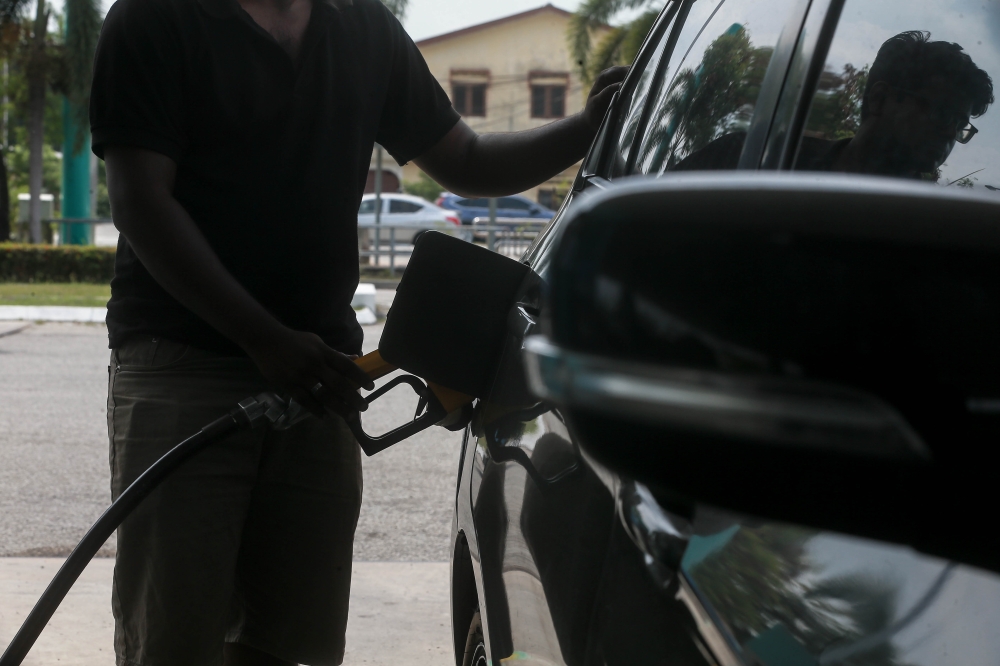
Prime Minister Datuk Seri Anwar Ibrahim has pushed back against criticism of the government's revised fuel subsidy scheme, asserting that a 200-litre monthly allocation of BUDI95 petrol is sufficient for the majority of Malaysian drivers. The premier's defence of the reduced quota comes as the fuel subsidy programme faces scrutiny from stakeholders questioning whether the cap adequately addresses the needs of regular commuters and commercial vehicle operators.
Anwar's rationale rests on consumption data suggesting that typical Malaysian drivers utilise approximately 100 litres of RON95 fuel monthly, effectively leaving headroom within the allocated ceiling. The prime minister's statement tacitly acknowledges that the government has restructured its approach to fuel subsidies, moving from a blanket subsidy model toward a more targeted system designed to balance fiscal sustainability with relief for ordinary Malaysians. This represents a recalibration of the nation's energy support strategy amid persistent inflation and budgetary pressures.
The BUDI95 initiative represents the government's effort to provide subsidised fuel access while constraining the fiscal burden of universal price controls. By implementing a monthly quota rather than unrestricted access, policymakers aim to direct limited resources toward regular consumers whilst limiting potential abuse or hoarding. The 200-litre threshold effectively translates to roughly five litres daily per vehicle, a figure administrators argue accommodates typical urban and suburban commuting patterns.
Malaysian families relying on personal transport for daily mobility—including journeys to workplaces, educational institutions, and essential services—form the intended beneficiary class. For these households, the quota should theoretically prevent dramatic inflationary shocks from global crude oil price fluctuations, which have periodically strained household budgets across the region. The subsidy programme thus functions as a stabiliser for middle and lower-income groups most vulnerable to energy cost volatility.
However, the policy distinction between average consumption and peak-demand periods warrants consideration. Commercial operators, long-distance commuters, and drivers in rural areas with limited public transport options may find the constraint binding during months of elevated fuel requirements. Urban professionals operating multiple vehicles or families with several cars would collectively exceed the per-vehicle threshold. These constituencies may experience the quota system as insufficiently generous, creating potential political friction.
The government's approach also reflects regional trends across Southeast Asia, where fuel subsidy programmes have evolved toward greater targeting and efficiency metrics. Countries including Indonesia and the Philippines have similarly implemented tiered subsidies or consumption caps to manage fiscal deficits whilst maintaining affordability. Malaysia's BUDI95 structure aligns with this broader regional pattern, suggesting coordinated policymaking responses to shared macroeconomic pressures.
Anwar's public defence of the quota underscores the political sensitivity surrounding fuel pricing in Malaysia, where energy costs directly influence transportation, food, and goods distribution throughout the economy. Any perception that subsidies inadequately serve ordinary citizens risks mobilising voter dissatisfaction, particularly among price-sensitive households. The prime minister's data-driven justification attempts to anchor the policy debate in empirical consumption patterns rather than political rhetoric.
Looking forward, the sustainability of the BUDI95 programme depends partly on global crude prices and ringgit strength against major currencies. Should international petroleum markets experience significant upheaval, the subsidy's fiscal cost could escalate, potentially necessitating further adjustments to quotas or eligibility criteria. Conversely, stabilised energy markets might enable modest quota increases or expanded beneficiary coverage without straining government finances.
The policy also carries implications for fuel retailers and distribution networks, which must implement administrative systems to monitor consumption patterns and enforce quota compliance. Petrol station operators and fuel card management systems require technological upgrades to track usage accurately and prevent quota circumvention. These implementation costs, whilst distributed across the sector, represent a tangible expenditure not always visible to consumers.
Beyond immediate fiscal considerations, the BUDI95 framework signals the government's commitment to protecting household purchasing power whilst gradually transitioning Malaysian consumers toward energy efficiency awareness. By constraining subsidised access, policymakers indirectly encourage fuel-conscious vehicle selection and driving behaviour, potentially supporting longer-term sustainability objectives. This implicit incentive structure reflects modern subsidy design that attempts to balance affordability with efficiency promotion.
Stakeholder responses will likely vary significantly across demographic groups and geographic regions, with urban commuters potentially more satisfied than rural or commercial users. Transport sector representatives, including taxi operators and logistics companies, may continue advocating for quota adjustments. The government faces an ongoing balancing act between fiscal responsibility and political acceptability, with the 200-litre threshold representing a pragmatic compromise rather than a permanent settlement of Malaysian fuel subsidy policy.

