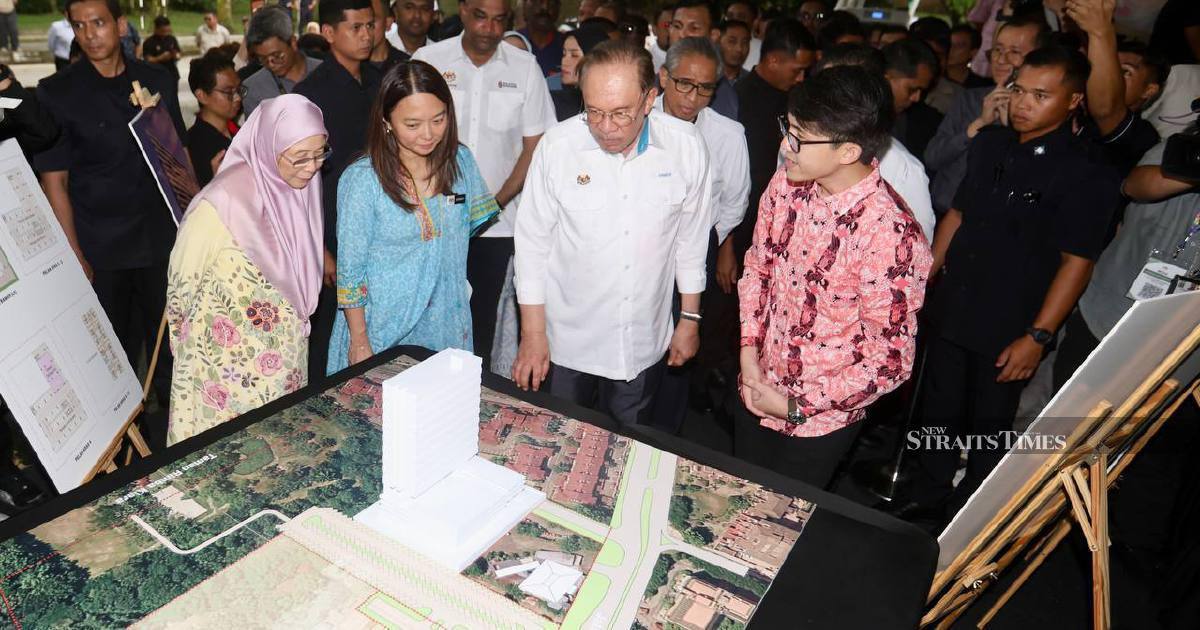
Prime Minister Datuk Seri Anwar Ibrahim has moved to rebut criticism that the government is neglecting the urban poor, emphasizing that development initiatives like the Bukit Kiara project demonstrate a genuine commitment to safeguarding the interests of Malaysia's most vulnerable city dwellers.
The housing and development initiative at Bukit Kiara serves as a centrepiece of the government's argument that it has not turned its back on low-income urban residents seeking stable homes and improved living conditions. Rather than treating the concerns of the poor as secondary to broader economic goals, the Prime Minister's position reflects a government narrative that development and social protection can work in tandem.
Anwar's assertion addresses persistent concerns among civil society groups and opposition figures who have questioned whether recent urban redevelopment projects adequately consider the welfare and displacement risks faced by lower-income communities. The Bukit Kiara scheme appears designed to counter such narratives by providing housing solutions tailored specifically for those struggling with affordability in Malaysia's congested cities.
The government's emphasis on this particular project highlights a strategic pivot toward demonstrating tangible, on-the-ground results that speak to the lived experiences of the urban poor. Rather than relying solely on policy announcements, officials are pointing to completed or ongoing construction as proof of commitment. This approach reflects lessons learned from previous cycles where promised assistance failed to materialize at the pace or scale promised.
For Malaysia's urban poor—a demographic increasingly concentrated in major cities like Kuala Lumpur, Petaling Jaya, and Selangor—housing remains a critical challenge. Property prices have outpaced wage growth for years, pushing many into rental markets characterized by overcrowding and substandard conditions. Initiatives addressing this gap directly affect millions who spend disproportionate portions of income on shelter, leaving less for healthcare, education, and other essentials.
The political dimensions of this issue deserve scrutiny. By framing the Bukit Kiara project as validation of rights protection, the government stakes its legitimacy partly on delivery of such schemes. Opposition parties and activists will likely continue testing whether these projects meet stated objectives or merely serve as symbolic gestures. The criteria used to measure success—whether affordability targets are genuinely met, whether residents are actually from intended demographic groups—will shape public perception of whether the government's claims hold weight.
Regional context matters as well. Singapore's public housing model and Thailand's varying approaches to urban poverty provide comparative benchmarks. Southeast Asian governments increasingly face pressure from urbanizing populations demanding affordable shelter, making the Bukit Kiara initiative part of a broader regional challenge. Malaysia's approach signals how it intends to compete for legitimacy in addressing this universal urban challenge.
Anwar's public defence of his government's record on this issue also reflects internal political calculation. As Prime Minister navigating coalition governance, the administration must balance competing interests—developers seeking profitable projects, urban communities seeking affordable housing, and various political constituencies with different priorities. Highlighting specific projects allows Anwar to show tangible work while maintaining relationships with business interests.
The broader question underpinning such claims concerns what constitutes genuine rights protection versus performative development. Does the Bukit Kiara project truly serve those most in need, or does it disproportionately benefit those slightly above poverty thresholds with greater ability to navigate application processes? These distinctions matter enormously for assessing whether government claims reflect reality or rhetoric.
Looking forward, the government's credibility on urban poor issues will depend on sustained delivery across multiple projects, transparent criteria for beneficiary selection, and acknowledgment of challenges when they arise. The Bukit Kiara initiative represents one test case among many. If the government can demonstrate similar commitment across various urban centers and demographic groups, its assertions about rights protection gain stronger footing.
For Malaysian observers skeptical of such claims, the coming months will reveal whether Anwar's statements translate into outcomes. Project completion timelines, unit pricing, and actual occupancy by intended beneficiaries will either validate or undermine the Prime Minister's defence. In urban politics, promises matter less than proof, and the urban poor—having heard countless assurances previously—remain rightly cautious about rhetoric until evidence accumulates.