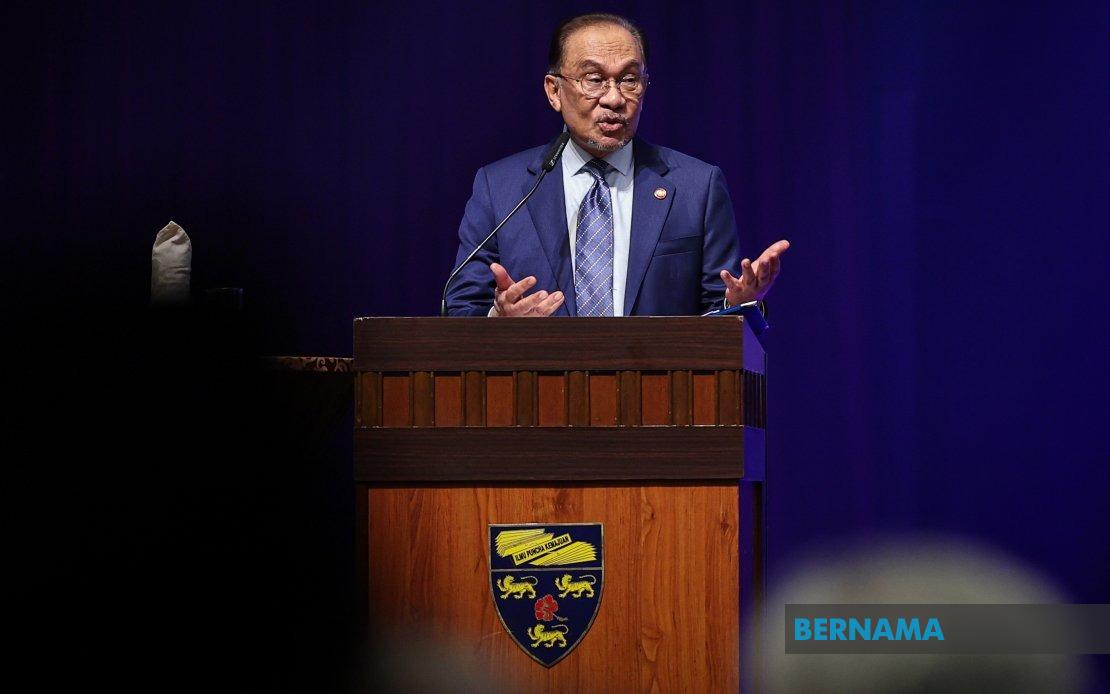
Prime Minister Datuk Seri Anwar Ibrahim has extended financial assistance to Rosli Abdullah, a 52-year-old gravedigger in Kuala Terengganu who has endured three years of debilitating mouth cancer. The contribution of RM2,000 was channelled through the Prime Minister's Department, with the transfer completed at the Flat Batas Baru surau on July 9. The assistance aims to ease the financial strain of his upcoming surgical intervention and provide relief during an exceptionally challenging period of his illness.
Deputy director of the Terengganu Federal Development Department's Implementation Coordination Unit, Azhar Abd Hamid, explained that the donation specifically targets the immediate medical expenses Rosli faces as he prepares for necessary surgical treatment. Beyond the immediate cash grant, officials recognised a broader gap in the social safety net surrounding the recipient. Azhar noted that Rosli had not previously been listed in the e-Kasih database despite meeting the eligibility requirements for Malaysia's targeted welfare assistance scheme. Authorities have committed to registering him without delay to unlock access to ongoing support mechanisms that will provide sustained help beyond the one-time donation.
The situation illuminates the vulnerability of informal workers in Malaysia's economy who lack institutional connections to welfare systems. Rosli's case represents countless individuals engaged in essential but poorly formalised occupations—in his instance, grave maintenance at a mosque—who remain invisible to government assistance programmes until external intervention occurs. His long-standing residence at the surau for over three decades had not triggered any automatic enrolment process, suggesting that even deep community integration does not necessarily translate into programme participation.
Mohd Radzali Mohamad, deputy chairman of the Flat Batas Baru surau management, provided stark details about Rosli's clinical deterioration over recent months. The cancer's progression has resulted in severe swelling affecting his mouth and right cheek, rendering him completely non-verbal for the past month. More alarmingly, the physical complications have made eating impossible; for two weeks preceding the announcement, Rosli survived on fluids administered through a feeding tube, highlighting the severity of his condition. His complete dependence on liquid nutrition underscores how cancer has disrupted basic human functions.
Rosli's medical history demonstrates the relentless nature of his affliction. He had previously undergone two surgical interventions, yet the disease has recurred with renewed aggression, necessitating another round of surgery. The Sultanah Nur Zahirah Hospital initially managed his case but subsequently referred him to Universiti Sains Malaysia Hospital in Kubang Kerian, Kelantan, indicating that his condition requires specialised oncological and surgical expertise beyond the referral hospital's capabilities. This referral pattern, while ensuring access to advanced care, also highlights the complexity and protracted nature of his treatment journey.
Beyond the medical dimensions, Rosli's personal circumstances compound his vulnerability considerably. He lives alone, unmarried, with no family support network to provide either emotional sustenance or practical assistance. His employment history, limited to gravedigging and occasional surau maintenance work, offered minimal financial accumulation or job security. The deterioration of his health has rendered him unable to perform even these modest income-generating activities, severing his sole livelihood channels. He has become almost entirely dependent on the benevolence of the surau's management and whatever sporadic community contributions materialise.
The surau community has recognised its responsibility toward a long-time member. Management has initiated an internal donation fund specifically targeting Rosli's medical and surgical expenses, acknowledging that individual charity, while essential, cannot suffice for the substantial costs associated with cancer treatment in Malaysian hospitals. However, collections to date remain insufficient to cover anticipated expenses, creating a funding gap that the Prime Minister's contribution helps bridge but does not entirely close. This shortfall illustrates how even collective community action can struggle when confronting the financial demands of serious illness.
Rosli's trajectory reflects broader challenges within Malaysia's healthcare financing and welfare architecture. While the country maintains a subsidised public health system, catastrophic out-of-pocket expenses often still burden patients, particularly those without employment-linked insurance or substantial savings. The e-Kasih scheme attempts to address such gaps by providing targeted assistance to the poorest households, yet registration remains incomplete across eligible populations. Rosli's non-registration, despite clear need and long-standing community presence, suggests that passive eligibility criteria insufficiently capture those most in need; active identification and enrolment mechanisms may require strengthening.
The intervention by the Prime Minister's Department through its Implementation Coordination Unit signals heightened attention to such cases at the highest political levels. The decision to direct funds through this avenue rather than standard healthcare or welfare channels suggests flexibility in deploying executive resources toward humanitarian crises. However, the reliance on ad hoc interventions by senior officials also implies that systematic identification and proactive support for individuals in similar circumstances may remain limited. Structural solutions ensuring that gravediggers and other informal workers are automatically captured by welfare databases might prevent future cases requiring prime ministerial attention.
For Rosli specifically, the RM2,000 donation and promised e-Kasih registration provide immediate relief and access to ongoing assistance, yet the underlying challenge of affording comprehensive cancer treatment persists. Malaysian public hospital systems, while subsidised, still charge patients significant amounts, particularly for specialist consultations, advanced imaging, and surgical procedures. The surau's continued fundraising efforts and any additional community support will remain necessary complements to government assistance. His case underscores how individual compassion and institutional support, while valuable, must combine effectively to ensure vulnerable Malaysians access dignity and care during medical crises.

