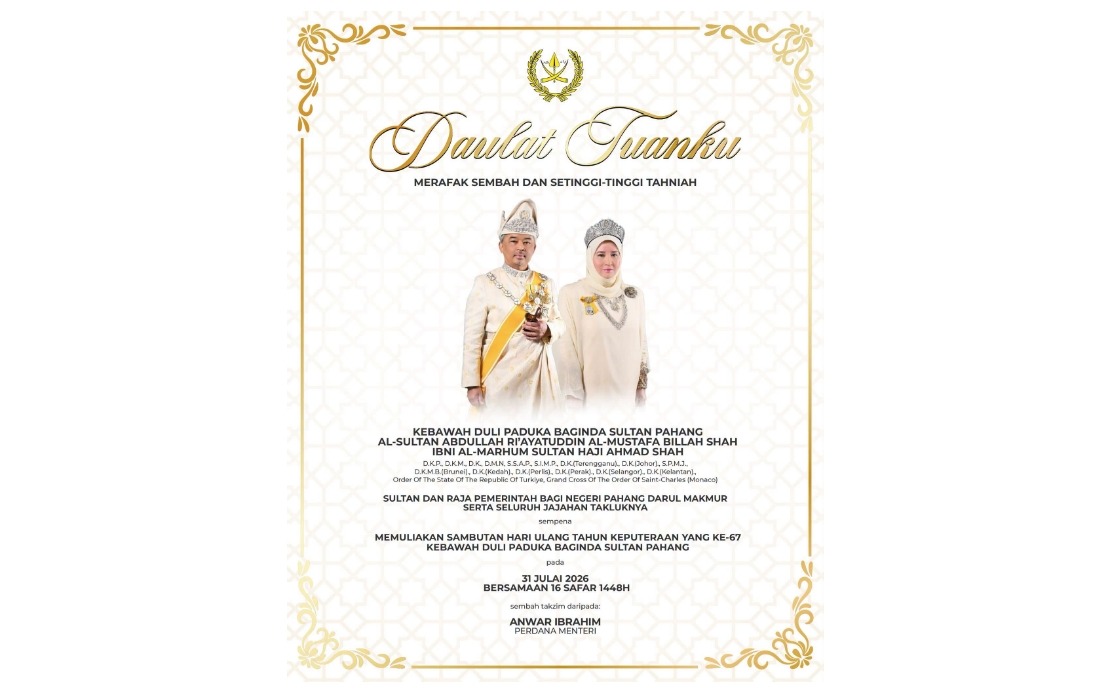
Prime Minister Datuk Seri Anwar Ibrahim publicly conveyed his warm felicitations to the Sultan of Pahang, Al-Sultan Abdullah Ri'ayatuddin Al-Mustafa Billah Shah, upon the occasion of His Royal Highness's 67th birthday on July 31. The gesture, shared through a social media platform, reflects the longstanding tradition of Malaysian political leadership acknowledging significant milestones within the country's constitutional monarchy framework.
The Prime Minister's message extended beyond mere pleasantries, incorporating prayers and well-wishes directed towards both the Sultan and members of the Pahang Royal Family. Anwar expressed his hope that the sovereign and his immediate circle would continue to enjoy divine favour and celestial guidance, consistent with the spiritual values that underscore Malaysia's governmental culture and public discourse. Such expressions carry symbolic weight in Malaysian governance, where the relationship between the executive and the constitutional monarchy remains constitutionally significant and ceremonially important.
Al-Sultan Abdullah Ri'ayatuddin Al-Mustafa Billah Shah has served as Sultan of Pahang since January 2019, following the abdication of his predecessor. As one of Malaysia's most senior royal figures, the Sultan plays a crucial ceremonial role within the nation's federal structure and participates in the Conference of Rulers, which advises on matters of constitutional importance. The Pahang monarchy also maintains extensive responsibilities regarding state governance and the welfare of residents across the peninsula's largest state by area.
The congratulatory message from Malaysia's chief executive underscores the delicate balance required in the country's constitutional arrangement, where the Prime Minister holds executive authority while the hereditary monarchy retains significant ceremonial and advisory functions. This relationship, established during Malaysia's independence in 1957 and enshrined in the Federal Constitution, necessitates regular public expressions of respect and goodwill between these two pillars of the nation's political structure.
Public birthday acknowledgments from senior government officials towards members of the royal households have become routine practice in Malaysian political culture, serving both ceremonial and diplomatic purposes. Such gestures help maintain the formal harmony that characterises interactions between the executive branch and the institution of constitutional monarchy. For Prime Ministers, particularly those navigating complex political landscapes, these expressions represent important gestures of institutional respect and continuity.
The Sultan of Pahang occupies a position of particular significance within Malaysia's royal structure, given that Pahang's ruler participates in the rotation of the Yang di-Pertuan Agong office among the hereditary sultans of the Malay states. This means that Al-Sultan Abdullah could potentially be nominated for the ceremonial position of King should the Conference of Rulers determine his selection during the next succession cycle. Such possibilities lend particular importance to maintaining strong relationships and cordial public acknowledgments between the federal executive and state sovereigns.
For Malaysian citizens and observers of governance, such public courtesies reinforce the constitutional separation and cooperation between distinct branches of authority. The Prime Minister's personal engagement in these acknowledgments—typically via his official communications channels—demonstrates the continuing relevance of protocol and tradition in modern Malaysian governance, even as the nation grapples with contemporary political challenges and policy priorities.
Beyond the ceremonial dimension, birthday greetings extended by Prime Ministers to sultans reflect the broader framework of intergovernmental relations within Malaysia's federal system. Pahang, as a state with significant economic interests including agriculture, mining, and tourism, maintains important collaborative relationships with federal authorities. Expressions of goodwill between senior leaders at federal and state levels can facilitate smoother coordination on matters of shared concern and mutual development.
The tradition of public acknowledgment also carries cultural resonance within Malaysia's diverse society, where respect for the monarchy commands support across various demographic and political segments. By ensuring that such greetings receive public attention through official channels, the Prime Minister reinforces the inclusive nature of Malaysian governance and the enduring respect accorded to constitutional institutions, regardless of shifting political circumstances or electoral outcomes.

