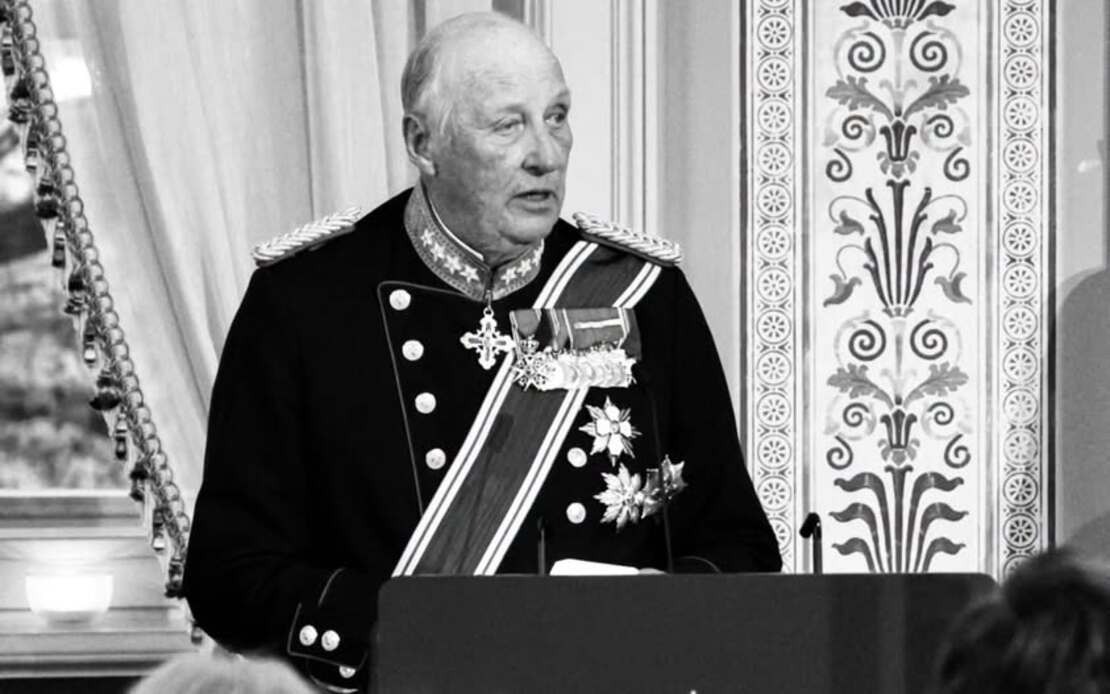
Prime Minister Datuk Seri Anwar Ibrahim has extended formal condolences on behalf of Malaysia to the people and government of Norway following the passing of King Harald V, who died on Friday at the National Hospital in Oslo at the age of 89. The Prime Minister's statement, issued through his official Facebook page, reflected Malaysia's recognition of the significant loss to the Nordic nation and its people during this period of mourning.
Anwar's message highlighted the late king's distinctive approach to understanding national identity and belonging. According to the Prime Minister, King Harald V had demonstrated a profound grasp of what it truly meant to be Norwegian in a contemporary, multicultural context. This perspective represented a forward-thinking approach to sovereignty and nationhood that transcended traditional ethnic or historical definitions, instead embracing a more inclusive vision of citizenship and belonging.
Particulously noteworthy in Anwar's tribute was his reference to King Harald's explicit recognition of Norway's diverse society. The monarch had publicly acknowledged that Norwegians came from varied backgrounds, including families with origins in Afghanistan, Pakistan, Poland, and numerous other nations around the world. By vocally affirming that these individuals and their descendants were equally Norwegian, King Harald V established a powerful symbolic framework for national cohesion based on shared values rather than exclusive ancestry or ethnicity.
The Prime Minister drew a broader philosophical conclusion from King Harald's legacy of inclusivity. Anwar underscored that the late king's legacy served as a reminder that national strength fundamentally derives from the dignity and respect a nation extends to all its inhabitants, regardless of their background or origin. This principle resonates particularly in contemporary Southeast Asian contexts, where nations like Malaysia continue to navigate questions of identity, belonging, and national cohesion amid increasing diversity and cross-border migration.
Beyond matters of inclusivity and social policy, Anwar also commended King Harald V for his deep understanding of constitutional obligation and personal integrity. The Prime Minister emphasized that the late monarch recognized the gravity of the oath he took upon ascending to the throne and remained steadfastly committed to fulfilling his responsibilities and maintaining fidelity to his pledges throughout his reign. This aspect of the tribute underscores the importance of institutional stability and the rule of law—principles that hold particular significance for Malaysia's own democratic and constitutional framework.
King Harald V's death followed a period of hospitalization that began on August 17 at Norway's National Hospital in Oslo. During his final illness, the 89-year-old monarch received cortisone treatment for hemolytic anemia, a condition affecting the production and survival of red blood cells. His death marks the end of an era in Norwegian monarchy and concludes a reign that had witnessed significant transformations in European politics, society, and international relations over several decades.
The timing of Malaysia's official condolence statement reflects the importance both nations place on bilateral relations and shared values within the broader international community. Norway and Malaysia, while geographically distant and distinct in many respects, share commitments to democratic governance, human rights, and inclusive societies—principles that underpinned much of King Harald's reign and remain central to Malaysian governance under the current administration.
For Malaysian observers and policymakers, King Harald V's emphasis on inclusive nationalism and social cohesion offers relevant lessons. As Malaysia continues to grapple with questions surrounding national unity, religious harmony, and the integration of diverse communities, the late Norwegian king's public articulation of belonging—extending citizenship and national identity to all residents irrespective of ethnic or religious background—provides a contemporary model of how monarchical leadership can reinforce inclusive values.
The condolence statement also reflects Malaysia's broader diplomatic engagement with European nations and the importance of ceremonial protocol in international relations. Such official tributes serve not merely as expressions of sympathy but as affirmations of shared values and mutual respect between nations, strengthening the diplomatic bonds that underpin stable international relations and cooperation across regions.
King Harald V's reign, which began in 1991, had been characterized by efforts to modernize the Norwegian monarchy while maintaining its symbolic importance to the nation. His passing represents a transition in Nordic leadership and closes a chapter in contemporary European history. The Malaysian government's acknowledgment of this loss, articulated through the Prime Minister's personal statement, demonstrates the country's recognition of significant developments in global affairs and its commitment to maintaining respectful relations with all nations on the world stage.

