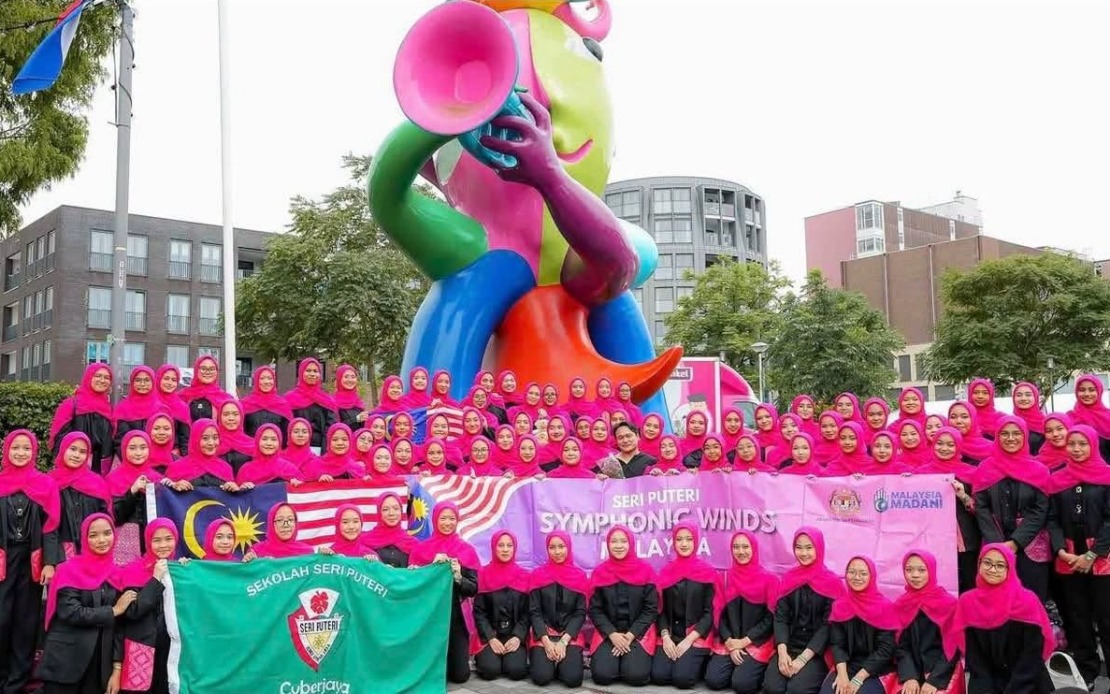
Prime Minister Datuk Seri Anwar Ibrahim has publicly commended the Seri Puteri Symphonic Winds Orchestra (SPWinds) for their stellar performance at the World Music Contest held in the Netherlands, where the ensemble captured the Gold With Distinction award in the Wind Band Youth Division. The achievement represents a significant milestone for Malaysia's music education sector and underscores the calibre of musical talent being cultivated within the nation's schools.
Through a Facebook statement, Anwar framed the orchestra's victory as emblematic of the qualities needed to propel Malaysia forward on the international stage. He emphasised that the Gold With Distinction accolade should serve as motivation for all Malaysians to persist in their endeavours with steadfast commitment, rigorous discipline, and resolute determination. The Prime Minister's message extended beyond simple congratulation, positioning the accomplishment as a source of national inspiration and a reflection of Malaysia's capacity to excel in cultural and artistic domains.
The SPWinds ensemble, which is affiliated with Sekolah Seri Puteri, has established itself as a formidable force in youth orchestral music. Prior to this international recognition, the orchestra demonstrated its competitive prowess by securing a Gold Award at the 11th World Orchestra Festival in Vienna, Austria, during the period of July 23 to 26 of the previous year. This successive achievement at prestigious competitions indicates a sustained trajectory of excellence and meticulous preparation by the ensemble and its conductors.
Government backing has played a tangible role in supporting the orchestra's development and activities. In April of this year, Anwar announced a RM100,000 financial contribution directed towards SPWinds as a gesture of backing and encouragement. The funding was presented during his attendance at the "Winds of Glory: AM:PM Amir Masdi & SPWinds in Concert" performance, which took place on April 25 at the Putrajaya International Convention Centre. The contribution was explicitly allocated to enable the orchestra to undertake programmes and initiatives that foster comprehensive student development through artistic excellence.
The significance of this government investment cannot be understated in the Malaysian context, where arts funding has historically competed for resources alongside other educational priorities. By earmarking public funds for music education at school level, the Prime Minister's office has signalled a commitment to cultivating creative talents alongside academic achievement. This approach aligns with broader global recognition that music and performing arts contribute substantially to students' cognitive development, emotional resilience, and social skills.
For Southeast Asian readers, the SPWinds achievement holds particular resonance as it demonstrates that regional students can compete successfully against international peers at world-class music competitions. The Netherlands-hosted contest attracts youth orchestras from multiple continents, making Malaysia's Gold With Distinction award a validation of the pedagogical standards and training rigour available within the country's school music programmes. This international recognition may influence perceptions of Malaysian education quality beyond traditional academic metrics.
The orchestra's repeated success at major international competitions reflects the dedication of both the young musicians and their instructional staff. Achieving such results requires sustained practice, financial resources for instrument maintenance and travel, access to quality teaching, and institutional support—factors that underscore why the government's financial backing proves consequential. Many student musicians in the region face barriers to advanced musical training, making the SPWinds model of school-based orchestral excellence noteworthy for educators across Southeast Asia.
Anwar's public recognition of this achievement also demonstrates awareness of the soft power dimension inherent in cultural accomplishments. When Malaysian youth excel on international platforms in arts and music, they contribute to the nation's global profile and cultural standing. This extends beyond competition medals; it influences how Malaysia is perceived internationally and can attract talent, investment, and collaborative partnerships in creative sectors.
The trajectory of SPWinds underscores the importance of systematic investment in music education infrastructure. Schools with sustained funding, qualified conductors, performance opportunities, and travel support create pathways for talented young musicians to develop their potential. The contrast between well-resourced programmes like SPWinds and under-resourced music programmes elsewhere in the region illustrates how policy choices and budgetary allocation directly shape outcomes in youth arts development.
Looking forward, the sustained encouragement from Malaysia's highest political office may inspire other educational institutions to prioritise music and performing arts within their curricula. The visibility of an award-winning school orchestra sends a message that artistic achievement merits recognition alongside sporting prowess and academic standing. For students considering arts pathways, the government's tangible support through funding and public acknowledgement may help legitimise music and orchestral performance as viable and valued pursuits.
The Prime Minister's congratulations also reinforce a broader narrative about Malaysian national identity and capability. By celebrating SPWinds' international success, Anwar connects artistic excellence to national pride and cohesion. This framing suggests that cultural accomplishments contribute meaningfully to national development and global standing, a perspective that historically has received less emphasis than economic indicators or infrastructure achievements in Malaysian public discourse.

