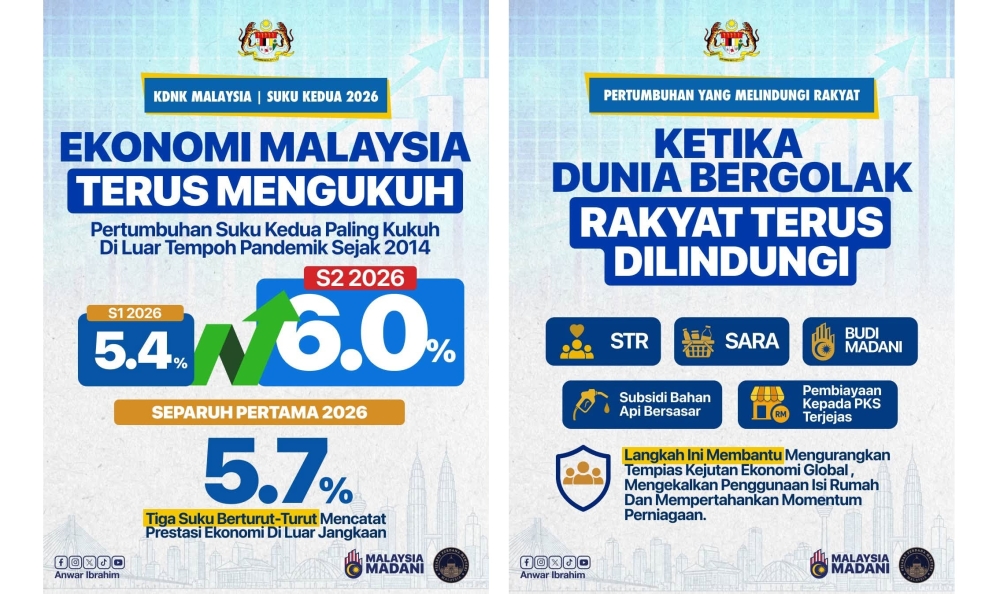
Prime Minister Datuk Seri Anwar Ibrahim has praised Malaysia's economic resilience in the second quarter, highlighting the government's success in delivering growth that exceeded forecasts while protecting ordinary Malaysians from the full brunt of worldwide price increases. The remarks underscore the administration's broader economic strategy as it navigates persistent global headwinds that have challenged emerging market economies across Southeast Asia and beyond.
The Prime Minister's comments reflect growing confidence within Policymakers' circles that Malaysia's diversified economic base—spanning manufacturing, services, agriculture, and digital sectors—provides a meaningful buffer against international economic shocks. This perspective carries significance for investors and analysts who have closely monitored the nation's trajectory following the pandemic-related contraction and subsequent recovery phases. The emphasis on outperforming market expectations suggests that government agencies and the central bank may have successfully calibrated their respective interventions to sustain momentum without overheating the economy.
Government measures to insulate households from inflation have taken multiple forms, ranging from targeted subsidies and price controls on essential commodities to direct cash assistance programmes for lower-income Malaysians. These interventions represent a deliberate policy choice to prioritize household purchasing power at a moment when developed economies have largely retreated from such protections, instead relying on aggressive monetary tightening to combat price pressures. The Malaysian approach reflects differing policy preferences and constraints facing governments with smaller domestic markets and greater exposure to imported inflation.
The broader context matters considerably for understanding Malaysia's economic positioning. Global supply chain disruptions, elevated energy prices stemming from geopolitical tensions, and tightening financial conditions have constrained growth across the Asia-Pacific region. Several neighbouring economies have experienced slower expansions or technical recessions, making Malaysia's reported outperformance particularly noteworthy from a regional comparative standpoint. The government's ability to maintain growth while restraining inflation has become a crucial talking point in domestic political discourse, especially as the administration approaches crucial policy decisions regarding budget allocations and medium-term fiscal plans.
Central bank monetary policy has interacted with fiscal support measures to shape economic outcomes. Bank Negara Malaysia's calibrated approach to interest rates—raising them incrementally while remaining less aggressive than some regional counterparts—has sought to address inflation without choking off credit availability for productive investment and consumer spending. This balancing act demonstrates the complexity of policymaking in environments where imported inflation, domestic demand pressures, and currency considerations all exert competing influences on economic conditions.
The government's shielding of households carries particular weight given Malaysia's income inequality metrics and the concentration of vulnerable populations in certain states and demographic groups. Subsidies and assistance programmes directly affect poverty reduction prospects and consumer confidence, which in turn influences spending patterns and economic growth trajectories. Policymakers have consistently framed these measures as temporary or targeted rather than permanent entitlements, signalling awareness of fiscal sustainability concerns and long-term budget constraints that will eventually necessitate difficult trade-off decisions.
Industrial sectors have responded unevenly to the economic environment, with some benefiting from reopened supply chains and rising international demand whilst others face margin compression from elevated input costs. The manufacturing sector, which remains central to Malaysia's export performance and foreign direct investment appeal, has demonstrated resilience despite challenges in semiconductor markets and regional competition. Tourism and services sectors have rebounded substantially from pandemic lows, contributing meaningfully to the measured growth figures that the Prime Minister highlighted.
Looking ahead, the sustainability of Malaysia's economic performance depends substantially on maintaining investor confidence and managing external vulnerabilities. The ringgit's exchange rate movements, foreign portfolio inflows and outflows, and commodity price developments—particularly for palm oil and petroleum products—represent key variables that policymakers monitor closely. Regional supply chain reintegration and potential shifts in global manufacturing geography also present both opportunities and risks for Malaysia's economic future.
The government's economic messaging simultaneously addresses domestic political audiences and international investors seeking stability and predictable policy frameworks. Anwar Ibrahim's emphasis on protecting household welfare whilst delivering growth reflects an attempt to build consensus around the administration's economic vision across different societal groups. This political-economic balancing act will likely continue shaping policy priorities through the current fiscal year and into subsequent budget cycles, as officials confront mounting pressures to demonstrate tangible improvements in living standards whilst maintaining macroeconomic stability.

