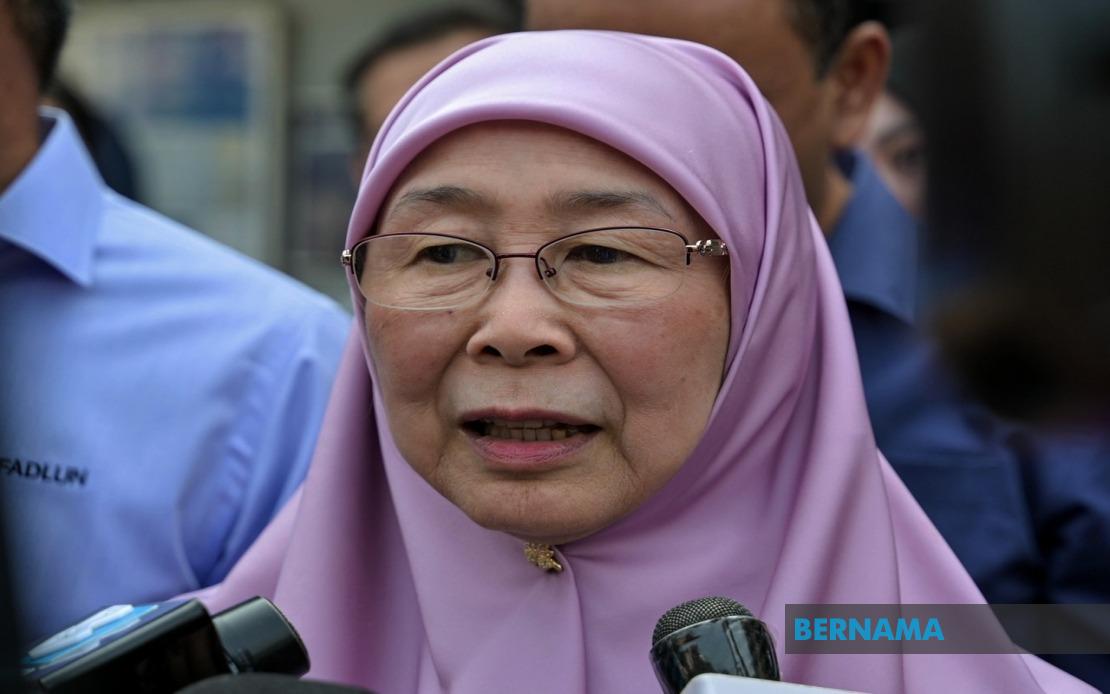
Prime Minister Datuk Seri Anwar Ibrahim is set to return home today following his scheduled discharge from hospital, his spouse Datuk Seri Dr Wan Azizah Wan Ismail confirmed on Monday. The Prime Minister underwent an elective laparoscopic surgical intervention on Monday morning to address a para-umbilical hernia, a relatively straightforward abdominal condition that required specialist intervention.
Dr Wan Azizah relayed Anwar's gratitude to Malaysians who had extended prayers and well-wishes during his hospital stay. The Prime Minister's appreciation extended to medical personnel and well-wishers who had shown their support throughout the brief treatment period. She conveyed his message through media interactions at a separate engagement, assuring observers that the procedure had proceeded according to plan.
The timing of Anwar's hospitalisation coincided with national celebrations, as Dr Wan Azizah was in attendance at the Semarak Merdeka programme marking the preliminary festivities for Malaysia's 2026 National Month. The event, held at the Bandar Tun Razak branch of Kuala Lumpur City Hall, brought together community leaders and residents in patriotic commemoration. Despite her husband's medical appointment, the Deputy Prime Minister maintained her public commitments, underlining the family's steadfast dedication to official responsibilities.
Anwar's decision to undergo elective surgery reflects a pragmatic approach to healthcare management, typical of senior political figures who schedule non-emergency procedures during parliamentary recesses or planned governmental periods. Para-umbilical hernias, which occur in the abdominal wall near the navel, frequently develop over time and may require surgical correction to prevent complications. Laparoscopic techniques represent the modern standard for such procedures, offering minimally invasive approaches that typically result in shorter recovery periods compared to traditional open surgery methods.
The public nature of the Prime Minister's medical procedure underscores Malaysia's established convention of transparency regarding the health status of senior government figures. Unlike some regional counterparts, Malaysian leadership traditionally maintains relatively open communication with media and public regarding significant health events, contributing to institutional confidence and stability. This openness also reflects contemporary democratic standards where citizens expect clarity regarding their national leaders' fitness for office.
The brief hospitalisation period and anticipated swift discharge suggest that the procedure encountered no unexpected complications. Medical professionals likely assessed Anwar's overall health status as robust, enabling the use of minimally invasive techniques rather than requiring extended in-patient observation. The straightforward nature of the intervention and recovery trajectory should enable the Prime Minister to resume full executive responsibilities without extended absence from governmental duties.
Regional observers have often noted Malaysia's institutional resilience in managing leadership transitions or health-related absences, reflecting the country's mature constitutional framework and strong civil service infrastructure. The smooth coordination between the Prime Minister's personal responsibilities and his public engagement schedule during his wife's hospital-based recovery period demonstrates the functional continuity of government operations. Senior officials and cabinet members can effectively manage day-to-day governance matters, ensuring that the nation's administrative machinery continues functioning without disruption.
Dr Wan Azizah's presence at the Semarak Merdeka celebrations carried particular significance as the Deputy Prime Minister, symbolising national unity and the government's commitment to commemorating Malaysia's independence heritage. Her participation, coupled with her public updates regarding Anwar's medical status, reinforced governmental continuity and public confidence during a period when the Prime Minister was temporarily unavailable for his highest-profile duties. The event itself highlighted the government's focus on the upcoming National Month celebrations, a significant fixture in Malaysia's annual civic calendar.
The para-umbilical hernia diagnosis, while requiring surgical intervention, poses no threat to Anwar's political viability or leadership capability. Such conditions represent common medical occurrences among middle-aged and senior individuals, unrelated to cognitive function or capacity for executive responsibility. The elective nature of the procedure, rather than an emergency intervention, further demonstrates the situation's routine character and predictable resolution timeline.
Looking forward, Anwar's return to normal duties should occur without meaningful delay, barring any unexpected post-operative complications unlikely given the standard nature of the laparoscopic intervention. Medical guidelines typically suggest light activity resumption within days and full activity return within 2-3 weeks for such procedures. The Prime Minister's anticipated rapid reintegration into his comprehensive schedule reflects both the procedure's straightforwardness and Malaysia's institutional capability to manage short-term leadership disruptions. This incident exemplifies the constitutional maturity and professional governance infrastructure that distinguish Malaysian political administration within the Southeast Asian context.

