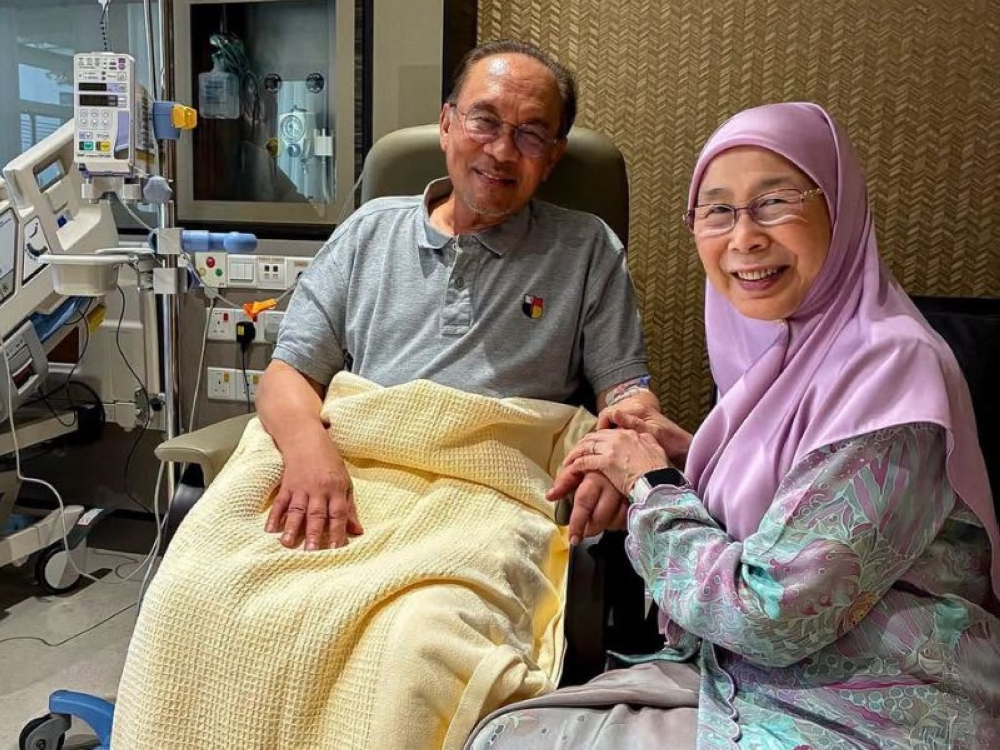
Prime Minister Datuk Seri Anwar Ibrahim is anticipated to leave hospital and return to his residence today after completing treatment for a hernia condition, according to his spouse Datin Seri Dr Wan Azizah Wan Ismail. The announcement marks the conclusion of the premier's brief hospitalization at a private healthcare institution, where medical specialists performed the necessary surgical intervention to address the abdominal complaint.
The Prime Minister's absence from official duties during his medical leave had prompted inquiries from the cabinet and parliamentary observers regarding the continuity of governmental functions. His return to normal activities signals a restoration of full executive capacity at the helm of the federal administration during a period marked by ongoing economic and policy deliberations. The timing of his recovery comes amid several pressing legislative matters pending parliamentary review and cabinet coordination.
Hernia procedures are regarded as routine surgical interventions, though they typically necessitate a period of controlled recuperation to ensure proper healing and prevent complications. Medical professionals generally recommend post-operative rest and activity restrictions to allow the surgical site to stabilize, a process that typically spans several weeks depending on individual circumstances and the complexity of the initial procedure. Most patients resume their standard duties progressively following initial discharge from hospital care.
The Prime Minister had publicly disclosed his decision to undergo the surgical procedure, demonstrating transparency regarding his health status to the Malaysian public and international observers. Such openness regarding high-ranking officials' medical matters reflects evolving standards of accountability and public information practices within Malaysia's political leadership. This contrasts with historical instances where senior government figures maintained greater discretion regarding personal health matters.
The brief hospitalization underscores the demands placed upon Malaysia's chief executive, whose responsibilities encompass legislative oversight, cabinet management, diplomatic engagements, and administrative decision-making across multiple portfolio areas. Even brief interruptions to the Prime Minister's schedule require careful coordination across government machinery to maintain operational continuity. Deputy ministers and senior officials typically assume delegated responsibilities during such periods to ensure uninterrupted service delivery.
Anwar Ibrahim's role as Prime Minister encompasses significant responsibility for steering the nation's economic recovery, managing regional diplomatic relationships, and addressing domestic challenges spanning education, healthcare, and infrastructure development. His effective engagement with coalition partners and parliamentary management remains crucial for maintaining the stability of the current government formation. The restoration of his full-time presence at the helm signals renewed focus on these multifaceted governmental priorities.
The announcement from his wife provides reassurance to stakeholders across the business community, civil service, and diplomatic missions regarding the Prime Minister's swift recovery and imminent return to substantive engagements. Market confidence and investor sentiment often correlate with perceived stability at the highest levels of executive authority, making such recovery updates matters of broader national importance beyond immediate family circles.
Malaysia's healthcare infrastructure, particularly its private medical sector, continues to serve governmental and corporate leadership with internationally comparable standards of surgical expertise and post-operative care. The choice of private facility reflects both the caliber of available medical services within the nation and the security requirements typically surrounding high-level political figures' healthcare arrangements. Malaysian private hospitals have consistently maintained accreditation standards recognized by international medical bodies.
The hernia condition, while requiring surgical correction, does not typically result in long-term complications or restrictions once successfully treated and properly rehabilitated. The Prime Minister's anticipated swift return to his residence suggests favorable surgical outcomes and absence of post-operative complications. Medical specialists would likely have emphasized adherence to specific activity guidelines during the immediate recovery phase to maximize healing efficiency.
Governmental operations continue through established institutional structures and delegated ministerial authority during leadership absences, though the presence of the chief executive at major policy meetings and cabinet sessions remains important for maintaining momentum on significant initiatives. The cabinet and parliamentary leadership will likely welcome the Prime Minister's resumption of full-time engagement with the complex portfolio of national concerns requiring executive attention and decision-making authority.

