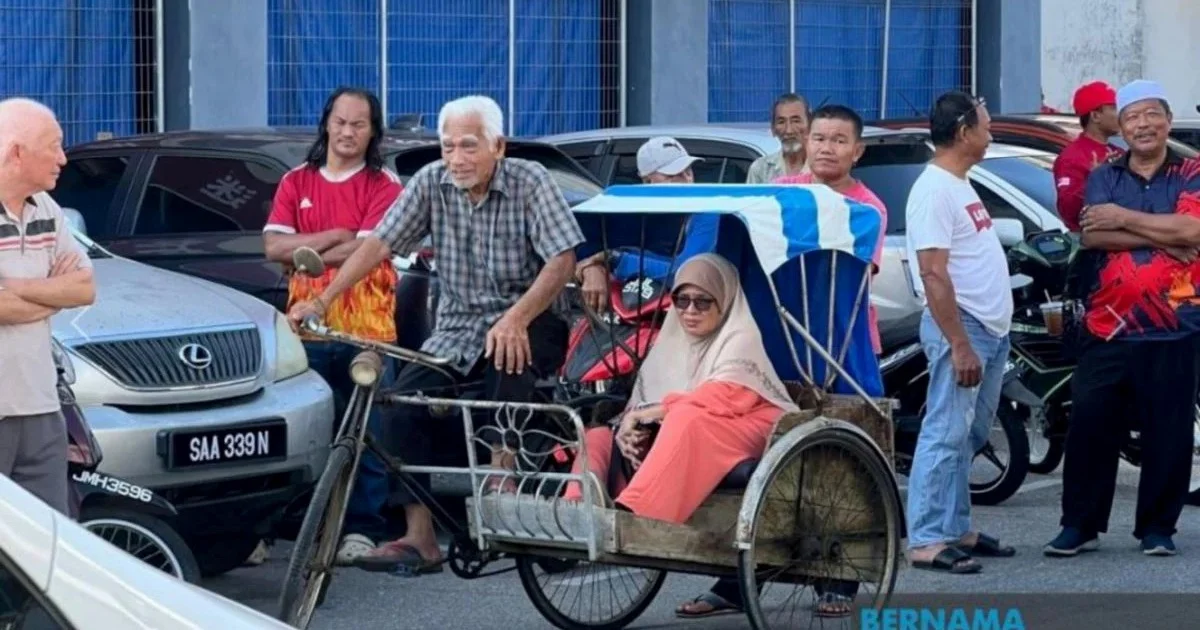
Prime Minister Datuk Seri Anwar Ibrahim has publicly acknowledged the dedication of an octogenarian trishaw rider, who made a determined journey on his three-wheeled vehicle to realise his wife's long-held wish of meeting the nation's leader in person. The 86-year-old man's gesture, involving nearly a kilometre of pedalling, has resonated with the Prime Minister, who took time to express his sincere appreciation for the elderly couple's effort and sentiment.
The encounter highlights the enduring connection between ordinary Malaysians and their political leaders, particularly among the older generation who have witnessed the nation's transformation over decades. For many elderly citizens, meeting a Prime Minister remains a significant milestone—a moment that holds symbolic weight beyond politics, representing recognition from the highest office in the land. The trishaw rider's willingness to exert himself physically at an advanced age underscores the importance his wife placed on this meeting, demonstrating how such personal aspirations can motivate individuals regardless of their physical limitations.
Trishaws remain an iconic symbol of Malaysia's urban landscape and cultural heritage, especially in cities like Kuala Lumpur and Penang, where they continue to serve commuters and tourists alike. The choice of transportation in this instance adds a distinctly Malaysian flavour to the story, reflecting the country's diverse transport ecosystem and the resourcefulness of its citizens. That the elderly man chose to ride his trishaw rather than seek alternative transport speaks to a sense of pride in his livelihood and identity as a traditional transportation operator.
The Prime Minister's gesture in acknowledging and thanking the rider extends beyond mere politeness. It reflects an awareness of the human stories that underpin national service—reminders that leadership involves recognizing the hopes and dreams of ordinary people. In a political climate often dominated by policy announcements and institutional matters, such personal interactions serve to humanize public figures and reinforce bonds between government and governed.
For the elderly couple, the effort invested in this meeting likely held profound meaning. At 86 years old, the rider may well have viewed this as a once-in-a-lifetime opportunity, a final chapter in a life lived through Malaysia's post-independence era. His wife's desire to see the Prime Minister may have been rooted in historical curiosity, political interest, or simply a bucket-list item for two individuals who have accumulated decades of memories and experiences.
The incident also provides a backdrop for reflecting on accessibility and inclusivity in how leaders engage with citizens. While the trishaw rider managed to complete his journey, the broader question of how government ensures that elderly and less mobile citizens can participate in public life remains relevant. Creating pathways for meaningful engagement with political leadership—whether through scheduled appearances, community visits, or accessible venues—becomes increasingly important as Malaysia's population ages.
Trishaw riders and the informal transport sector represent a significant component of Malaysia's urban economy and social fabric. Many operators, particularly older ones, have built their livelihoods around this work, often serving multiple generations of passengers. By acknowledging the rider's effort, the Prime Minister also implicitly recognised the contributions of this demographic to Malaysian society, a gesture that carries weight beyond the immediate encounter.
The story resonates in the context of contemporary Malaysian politics, where maintaining public trust and demonstrating accessibility remain central concerns for any administration. Personal moments of connection—where leaders demonstrate genuine appreciation for citizen engagement—can accumulate into broader perceptions of government responsiveness and care. In an era of digital communication and mass media, face-to-face interactions retain their power to create lasting impressions.
For younger Malaysians observing such interactions, the narrative also conveys messages about determination, dignity, and the value placed on meaningful experiences. The elderly couple's quiet determination serves as a counterpoint to more dramatic or contentious political narratives, offering instead a portrait of elderly citizens exercising agency and pursuing their goals within the bounds of their abilities.
The Prime Minister's thanks to the trishaw rider, while seemingly a modest exchange, exemplifies the possibility for respectful engagement between leaders and citizens across generational and socioeconomic divides. In a diverse, democratic society like Malaysia, such moments of mutual recognition—where leadership is acknowledged and citizenship is honoured—help sustain the social contract that binds government and people together.
Looking forward, this encounter may inspire other elderly citizens to pursue their own aspirations, however modest or grand, while also serving as a reminder to public figures of the importance of acknowledging the people behind Malaysia's headlines and statistics. The trishaw rider's nearly one-kilometre journey becomes not merely a physical feat, but a symbolic affirmation of how personal determination and political recognition can intersect in ways that enrich the national narrative.

