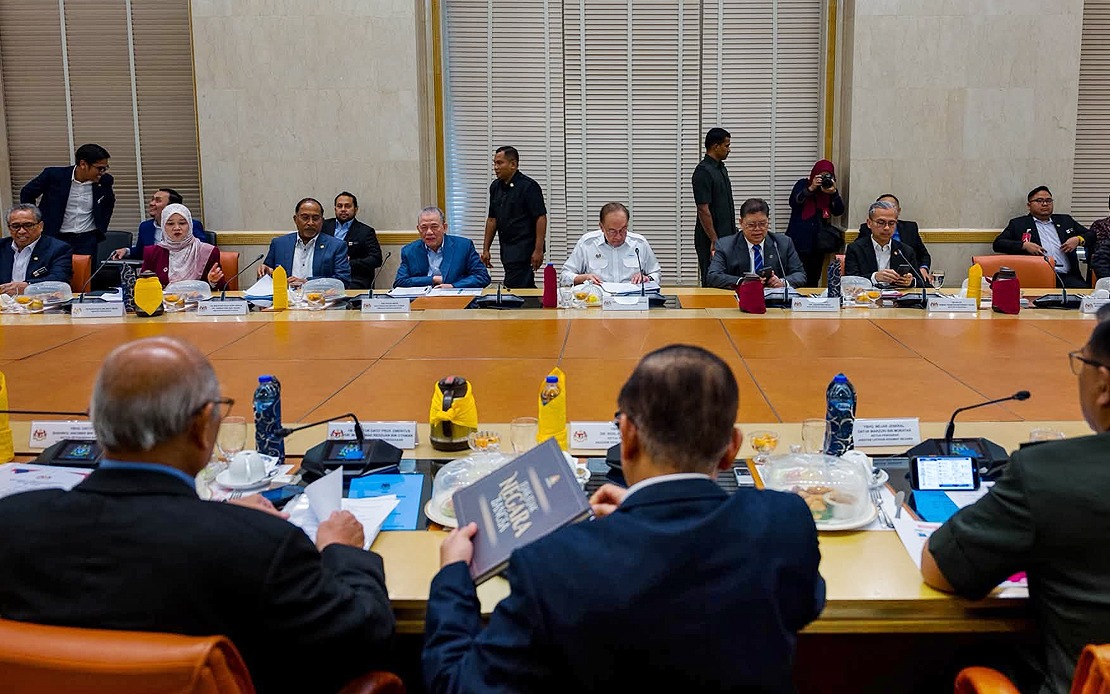
Prime Minister Datuk Seri Anwar Ibrahim has made a fresh call for the systematic cultivation of nationhood values across Malaysia, arguing that such efforts form the bedrock of national cohesion and international standing. Speaking following a Dewan Kenegaraan Board of Governance Meeting he chaired, Anwar emphasised that stronger emphasis on these shared principles would produce citizens of refined character, moral courage and unwavering commitment to the nation's welfare.
The Prime Minister's remarks arrive at a moment when Malaysia continues to grapple with the complexities of managing diversity across religious, ethnic and socioeconomic lines. By centring the nation-building discourse on commonly held values rather than divisive narratives, the government appears to be positioning such initiatives as unifying forces. Anwar's framing suggests that individual identity and national pride need not be mutually exclusive, but rather mutually reinforcing — a distinction likely significant for multiethnic Southeast Asia.
Central to the government's approach is the National Service Training Programme, or PLKN, which Anwar noted has gathered momentum with encouraging feedback from both participants and their families. The scheme, designed to bring together young Malaysians from varied backgrounds for structured training, represents more than ceremonial nation-building; it functions as a practical instrument for inculcating shared experiences and collective identity among the youth cohort. Government data and anecdotal reports suggest the programme has successfully created bonds among participants who might otherwise operate within siloed communities.
Anwar stressed that the PLKN framework warrants continued expansion and refinement as it demonstrates tangible results in fostering discipline, personal resilience and a sense of collective belonging. Such programmes carry particular weight in the Malaysian context, where generational attitudes toward national unity have shown variation. By investing in direct experience-based learning rather than purely rhetorical appeals, the government tacitly acknowledges that values transmission requires active participation and peer reinforcement.
A parallel institutional innovation highlighted during the governance meeting was the role of the Nationhood Fellows, a body tasked with drawing upon prominent personalities and senior statesmen from disparate backgrounds to supply intellectual and strategic input into the nation-building enterprise. This mechanism reflects a deliberate attempt to transcend partisan divides by incorporating figures from across the political and social spectrum into conversations about Malaysia's foundational identity. Such inclusive deliberation forums can diffuse polarisation by creating space for principled disagreement couched within a shared commitment to national interest.
The emphasis on cultivating love for country through values-grounded community development carries implications beyond symbolism. In recent years, various Southeast Asian nations have faced challenges stemming from fractured national narratives, competing identity claims and weakened social cohesion. Malaysia's explicit focus on strengthening nationhood values represents a calculated effort to preempt such dynamics by investing early in the moral and psychological foundations of citizenship.
Anwar's governance priorities also implicitly acknowledge the link between national resilience and individual character formation. Nations that weather external pressures and internal tensions typically possess populations bound by something deeper than legal obligation alone. The cultivation of integrity, principled action and collective purpose creates psychological and social capital that proves invaluable during periods of strain or transition. In this sense, the investment in values education and experiential bonding programmes constitutes strategic governance.
The broader context includes Malaysia's positioning within the ASEAN region and the global order. As regional competition intensifies and external actors seek influence, nations with strong internal unity and shared purpose prove more resistant to fragmentation and external manipulation. The Prime Minister's emphasis on strengthening national identity through values-based initiatives thus carries geopolitical undertones, even if framed in domestic terms.
Moving forward, the success of such nation-building efforts will depend substantially on institutional follow-through and resource commitment. Initiatives that remain aspirational without sustained funding, personnel and programmatic development often fail to achieve intended impact. The government will require clear metrics to assess whether values-transmission programmes are translating into measurable changes in civic behaviour, social trust and national cohesion. Regular evaluation and public reporting of such outcomes would strengthen public confidence in the initiative.
The convergence of the PLKN expansion, the Nationhood Fellows framework and the broader values-cultivation agenda suggests the government is taking a comprehensive, multi-channel approach to identity formation. Rather than relying on a single institutional lever, this strategy operates across educational, experiential and intellectual domains simultaneously. Such redundancy, if properly coordinated, increases the likelihood that core messages about shared nationhood will reach diverse audiences through preferred channels.
Ultimately, Anwar's articulation of the nation-building challenge reflects a sophisticated understanding of governance in pluralistic societies. Strong nationhood need not erase particularities or suppress difference; instead, it establishes a shared framework within which diverse Malaysians can negotiate their identities and interests productively. Whether these initiatives can meaningfully reshape civic culture will become evident in the years ahead.

