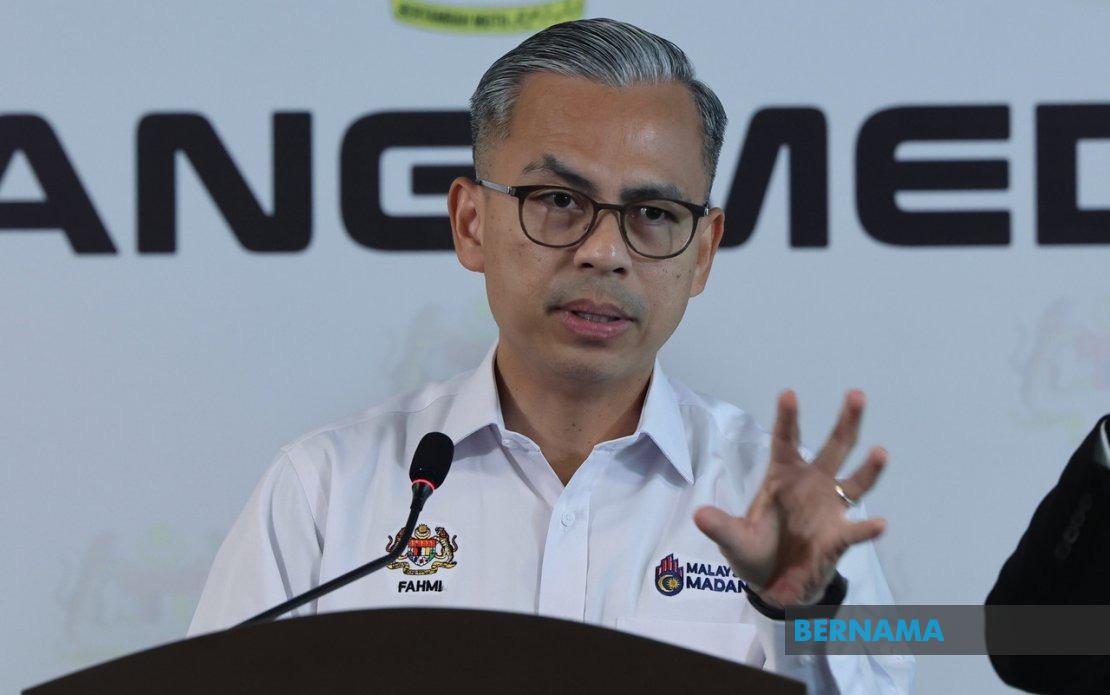
Prime Minister Datuk Seri Anwar Ibrahim has instructed the Ministry of Human Resources (KESUMA) to expedite the processing of the initial batch of 15,000 foreign worker applications in a bid to alleviate labour shortages that have continued to constrain growth across multiple sectors of the Malaysian economy. The directive came during a Cabinet meeting in Putrajaya on August 5, with Communications Minister Datuk Seri Fahmi Fadzil announcing the decision at a subsequent press conference. The move represents a concerted effort by the federal government to balance Malaysia's workforce requirements with the operational challenges facing industries struggling to fill vacant positions.
According to Fahmi, the accelerated processing initiative serves a dual purpose of meeting immediate labour demand while simultaneously bolstering broader economic activity. By streamlining the approval mechanism for foreign workers, the government seeks to enable employers across affected industries to access the workforce they require without prolonged delays that have historically complicated hiring processes. The rationale underlying this approach reflects acknowledgment that labour constraints have become a tangible brake on productivity and expansion in multiple sectors, from manufacturing to services and agriculture.
The directive builds upon earlier administrative reforms implemented by KESUMA under the stewardship of Human Resources Minister Datuk Seri R. Ramanan. The ministry had previously assumed comprehensive oversight of the One-Stop Centre (OSC) for Foreign Worker Management, consolidating previously fragmented responsibilities within a single institutional framework. This restructuring took effect immediately following a Cabinet decision reached on July 1, marking a significant reorganization of how Malaysia's foreign worker recruitment process operates at the federal level.
The centralization of foreign worker management under KESUMA represents an intentional effort to strengthen institutional governance surrounding the recruitment, vetting, and placement of international labour. Prior arrangements involving multiple agencies and coordination mechanisms had created bottlenecks and inefficiencies that impeded the timely processing of applications. By concentrating authority within a single ministry, the government aims to establish clearer lines of responsibility while enabling more systematic and efficient administration of foreign worker flows.
The genesis of this policy shift traces back to deliberations conducted during the first 2026 Cabinet Committee on Foreign Workers meeting on June 30, when senior government officials evaluated existing arrangements and determined that consolidated management under KESUMA would yield superior outcomes. The decision reflected broader strategic thinking within the MADANI government regarding how to deploy available policy tools to support economic growth objectives while maintaining appropriate regulatory oversight.
For Malaysian employers grappling with persistent recruitment difficulties, the accelerated processing initiative offers tangible relief from constraints that have complicated workforce planning. Construction companies, manufacturing facilities, hospitality enterprises, and agricultural operations have repeatedly cited labour shortages as impediments to expansion and operational efficiency. The approval of 15,000 applications in rapid succession could inject meaningful supply into labour markets where demand has substantially outpaced domestic availability.
The timing of this directive carries significance given Malaysia's broader economic trajectory and competitive positioning within Southeast Asia. Regional competitors including Thailand, Vietnam, and Indonesia have pursued varied approaches to foreign worker management, some with greater regulatory flexibility than others. By demonstrating commitment to streamlined processing while maintaining governance standards, Malaysia seeks to remain an attractive destination for international labour while avoiding the reputational and operational complications that arise from uncontrolled or poorly managed migration flows.
Implementation challenges will likely emerge as KESUMA scales operations to handle the processing surge. The ministry must balance speed with thorough vetting procedures that protect both Malaysian workers and employers from exploitation or unsuitable placements. Training frontline staff, deploying adequate technological infrastructure, and establishing clear protocols will determine whether the 15,000-application target can be achieved within reasonable timeframes without compromising quality or security considerations.
The broader labour policy framework within which this decision operates reflects evolving recognition that Malaysia's demographic profile and workforce composition necessitate strategic reliance on foreign workers in specific sectors and occupational categories. Rather than resist this reality, the government has chosen to manage it proactively through institutional reforms and accelerated processing mechanisms designed to harness international labour in ways that complement domestic workforce development while sustaining economic competitiveness. This pragmatic approach acknowledges that wholesale labour market closure remains neither feasible nor economically rational given Malaysia's development stage and sectoral requirements.
Stakeholder reactions to the initiative will likely vary considerably. Employers in labour-dependent sectors will welcome the prospect of faster worker access, while labour unions and worker advocacy groups may scrutinize whether appropriate protections for both foreign and domestic workers remain intact during the accelerated processing phase. Trade associations representing industries with significant foreign worker reliance will monitor implementation closely to ensure that the promised efficiency gains actually materialize operationally.
The success of this initiative will be measurable against concrete metrics including actual processing timelines, application approval rates, and the extent to which labour shortages subsequently ease across targeted sectors. Should the government successfully process and deploy the 15,000 approved workers within target timescales, the demonstration effect may encourage consideration of similar acceleration mechanisms for subsequent cohorts. Conversely, if implementation stumbles, the initiative could highlight capacity constraints within KESUMA that warrant additional resource allocation or structural adjustment.
Moving forward, Malaysian policymakers will likely evaluate whether the 15,000-application authorization suffices to address current labour deficits or whether additional tranches become necessary as economic activity continues recovering. The institutional architecture now in place through KESUMA's consolidated management offers a more stable foundation for responsive labour policy than previously existed, potentially positioning Malaysia to calibrate foreign worker intake more effectively based on evolving economic conditions and sectoral requirements.

