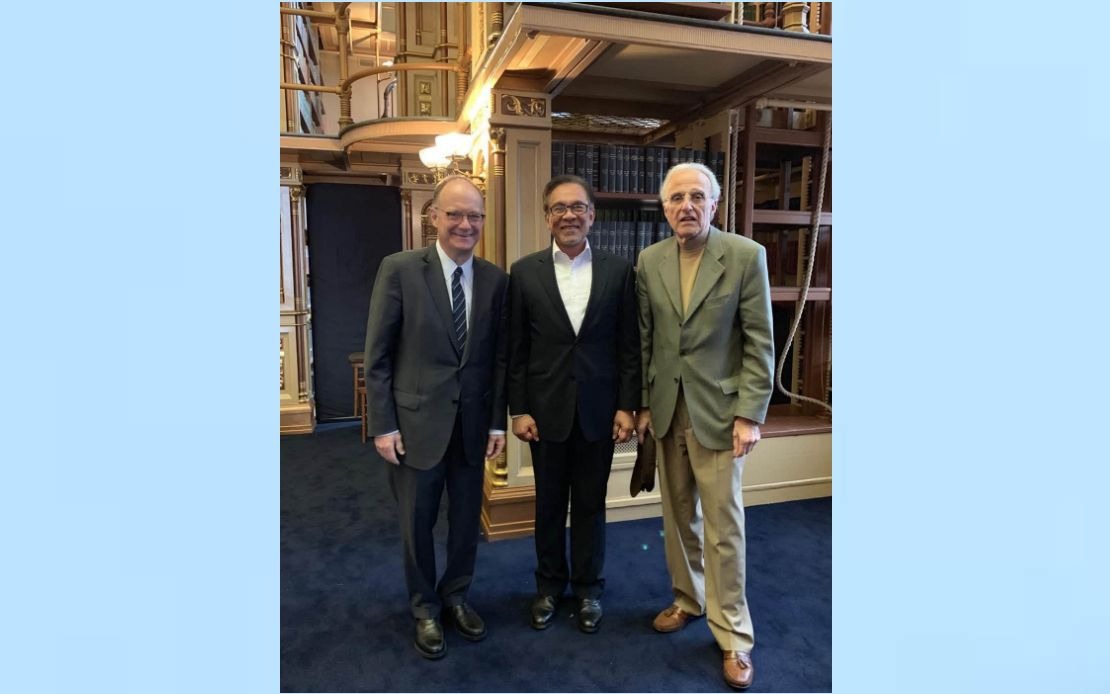
Prime Minister Datuk Seri Anwar Ibrahim has paid public tribute to Professor John L. Esposito, one of the world's most prominent scholars of Islamic studies, following the scholar's death. In a Facebook statement released on July 16, Anwar reflected on a friendship that stretched across more than five decades, beginning in the early 1970s when the two first encountered one another during formative years of their respective careers.
Esposito's intellectual legacy rests on his pioneering work in demystifying Islam for Western audiences and creating sustained dialogue between Muslim and Christian communities. The Georgetown University scholar dedicated his academic career to bridging the chasm between civilisations that might otherwise have remained separated by misunderstanding and cultural distance. His approach was notably different from the polemical positions that dominated discussions of Islam in many Western institutions during his most productive years.
Among Esposito's most significant institutional contributions was his founding of Georgetown University's Centre for Muslim-Christian Understanding, an initiative that transformed how American academic institutions engaged with Islamic thought and contemporary Muslim societies. This centre became a nexus for serious scholarship and interfaith engagement at a time when such conversations were comparatively rare in elite American universities. His collaborative work on Makers of Contemporary Islam further cemented his status as someone who could translate the complexities of Islamic intellectual traditions into terms accessible to non-specialist readers without sacrificing academic rigour.
Anwar specifically highlighted Esposito's popular works, particularly What Everyone Needs to Know About Islam and Who Speaks for Islam?, which proved instrumental in providing balanced, evidence-based perspectives during a period when public discourse about Islam had become increasingly polarised. The timing of these publications mattered considerably; their release in the years following the September 11 attacks provided a corrective voice to sensationalist and superficial commentary that dominated media coverage. At a moment when the world grappled with profound questions about Islam's relationship to violence and modernity, Esposito offered scholarly nuance grounded in decades of research across Muslim-majority regions.
The Prime Minister's characterisation of Esposito as someone who "built bridges where others were content to build civilisational barriers" encapsulates the scholar's fundamental philosophical commitment. This approach held particular significance for Malaysia and the broader Southeast Asian region, where Muslim-majority societies have long navigated complex relationships with Western powers and institutions. Esposito's work demonstrated that serious intellectual exchange across religious and cultural boundaries remained possible even amid geopolitical tensions and historical grievances.
Anwar's personal testimony about his decades-long bond with Esposito reveals the human dimension behind academic reputation. The Prime Minister described valuing Esposito's wisdom and guidance across the years, characterising him as simultaneously a formidable intellectual force and a dependable friend. This distinction between public scholar and private confidant underscores how Esposito's influence extended beyond published work to personal mentorship and quiet counsel offered across numerous conversations conducted away from public scrutiny.
The description of Esposito as "as generous in private conversation as he was rigorous on the page" speaks to a consistency of character that transcended his professional roles. Many scholars maintain a sharp separation between their public personas and private interactions, but Anwar's remarks suggest that Esposito maintained intellectual honesty and generosity of spirit across both domains. This kind of personal integrity carries particular weight when assessing a scholar's contributions to interfaith understanding, as it suggests his commitment to dialogue emerged from genuine conviction rather than professional positioning.
For Malaysia specifically, Esposito's passing represents the loss of a voice that had long engaged seriously with Southeast Asian Islam. His scholarly work frequently acknowledged the sophisticated intellectual traditions flourishing in Malaysia, Indonesia, and other regional Muslim societies, treating them with the seriousness they deserved rather than marginalising them as peripheral to "authentic" Islamic thought. This geographical inclusivity in his scholarship helped establish that Islam's diversity and contemporary relevance could not be understood through a narrow Middle Eastern lens.
The broader implications of Esposito's legacy for contemporary discourse on Islam remain significant. In an era when populist movements continue to exploit religious anxieties and oversimplify Islam's relationship to politics, modernity, and coexistence with secular institutions, the work of rigorous scholars willing to engage popular audiences becomes increasingly valuable. Esposito's books remain in print and continue to reach new readers navigating their own questions about Islamic thought and Muslim societies, meaning his influence will likely persist across generations.
Anwar's public mourning also signals the value that Malaysia's government places on intellectual contributions to global understanding. By offering official condolences and personal remembrance, Anwar elevated Esposito's achievements beyond academic circles, acknowledging that scholarship addressing the most fundamental questions about religion, culture, and civilisation carries genuine political and diplomatic significance. The statement implicitly endorses Esposito's approach to interfaith engagement as aligned with Malaysia's own stated commitments to Muslim-Christian understanding and regional stability.

