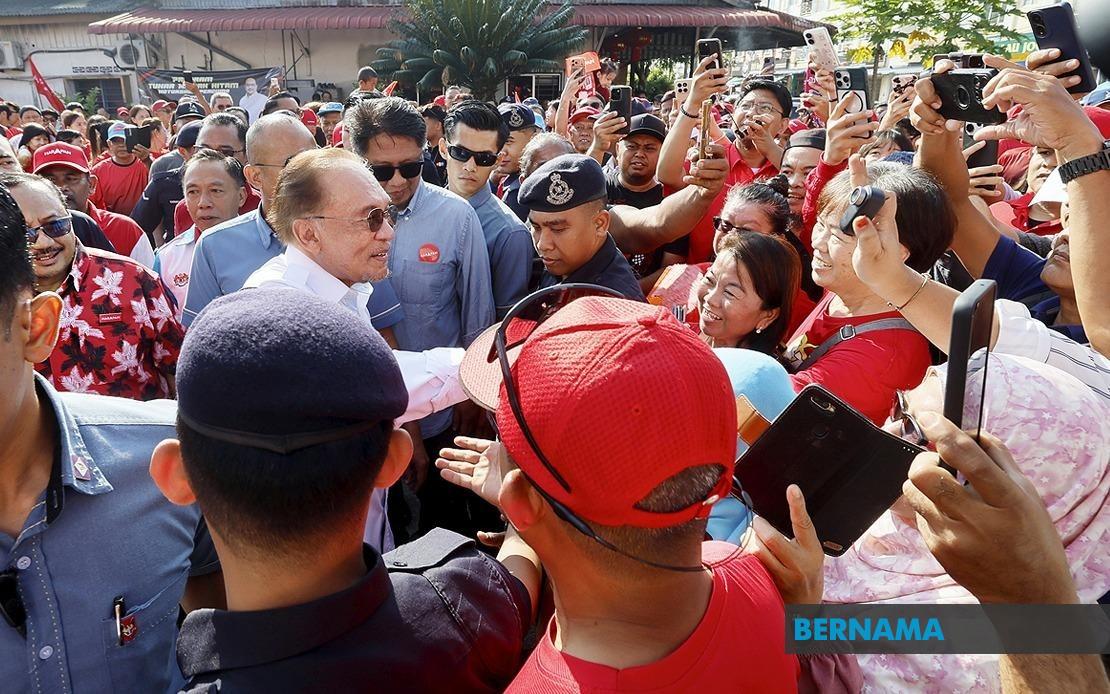
Prime Minister Datuk Seri Anwar Ibrahim took a moment out of his campaign schedule in Batu Pahat to reconnect with Abdul Razak Pelangga, 86, and his wife Jamilah Samsudin, 64, who had become the subject of widespread online attention after their determined journey to meet him. The reunion occurred during the "Yok! Meriahkan Johor! Undi Harapan" programme held in Senggarang on Wednesday, just days before Johor voters head to the polls.
The couple's original encounter with the Prime Minister last Sunday had captured hearts across the country when Abdul Razak pedalled nearly one kilometre by trishaw so his wife could fulfil her wish of meeting Anwar. What began as a simple personal quest resonated with Malaysians, transforming the modest elderly couple into symbols of civic engagement and hope within their community. The story gained significant traction on social media platforms, reflecting public interest in such grassroots moments during the election period.
During Wednesday's programme, Anwar engaged warmly with the couple, sharing good-humoured banter with Abdul Razak about the octogenarian's impressive physical capability in pedalling the trishaw across that distance. The exchange demonstrated the Prime Minister's approachability and willingness to acknowledge ordinary citizens' efforts and dedication. Beyond the lighthearted jokes, Anwar expressed genuine gratitude to Abdul Razak and Jamilah for their continued support, recognising their participation as meaningful in the broader context of democratic engagement.
The Senggarang event formed part of the Pakatan Harapan coalition's push to mobilise voter support across Johor ahead of the state election. The programme brought together key political figures, including Datuk Fahmi Fadzil, the Minister of Communications and PH Communications director, whose presence underscored the coalition's coordinated campaign strategy. The gathering also featured several PH candidates contesting in the upcoming polls, including Onn Abu Bakar representing Senggarang, Mohd Khuzzan Abu Bakar for Semerah, and Felicia Poh Rui Ling for Penggaram.
The timing of this reunion holds particular significance within the broader campaign narrative. As Johor prepares for its state election scheduled for Saturday, political parties across the spectrum are intensifying their efforts to connect with voters at both grassroots and community levels. The reunion of Anwar with Abdul Razak and Jamilah serves as a potent reminder that electoral campaigns ultimately revolve around connecting leaders with the citizens they seek to represent, transcending the usual bounds of formal political machinery.
Anwar's engagement with ordinary constituents, particularly elderly citizens, carries weight in Malaysian political discourse. It reflects an approach that values direct interaction and personal acknowledgment of public participation in the democratic process. The Prime Minister's willingness to carve out time in his schedule for such personal moments, despite the demands of a full campaign itinerary, sends a message about the importance placed on recognising grassroots support and community involvement.
The story of Abdul Razak and Jamilah also illuminates broader themes relevant to Malaysian society, particularly regarding the participation of senior citizens in civic processes. At 86 years old, Abdul Razak's commitment to accompany his wife to meet the Prime Minister demonstrates that engagement with democracy and political participation is not confined to younger demographics. For many elderly Malaysians, voting and engaging with political processes remain priorities that transcend age and physical constraints.
From a campaign perspective, the amplification of such human interest stories across social media platforms provides political parties with organic reach and positive messaging. The narrative of an elderly couple's simple yet determined quest to see their leader generates goodwill and humanises political figures in ways that traditional campaign materials often cannot achieve. For the Pakatan Harapan coalition, the reunion offered a valuable opportunity to reinforce messaging around accessibility and connection to ordinary Malaysians.
The Johor state election represents a crucial political moment for the coalition and its opponents, as control of a major state carries significant implications for national politics and governance. Campaign activities across the state have intensified in recent days, with various parties deploying candidates and senior leaders to engage voters. The convergence of high-stakes electoral competition with touching personal narratives like that of Abdul Razak and Jamilah creates a complex political landscape where emotion and policy considerations often intertwine.
Early voting procedures took place last Tuesday, allowing some voters to cast their ballots in advance of the main election day. The staggered voting process reflects efforts to manage logistics and ensure broader voter participation across different segments of the population. As Saturday's polling day approaches, both the governing coalition and opposition parties are making final appeals to undecided voters and reinforcing their positions on key policy matters affecting Johor residents.
The broader implication of Anwar's engagement with Abdul Razak and Jamilah extends beyond the immediate context of the Johor election. It reflects contemporary expectations among Malaysian voters that their leaders demonstrate genuine interest in hearing from constituents and acknowledging their participation in democratic processes. In an era of digital connectivity and social media scrutiny, such personal moments between leaders and citizens carry amplified significance, often shaping public perception more than formal policy announcements.

