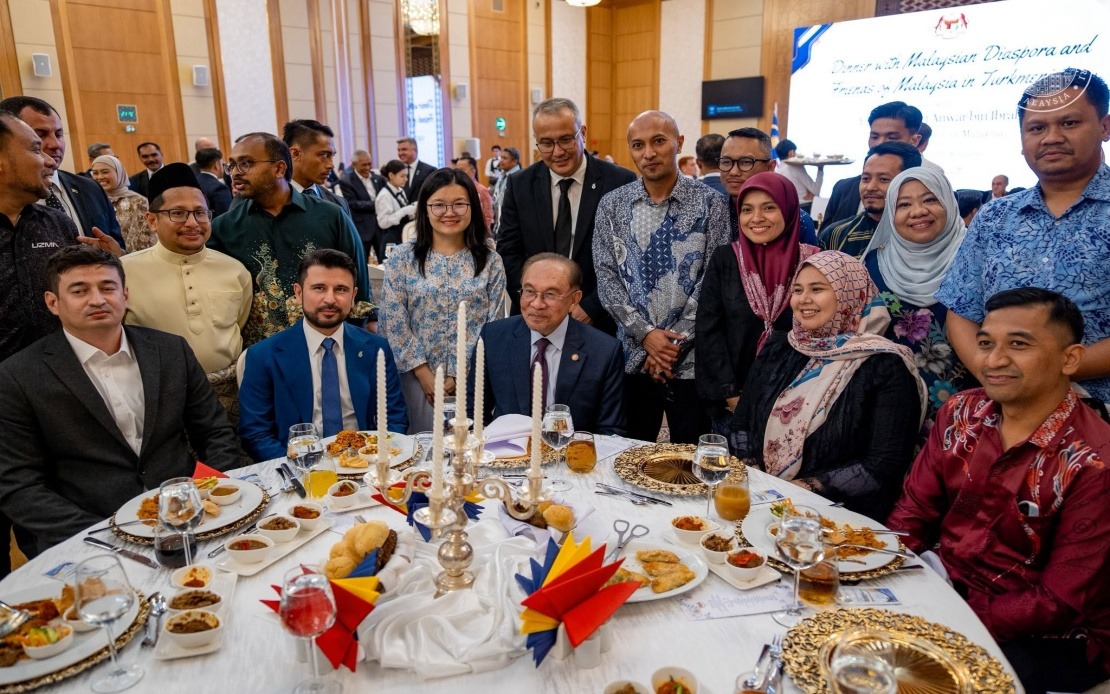
Prime Minister Datuk Seri Anwar Ibrahim used his official visit to Turkmenistan to connect with Malaysians living in Ashgabat, reinforcing the MADANI Government's pledge to nurture relationships with citizens and communities scattered across the globe. The engagement reflected a broader diplomatic strategy that extends beyond traditional state-to-state economic dealings, instead weaving in the human dimension of international relations through direct interaction with expatriate communities.
During the encounter, Anwar emphasised the critical role that overseas Malaysians play in representing the nation's values and interests abroad. He characterised them as unofficial ambassadors who actively contribute to building Malaysia's international reputation through their professional endeavours, personal conduct, and cross-cultural engagement. This framing underscores a recognition within government circles that the diaspora functions as a powerful but often underutilised asset in soft power projection, particularly in regions where Malaysia maintains growing strategic interests.
The Prime Minister encouraged the expatriate group to sustain their emotional and practical connections with Malaysia, emphasising the importance of staying informed about the country's developmental trajectory. This appeal carries particular significance in the context of brain drain concerns that have periodically troubled Malaysian policymakers, as maintaining psychological bonds with the homeland may influence decisions about long-term settlement and potential return migration. By personally engaging with these communities, Anwar signals that the government values their continued identification with Malaysia despite geographical separation.
Anwar's visit to Ashgabat represents his first official engagement with Turkmenistan as Prime Minister, occurring at the invitation of President Serdar Berdimuhamedov. The visit was reciprocated following Berdimuhamedov's trip to Malaysia in December 2024, establishing a pattern of high-level diplomatic exchange that aims to deepen bilateral relationships. The Central Asian nation, though geographically distant and culturally distinct from Malaysia, has emerged as a region of increasing geopolitical and economic interest for Southeast Asian states seeking to diversify partnerships beyond traditional Western and Asian-Pacific alignments.
Beyond the ceremonial aspects of state visits, Anwar articulated a comprehensive vision for Malaysia-Turkmenistan engagement that transcends conventional trade and investment metrics. He highlighted that the bilateral relationship encompasses efforts to cultivate genuine friendship between nations, foster mutual understanding, and identify collaborative opportunities that generate mutual benefit. This broader approach suggests that Malaysia is adopting a longer-term perspective on Central Asian relationships, viewing them not merely as transactional arrangements but as foundations for sustained diplomatic presence in a strategically important region.
The timing of this diaspora engagement during an official state visit demonstrates a deliberate fusion of formal diplomacy with grassroots outreach. Rather than conducting diaspora affairs exclusively through embassy channels or sporadic government initiatives, bringing direct engagement from the apex of executive authority elevates the symbolic importance of these communities. For Malaysians in Ashgabat, the Prime Minister's personal attention validates their significance to national interests and provides reassurance regarding government support for citizens living in challenging or remote circumstances.
Central Asia represents a frontier for Malaysian diplomatic expansion, where opportunities exist across energy cooperation, infrastructure development, and halal trade—sectors where Malaysia possesses expertise and competitive advantages. The presence of Malaysian citizens in this region, even in relatively small numbers, provides informal networks that can facilitate business relationships and cultural exchanges. Anwar's engagement with this community signals a commitment to leveraging every available resource and relationship to advance national interests in an increasingly multipolar geopolitical environment.
For Southeast Asian observers, this episode illustrates how middle-power nations like Malaysia navigate global engagement by combining traditional state diplomacy with non-state actor mobilisation. The diaspora, often overlooked in formal international relations discourse, represents repositories of cultural knowledge, professional networks, and entrepreneurial capacity that can amplify a nation's soft power reach. By publicly recognising and engaging these communities, Anwar positions Malaysia as a country that maintains institutional memory and emotional bonds across geographical distances.
The MADANI Government's emphasis on strengthening diaspora relationships also reflects broader policy shifts toward inclusive governance that acknowledges how globalisation has dispersed Malaysian communities worldwide. Rather than viewing migration primarily as a loss, this approach frames overseas Malaysians as participants in an extended national project, capable of contributing to Malaysia's development even from abroad through remittances, knowledge transfer, business linkages, and reputational advocacy. This perspective is particularly relevant given projections that diaspora populations will continue growing as educational and economic opportunities drive professional mobility.
As Malaysia expands its footprint in Central Asia and beyond, the capacity to mobilise diaspora communities as partners in diplomatic and economic endeavours becomes increasingly valuable. Anwar's engagement in Ashgabat exemplifies this strategy in action, demonstrating how personal diplomacy from senior leadership can energise expatriate populations and encourage sustained commitment to national interests. The message conveyed—that overseas Malaysians matter to their government and remain integral to national narratives despite physical distance—carries implications extending far beyond this particular visit, potentially influencing how Malaysians abroad perceive their relationship with the homeland.