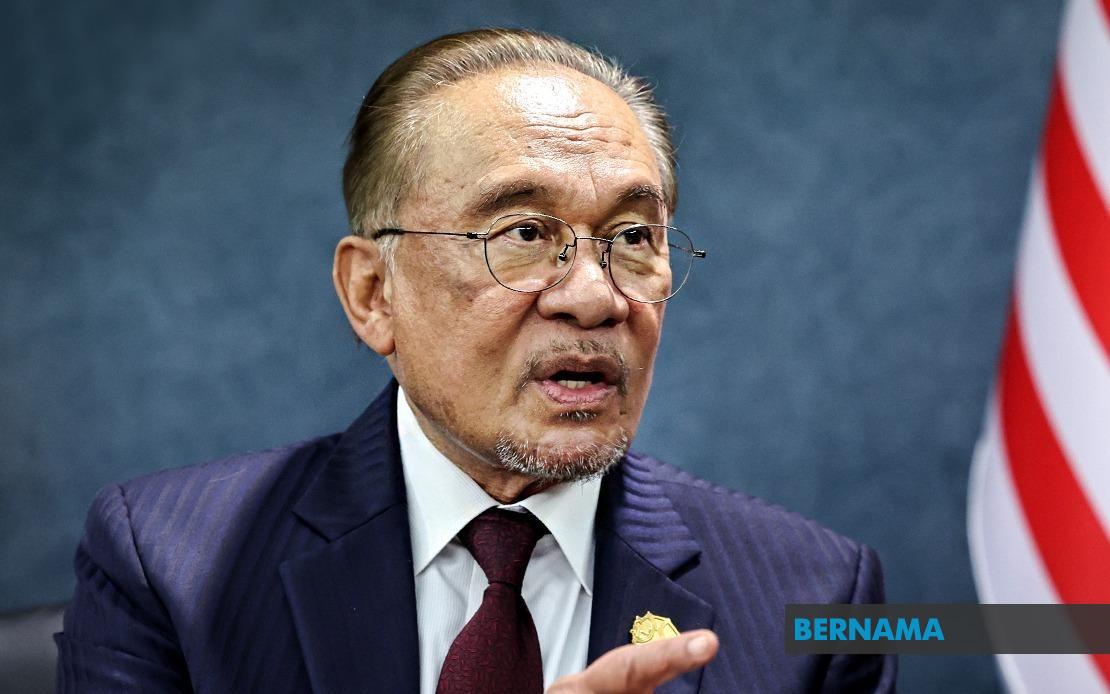
Prime Minister Datuk Seri Anwar Ibrahim took centre stage at the ASEAN-Russia Business Forum held in Kazan, addressing an assembly of business executives and officials from throughout ASEAN and Russia. The engagement at Kazan IT Park represented a key diplomatic moment for Malaysia within the broader framework of ASEAN's strategic positioning in relation to Moscow, underscoring the continued relevance of economic partnerships between the regional bloc and the Russian Federation despite geopolitical complexities.
The Prime Minister, who holds the concurrent portfolio of Finance Minister, delivered remarks intended to highlight opportunities for deepened commercial ties and collaborative ventures between the two regions. His reception at the venue was facilitated by Ilya Nachvin, Minister of Digitalisation of Public Administration, Information Technologies and Communications of the Republic of Tatarstan, signalling Russia's commitment to engaging ASEAN through both political and technological channels.
Following the business forum proceedings, Anwar participated in the ASEAN-Russia Commemorative Summit Gala Dinner held at the Tatar State Academic Theater, where state protocol afforded him a courtesy meeting with Russian President Vladimir Putin. This bilateral moment reflected Malaysia's standing within ASEAN and its bilateral relationship with Russia, providing an opportunity to discuss matters of mutual interest at the highest governmental level.
The 2024 summit in Kazan carried particular symbolic weight, coinciding with the 35th anniversary of ASEAN-Russia dialogue relations. The relationship trajectory between the two entities has undergone substantive evolution since initial contact in 1991, when dialogue mechanisms were first established. Russia's elevation to full ASEAN Dialogue Partner status in 1996 represented a formalisation of engagement that would later deepen considerably with the designation of Strategic Partnership status in 2018, creating institutional frameworks for cooperation spanning political-security matters, economic integration, and cultural-social exchanges.
Geographically, Kazan's selection as the summit venue possessed considerable symbolic resonance. Situated some 800 kilometres east of Moscow at the convergence of the Volga and Kazanka rivers, the city functions as Russia's European gateway and cultural bridge between Russian and Muslim-majority societies. With a metropolitan population exceeding 1.3 million inhabitants, Kazan occupies an established position as the nation's third most significant urban centre, trailing only Moscow and St Petersburg. The city's historical trajectory spanning more than a millennium has positioned it as a custodian of Islamic heritage and cultural traditions within the Russian Federation, making it an appropriately symbolic location for dialogues involving ASEAN member states, several of which represent the world's largest Muslim-majority populations.
Bilateral economic engagement between Malaysia and Russia demonstrates meaningful commercial substance. In 2025, Russia ranked as Malaysia's ninth-largest trading partner among European nations, with aggregate commerce reaching RM8.72 billion in value, equivalent to approximately USD2.04 billion. This commercial relationship reflects complementary supply chains and consumption patterns, with Malaysian exporters predominantly shipping electrical and electronic products, machinery, equipment components, and processed foodstuffs to Russian markets. Conversely, Malaysian importers draw petroleum products, mineral resources, chemicals, and chemical-derived goods from Russia, establishing a pattern of cross-sector trade that supports manufacturing and consumption across both economies.
Regional trade statistics between ASEAN as a collective entity and Russia registered USD18.1 billion throughout 2024, though Russian foreign direct investment flows into ASEAN territories remained comparatively modest at USD92.97 million. This disparity between trade volumes and investment capital inflows suggests considerable untapped potential within the economic partnership, particularly in sectors where Russian capital and technology could catalyse productivity gains or infrastructure development across Southeast Asia.
MALAYSIA's participation in the commemorative summit reflected its institutional commitment to ASEAN cohesion while simultaneously pursuing bilateral relationship management with significant non-regional powers. The summit framework enables member states to articulate collective interests whilst maintaining individual diplomatic channels with strategic partners. For Malaysia specifically, engagement with Russia occurs within broader foreign policy considerations encompassing relationships with Western powers, China, India, and other regional actors, requiring diplomatic nuance and strategic balance.
The timing of this ASEAN-Russia engagement occurs amid evolving geopolitical circumstances affecting global commerce, investment flows, and diplomatic alignments. Southeast Asian nations have generally sought to maintain pragmatic relationships across diverse geopolitical constituencies rather than align exclusively with any single bloc, a positioning that requires careful diplomatic management particularly when engaging with major powers subject to international sanctions or strategic competition. The business forum component of the summit emphasises commercial dimensions of the relationship, potentially offering pathways for deepening economic ties whilst managing political sensitivities that may constrain investment or technology transfer in certain sectors.
Looking forward, the ASEAN-Russia Strategic Partnership framework offers avenues for expansion in emerging domains including digital transformation, renewable energy, agricultural technology, and infrastructure development. For Malaysia as a middle-income nation pursuing high-technology manufacturing and services-sector growth, selective engagement with Russian expertise in specific domains could complement its broader economic diversification strategies. The business forum format facilitates identification of concrete commercial opportunities whilst the summit's political dimensions enable governments to establish policy frameworks supporting private-sector transactions and long-term partnership arrangements.