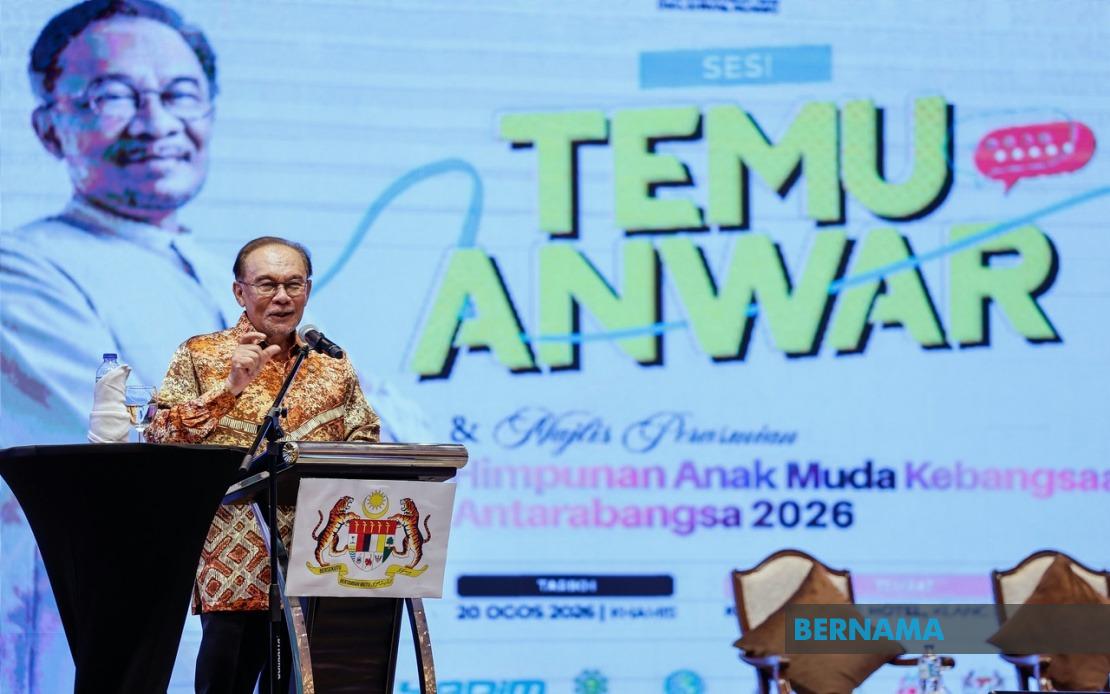
Prime Minister Datuk Seri Anwar Ibrahim has indicated that the government will roll out several consequential policy announcements over the coming weeks, with major declarations planned for late August, mid-September, and October. Speaking at the Temu Anwar session held during the opening ceremony of Himpunan Anak Muda Antarabangsa (HAMKA) 2026 in Klang, the Prime Minister provided a timeline for government initiatives whilst declining to disclose specifics at this stage. He revealed that an announcement would precede National Day on August 30, with another scheduled for Malaysia Day celebrations on September 16, followed by further measures when the government tables the annual Budget in early October.
The Prime Minister's measured disclosure came in response to concerns raised by a student participant regarding government support for young workers engaged in the gig economy—a sector that has expanded considerably across Malaysia as flexible employment gains prominence. Anwar acknowledged that whilst the government had implemented support mechanisms, dialogue with stakeholders suggested that existing assistance packages fell short of addressing the full scope of challenges confronting this demographic. Rather than committing to specific measures immediately, he adopted a consultative posture, emphasising that the government would carefully examine additional proposals before determining its capacity to implement new programmes.
Central to the government's current strategy for protecting gig economy participants is the Malaysian Gig Economy Commission, known locally as SEGiM, which was established to create a regulatory framework addressing the unique circumstances of non-traditional workers. Alongside this institutional development, the government has prepared legislative instruments, notably a new bill targeting small business operators, to extend protections and establish clearer rights for workers operating outside conventional employment relationships. These measures represent a substantial shift in how Malaysia's policymakers approach labour regulation, as the gig and informal economy now encompasses hundreds of thousands of citizens navigating income generation without traditional employer-employee contracts.
Beyond immediate welfare protections, Anwar identified entrepreneurship as a critical pathway for young Malaysians seeking financial independence and wealth creation. He highlighted that the government intended to enhance access to business financing through existing mechanisms such as the National Entrepreneurial Group Economic Fund, commonly referred to as TEKUN. This institution has historically served as a crucial lending source for aspiring entrepreneurs lacking significant capital reserves, particularly benefiting first-time business operators from lower-income backgrounds.
However, the Prime Minister acknowledged a structural constraint within current financing frameworks: the requirement that applicants demonstrate an established business track record before qualifying for government-backed loans. Anwar suggested this prerequisite warrant reconsideration given the rapidly transforming employment landscape, where traditional career progression has given way to more fluid, project-based work arrangements. He recognised that such eligibility criteria, whilst designed to ensure loan repayment capacity, may inadvertently exclude precisely those young workers most in need of capital to transition from precarious gig work into more sustainable entrepreneurial ventures.
The timing of these announcements carries particular significance for Malaysia's youth population, which has grown increasingly vocal regarding economic anxieties and employment prospects. Youth unemployment remains a persistent policy challenge, and the expansion of gig economy participation—often by necessity rather than choice—has raised questions about income security, benefits access, and long-term financial viability. By anchoring major policy statements to National Day and Malaysia Day, the government signals that youth economic welfare and national development are intertwined priorities worthy of ceremonial emphasis.
Anwar's approach of sequencing announcements across three distinct occasions throughout the calendar year suggests a deliberate strategy to maintain momentum on youth-focused initiatives whilst integrating these measures with broader fiscal and developmental frameworks. The August 30 announcement will set the tone before independence celebrations, the September 16 declaration aligns with Malaysia Day festivities that emphasise national unity and shared prosperity, and the October Budget presentation provides the fiscal mechanism through which government commitments translate into allocated resources and implementation pathways.
For Malaysian readers, particularly young professionals and aspiring entrepreneurs, these pending announcements may indicate expanded access to financing, revised eligibility criteria for entrepreneurship support, and enhanced protections for gig economy participants. The government's acknowledgment that existing assistance programmes may require augmentation reflects growing recognition that Malaysia's economic transition demands adaptive policy frameworks capable of supporting workers in non-traditional employment categories. The coming months will reveal whether the government's listening exercises translate into substantive policy modifications or represent incremental refinements to existing arrangements.
The Prime Minister's candour regarding the need to consult, listen and assess government capacity before committing to new expenditures also suggests fiscal prudence amidst a complex economic environment. By declining to announce specifics prematurely, Anwar avoided raising expectations potentially unachievable given budgetary constraints or competing national priorities. This measured communication style stands in contrast to grand promises, instead positioning the government as thoughtfully deliberative regarding major policy shifts affecting millions of young Malaysians navigating the gig economy and entrepreneurial pathways.

