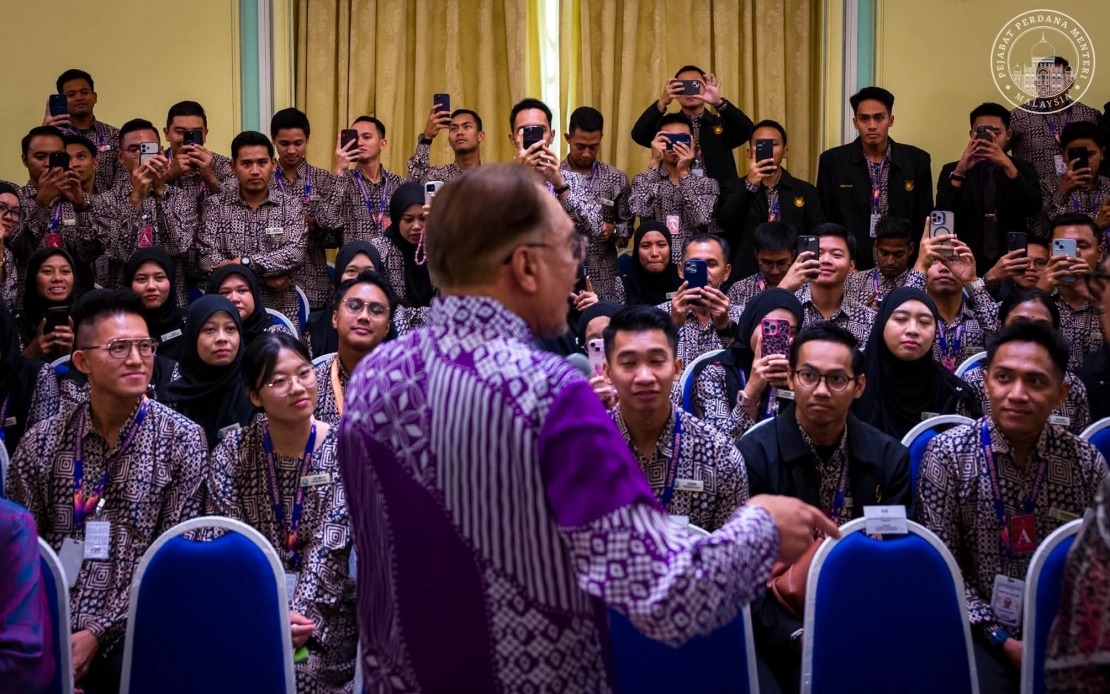
Prime Minister Datuk Seri Anwar Ibrahim has delivered a pointed message to Malaysia's administrative elite about the dual imperatives facing the civil service: the courage to modernise systems and processes while maintaining the ethical foundations that sustain public trust. Speaking during a session with Administrative and Diplomatic Service (PTD) officer cadets undertaking the Postgraduate Diploma in Public Management at his Putrajaya office on July 16, Anwar underscored that the nation's trajectory hinges on having officials who can navigate this delicate balance.
The timing of Anwar's intervention reflects wider concerns about Malaysia's governance landscape. The country has faced criticism over the years regarding bureaucratic inefficiency, corruption allegations, and resistance to institutional reform within pockets of the public sector. By directly engaging with the next generation of senior civil servants—those destined for the highest echelons of government administration—Anwar is attempting to shape organisational culture at its source. PTD officers typically progress into deputy secretary and secretary positions across federal and state governments, making their formative training crucial to the implementation of national policy.
Anwar's emphasis on placing national and public interests above all else carries particular resonance in Southeast Asia's contemporary context. Across the region, several countries have grappled with public sector capture by narrow interests, whether political factions, corporate players, or entrenched bureaucratic cliques. Malaysia, too, has contended with such tensions. By instilling in cadets the principle that civil servants must prioritise the broader good, Anwar is attempting to inoculate the administrative apparatus against such compromises before they take root in careers that may span three decades.
The commitment to embracing change addresses a persistent structural challenge within Malaysian government. Large bureaucracies often develop institutional inertia, with established procedures and hierarchies resisting innovations that might threaten existing power distributions or require retraining. The digital transformation agenda, policy modernisation efforts, and shifts towards outcome-based rather than process-based management have all encountered friction within parts of the public service. By explicitly calling on cadets to cultivate the courage to champion change, Anwar is signalling that resistance to necessary reform will not align with the government's strategic direction.
Efficiency gains remain critical for Malaysia's competitive positioning. The country competes with Indonesia, Thailand, the Philippines, and Vietnam for foreign direct investment and regional influence. Investors and development partners increasingly assess governance quality and administrative responsiveness when making deployment decisions. A public service that can execute policy swiftly and adapt to shifting market conditions thus becomes a tangible asset for Malaysia's economic strategy. Anwar's message to incoming senior officials connects administrative performance directly to national prosperity.
The emphasis on good governance and integrity also addresses a vulnerability that has sometimes undermined Malaysia's diplomatic standing. Regional peers and international observers have occasionally questioned the impartiality of Malaysian institutions during periods of political turbulence. By reinforcing that principled public service must transcend partisan interests, Anwar is attempting to strengthen the institutional buffers that protect civil servants from pressure to serve factional causes rather than national ones. This separation between politics and administration remains imperfect across Southeast Asia, and Malaysia's track record is mixed.
The private nature of the engagement—conducted at Anwar's office rather than a formal state occasion—suggests this was intended as substantive instruction rather than ceremonial messaging. The Prime Minister's decision to publicise the encounter via Facebook indicates he wanted the message to reach a wider audience within and beyond government. Cadets currently undergoing training will eventually supervise thousands of officials across ministries, statutory bodies, and public agencies. The values and leadership philosophy they absorb now will shape decision-making frameworks throughout their careers.
For Malaysian readers concerned with governance quality, Anwar's intervention can be read as recognition that administrative transformation requires investment in the worldviews and competencies of rising officials. It is insufficient to announce policy reforms from the centre if the officials tasked with implementation have not been persuaded of their necessity or equipped to champion them. By directing his message to PTD cadets, Anwar is attempting to build momentum for change from within the system itself, leveraging the natural authority that mentoring by the Prime Minister carries among ambitious bureaucrats.
The challenge ahead lies in translating rhetorical commitments into sustained institutional practice. Civil services across Southeast Asia frequently encounter the gap between principles articulated at leadership level and incentive structures operating at operational levels. Junior officials may be encouraged to embrace innovation but face career penalties if they fail to follow established procedures. Similarly, the demand for integrity can clash with political pressures exerted on ministries to deliver outcomes favourable to particular constituencies. How effectively Anwar's message translates into changed behaviour will depend on whether accompanying reforms to performance metrics, training programmes, and accountability mechanisms reinforce the values he articulated.
Looking forward, the cadets who received Anwar's message will test whether Malaysia's public sector can genuinely become more adaptive and efficient while maintaining ethical standards. Their success or failure in navigating that tension will substantially influence whether the Malaysian state can execute the complex policy agenda required for the country's next phase of development—from economic transformation to managing demographic shifts and environmental challenges. In that sense, Anwar's address to a relatively small group of trainees carries implications extending far beyond the immediate audience.

