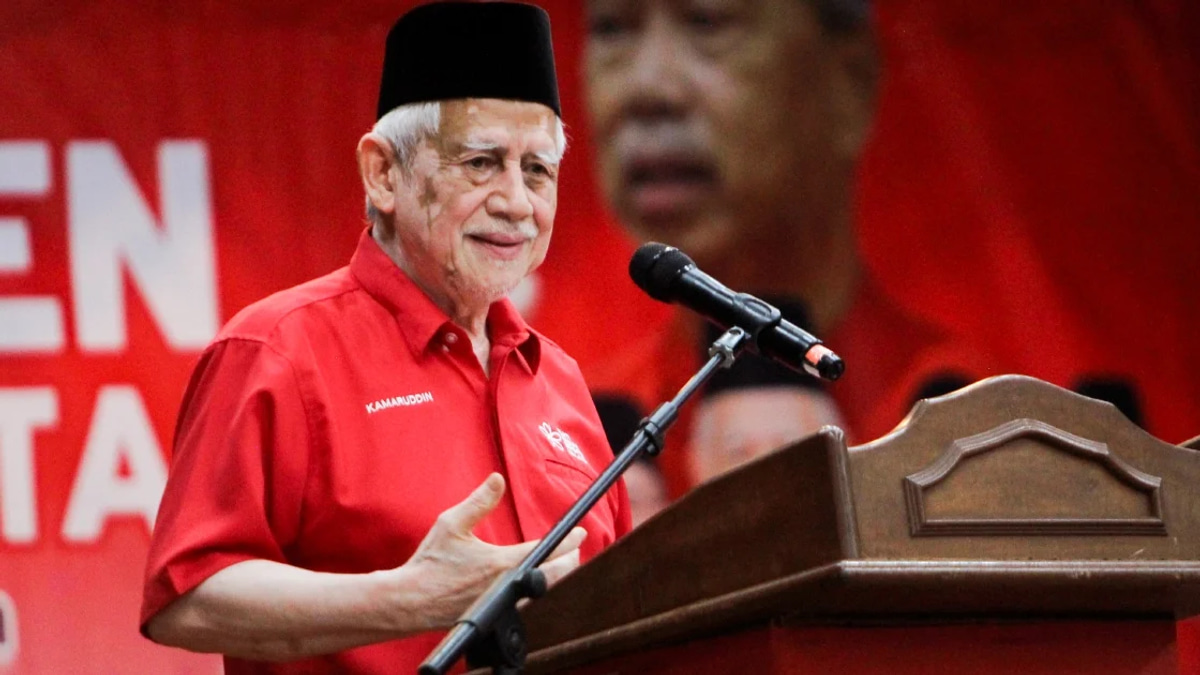
Prime Minister Datuk Seri Anwar Ibrahim has made a renewed call for Malaysians across all communities to embrace the philosophical and spiritual principles underlying Hijrah, positioning it as a framework that transcends religious boundaries to encompass shared national values of truthfulness, economic prosperity and collective security.
The concept of Hijrah, traditionally understood as Prophet Muhammad's migration from Mecca to Medina in the seventh century, carries profound significance within Islamic tradition as a turning point that established principles of justice, community welfare and moral integrity. Anwar's invocation of this historical moment suggests an attempt to recontextualise its meaning beyond purely religious parameters, applying its core tenets to Malaysia's contemporary challenges of political accountability, economic inequality and social fragmentation.
This message arrives during a particularly sensitive period in Malaysian governance, where public confidence in institutional transparency remains contested. By emphasizing truth as a foundational principle, the Prime Minister appears to be signalling commitment to governance standards that align with broader expectations for accountability and honest public discourse. The framing carries implicit acknowledgment that Malaysia's path forward depends fundamentally on citizens and leaders operating from positions of moral clarity and factual integrity, especially as the nation navigates competing narratives across political, religious and communal lines.
The prosperity dimension of Anwar's appeal addresses Malaysia's persistent economic anxieties. The nation continues grappling with income inequality, youth unemployment and the need to sustain competitiveness in an increasingly challenging regional economy. By linking Hijrah to prosperity, the Prime Minister invokes both historical precedent and spiritual motivation, suggesting that adherence to truthful principles and ethical conduct in business and governance naturally generates economic benefit. This framing may resonate particularly among younger Malaysians seeking both spiritual meaning and material security in uncertain times.
Security, the third pillar of Anwar's formulation, encompasses multiple dimensions relevant to contemporary Malaysia. National security in its conventional sense remains paramount, particularly given regional tensions and transnational threats. Yet the invocation equally encompasses social security—the psychological comfort that comes from stable institutions, predictable governance and inclusive policies that ensure no community feels systematically disadvantaged. In a nation as diverse as Malaysia, where religious and ethnic identities frequently intersect with political positioning, security conceptualised broadly serves as shorthand for the kind of institutional trust that enables diverse populations to coexist peacefully.
Anwar's rhetorical strategy of universalising Hijrah principles demonstrates awareness that national mobilisation in plural Malaysia requires framing that acknowledges Islamic foundations while remaining inclusive of non-Muslim citizens who comprise roughly 40 percent of the population. By emphasising truth, prosperity and security rather than explicitly religious language, the message becomes accessible to Malaysians of all faiths who share commitment to these universal values. This represents a departure from more sectarian political discourse that has occasionally characterised Malaysian public debate.
The timing of such an appeal carries political implications for the Prime Minister's administration. After years of political turbulence, coalition fragmentation and public scepticism about political elites, Anwar appears intent on establishing a moral and philosophical foundation for his government's legitimacy beyond mere electoral mandate. By appealing to deeper shared values, he seeks to build what might be termed a values-based coalition that transcends traditional party politics and ethnic-religious calculations.
For Malaysia's business community and investors both domestic and foreign, the emphasis on truth and prosperity carries tangible implications. Corporate governance standards, transparent regulatory environments and predictable legal frameworks become not merely technical requirements but moral imperatives reflecting Hijrah principles. This framing potentially strengthens arguments for anti-corruption measures, institutional reform and policy consistency that businesses require for long-term investment decisions.
Regionally, Malaysia's position as a Muslim-majority nation with significant non-Muslim populations and its role as a bridge between different civilisational spheres gives particular weight to messages about inclusive values. Anwar's articulation of Hijrah as encompassing shared principles of truth and prosperity rather than sectarian identity positions Malaysia as a model for how Islamic principles can inform modern governance in plural societies—an increasingly relevant consideration as Muslim-majority nations worldwide navigate modernisation, democratisation and intercommunal coexistence.
The challenge for translating this rhetorical appeal into concrete outcomes lies in implementation and consistency. Malaysians across the political spectrum will scrutinise whether governmental policies, institutional behaviour and leadership conduct actually reflect the principles of truth, prosperity and security being invoked. Without demonstrable alignment between official pronouncements and governmental practice, such appeals risk being dismissed as mere rhetoric divorced from reality.
Movements toward institutional transparency, economic policies that broaden opportunity, and security frameworks that protect all communities equally would provide tangible evidence of Hijrah principles in action. Conversely, lapses in accountability, policies perceived as benefiting particular groups, or security measures that appear discriminatory would undermine the credibility of the moral framework Anwar is attempting to establish. The gap between ideals and implementation will ultimately determine whether this appeal to shared values contributes meaningfully to Malaysia's national cohesion or remains primarily a political statement.