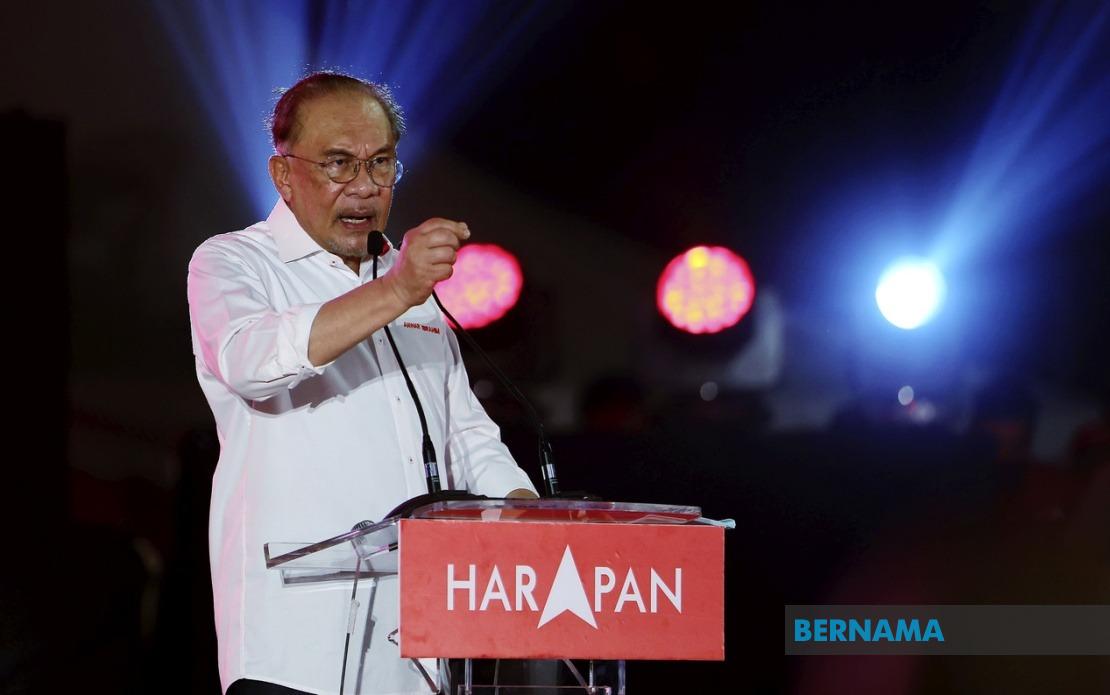
Prime Minister Datuk Seri Anwar Ibrahim has drawn a clear line for the upcoming 16th Negeri Sembilan State Election, warning political contenders not to instrumentalise sensitive issues surrounding the monarchy and the Federal Constitution for electoral gain. Speaking at the Pakatan Harapan candidate announcement ceremony in Kuala Pilah on July 14, the PH chairman stressed that while vigorous political rivalry forms a natural part of democratic systems, such competition must be exercised within bounds of responsibility and respect for national institutions.
Anwar's intervention signals concern that the campaign might otherwise veer into contentious territory that could fracture community cohesion. His framing distinguishes between permissible political disagreement and impermissible attacks on foundational state structures. The message carries particular weight given Malaysia's constitutional framework, which affords special protections to the institution of the monarchy and the constitutional order itself. By publicly setting these parameters before the campaign gains momentum, Anwar appears intent on preventing escalation into divisive rhetoric that might echo beyond state borders and undermine federal-state harmony.
The Prime Minister elaborated that substantive political competition and the articulation of differing policy visions remain not only acceptable but essential to democratic health. However, he drew a sharp distinction between legitimate debate and the spreading of falsehoods or inflammatory claims designed to sow discord among the electorate. This nuance acknowledges that states and federal coalitions will naturally clash over governance priorities and resource allocation, yet insists such contests avoid delegitimising the institutions that bind the nation together.
Anwar's remarks come as Pakatan Harapan prepares to contest the election with a slate combining fresh political talent alongside seasoned parliamentarians from its three component parties: PKR, DAP, and Amanah. The coalition announced 36 candidates, including the renomination of Menteri Besar Datuk Seri Aminuddin Harun in the Linggi seat and DAP secretary-general Anthony Loke contesting the Chennah state seat. This composition signals confidence in both continuity and renewal, suggesting PH believes its track record in Negeri Sembilan warrants another mandate.
The announcement drew representation from PH's senior hierarchy, with Amanah president Datuk Seri Mohamad Sabu, PH Communications Director Datuk Seri Fahmi Fadzil, and PH Election director Datuk Seri Amirudin Shari present to underscore the coalition's unified front. Such high-level attendance demonstrates that PH views the state election not merely as a local contest but as consequential for its national political standing, particularly in consolidating support within one of its traditional strongholds on the peninsular heartland.
Anwar's public endorsement of Aminuddin's leadership—describing him as cooperative and effective in working alongside federal authorities—provides crucial political backing ahead of the campaign. This endorsement matters strategically because it frames the incumbent MB as aligned with the federal government's development agenda, suggesting that voting for PH in Negeri Sembilan serves not parochial state interests but harmonious federation-wide progress. The emphasis on coordination between state and federal tiers counters potential opposition narratives that might depict PH governance as fractious or misaligned.
The substantive focus on development carries particular resonance in Negeri Sembilan, a state seeking to accelerate economic diversification and infrastructure development. Anwar's declaration that the state must not fall behind in the federal government's advancement programme implicitly warns against fragmentation of governance through divided administrations. This logic suggests that PH control at both state and federal levels enables more efficient resource deployment and policy coherence—a common argument deployed by governing coalitions seeking re-election.
Anwar's cautionary words about royal institutions and constitutional matters reflect broader concerns within Malaysia's political landscape about the health of public discourse. Recent years have witnessed occasional inflammatory rhetoric touching on matters traditionally considered beyond electoral contestation. By setting these guardrails explicitly, Anwar positions Pakatan Harapan as the guardian of institutional stability and constitutional propriety, potentially gaining votes among electors who value predictability and respect for established frameworks.
The timing of this intervention, made during the candidate announcement phase before campaigning officially commences, suggests deliberate strategy. By establishing norms early, Anwar potentially constrains opposition parties' tactical options without appearing heavy-handed or defensive. Opposition parties endorsing these principles face difficulty violating them without inviting accusations of bad faith, while those rejecting them risk appearing reckless to moderate voters concerned about political extremism.
For Malaysian readers in other states, Anwar's address carries broader implications about how the federal government intends to approach competitive electoral politics moving forward. The emphasis on institutional respect and constitutional propriety, combined with invocation of development and progress narratives, sketches a governing philosophy that prioritises stability and forward momentum over confrontational politics. Whether opposition parties in Negeri Sembilan will observe these boundaries remains to be seen, but Anwar has clearly staked out PH's positioning as the coalition committed to responsible democratic practice.

