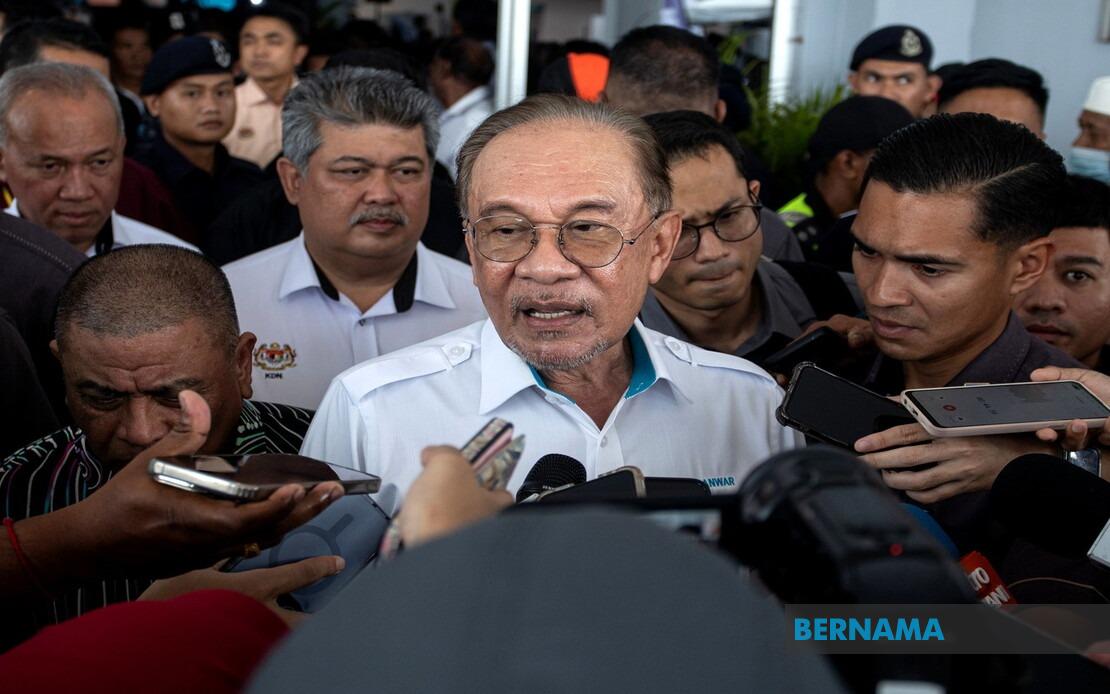
Prime Minister Datuk Seri Anwar Ibrahim has issued a stern reminder to all government officials that attacking their coalition partners during state election campaigns will not be tolerated, emphasizing that those who breach this discipline should be prepared to resign from office. Speaking in Ipoh following the MADANI KITA engagement with the Tambun Community, Anwar stressed that maintaining unified governance at the federal level takes precedence over competitive electoral contests at the state level, even when coalition partners face off against one another in regional polling.
The Prime Minister's intervention reflects growing tensions within Malaysia's Unity Government coalition as several states prepare for elections, with competition between coalition partners potentially undermining the cohesion needed to sustain the administration. Anwar acknowledged that the Malaysian democratic system permits coalition members to contest against each other at the state level—a reality that has become increasingly common as federal partners compete for regional influence and voter support. However, he drew a crucial distinction between legitimate state-level competition and public attacks on federal government policies or institutions, which he characterized as corrosive to the administration's credibility.
Anwar's remarks carry particular weight given his dual role as Prime Minister and chairman of Pakatan Harapan, positioning him as an arbiter of coalition conduct. His message to government officials—whether serving as ministers, deputy ministers, or heads of federal agencies—was unambiguous: if these individuals intend to campaign against their coalition partners by attacking the federal administration, they must first divest themselves of their government positions. This represents a clear attempt to separate the roles of campaigner and public servant, ensuring that those on the government payroll do not undermine its legitimacy while simultaneously benefiting from official status and resources.
The Prime Minister has already consulted with his two deputies, Datuk Seri Dr Ahmad Zahid Hamidi and Datuk Seri Fadillah Yusof, indicating that this directive represents a coordinated position from the senior leadership. This consultation suggests that concerns about campaign conduct may extend beyond one coalition partner, reflecting a broader need to establish ground rules for how the Unity Government manages internal competition during election periods. By engaging his deputies early, Anwar has attempted to ensure institutional buy-in for these disciplinary standards across the coalition structure.
For Malaysian observers, Anwar's intervention highlights the inherent contradiction of coalition governments competing internally while maintaining federal unity. The Prime Minister framed this challenge as manageable within democratic norms, provided that officials maintain their integrity and refrain from weaponizing government institutions or policies for electoral advantage. His statement that coalition members remain "free to campaign on state issues" suggests a recognition that state-level contests involve legitimate policy disagreements and regional priorities that warrant robust political competition. The constraint, however, is that such campaigns cannot extend to attacking the legitimacy or performance of the federal government itself.
The emphasis on preserving "cordial relations" at both federal and state levels underscores Anwar's concern that adversarial campaign conduct might poison the collaborative relationships necessary for governance. When coalition partners occupy senior government positions while simultaneously campaigning against the federal administration, the resulting cognitive dissonance can confuse voters and undermine public confidence in institutional effectiveness. Anwar's approach attempts to compartmentalize these roles, keeping election-season rhetoric separate from the daily business of administering government services.
This directive also has implications for how coalition dynamics will evolve in Malaysia's federal system. If enforced consistently, Anwar's standard could reshape campaign behavior across future electoral cycles, establishing a precedent that government officials must choose between their positions and aggressive opposition to coalition partners. For regional observers in Southeast Asia, where coalition governments are common, Malaysia's approach to managing internal competition during elections may offer instructive lessons about maintaining governmental functionality amid partisan tensions.
The practical enforceability of Anwar's directive remains to be tested. His threat that violators should resign from their posts suggests an expectation of voluntary compliance rooted in party discipline and mutual understanding of coalition obligations. However, if specific officials ignore this warning and proceed with attacks on the federal government, Anwar's credibility will depend on whether he actually removes or accepts resignations from these individuals. The strength of coalition discipline will become apparent only through concrete consequences.
For the broader Unity Government coalition—which includes Pakatan Harapan, Barisan Nasional, and other partners—the Prime Minister's warning represents an attempt to establish clear boundaries for acceptable campaign conduct. By articulating these standards publicly rather than managing them through backroom discussions, Anwar has signaled that concerns about coalition unity are serious enough to warrant direct public address. This transparency may itself serve as a deterrent, as officials now understand that violations will be matters of public record rather than internal party matters.
The timing of Anwar's intervention, delivered at a community engagement event, also suggests his desire to frame coalition discipline as a governance imperative rather than a partisan power play. By discussing the matter in the context of delivering effective services to the public, he has anchored the directive to the broader purpose of the Unity Government coalition—to serve Malaysian interests above narrow electoral considerations. This framing may resonate with voters who are increasingly skeptical of politician behavior that prioritizes campaign advantage over institutional integrity.
Looking forward, how the Unity Government manages state election campaigns will substantially influence the longevity and effectiveness of the coalition arrangement. If officials respect Anwar's discipline guidelines, the coalition may emerge from state elections with its federal cohesion intact. Conversely, if prominent figures violate these standards with apparent impunity, the coalition risks appearing hypocritical or weak, potentially accelerating its fragmentation. For Malaysian voters and international observers, the coming months will test whether Malaysia's political leadership can indeed balance internal electoral competition with institutional unity.

