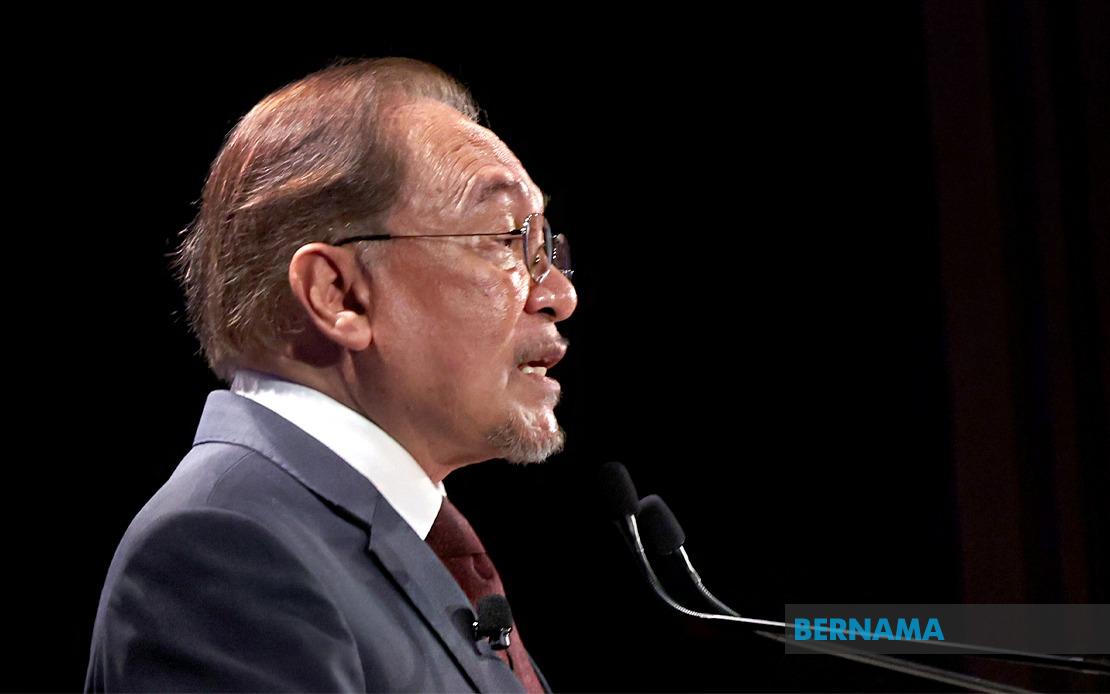
Prime Minister Datuk Seri Anwar Ibrahim's closing day in Ashgabat will be packed with high-level diplomatic engagements designed to deepen Malaysia's partnership with Turkmenistan, a strategically important Central Asian nation positioned along the western shore of the Caspian Sea. The schedule reflects the significance both governments place on strengthening bilateral relations across multiple sectors, from commerce to scientific collaboration.
The prime minister begins his official proceedings with a formal reception at the Presidential Palace, where he will be received by Turkmenistan President Serdar Berdimuhamedov. This ceremonial welcome sets the diplomatic tone for substantive bilateral negotiations scheduled immediately afterward. The one-on-one meeting between the two leaders provides an opportunity for candid discussion on matters of mutual concern before the delegations expand to include broader government representatives.
During the full bilateral talks, Anwar and Berdimuhamedov will address the trajectory of their nations' relationship and identify concrete opportunities for deepening cooperation. The discussion agenda spans an impressive range of domains, including trade and investment promotion, hydrocarbon development, agricultural commerce, energy initiatives, tourism expansion, educational exchange, digital infrastructure, and research collaboration. This comprehensive approach demonstrates Malaysia's intent to build a multifaceted partnership rather than concentrate on any single sector.
A particularly significant outcome will be the signing of a joint statement accompanied by the execution of several binding agreements. These documents include an Air Services Agreement that will facilitate increased aviation connectivity between the two nations—a practical mechanism for boosting both business travel and tourism. Additionally, both governments will formalize a memorandum of understanding between Malaysia's Foreign Ministry Institute and Turkmenistan's equivalent body, institutionalizing diplomatic dialogue and cultural exchange at the institutional level.
Transport cooperation receives distinct attention through a separate agreement between Malaysia's Ministry of Transport and Turkmenistan's State Service for Transport, reflecting shared interest in improving logistics and connectivity. Scientific collaboration will be formalized through a memorandum between the Academy of Sciences Malaysia and the Academy of Sciences of Turkmenistan, positioning both nations' research institutions for collaborative projects in areas ranging from technology to environmental studies. The energy sector, critical to Turkmenistan's economy and central to Malaysia's hydrocarbon interests, will be addressed through multiple oil and gas documents.
The bilateral engagement concludes with a hosted luncheon at the Presidential Palace, offering an informal setting for continued dialogue. Anwar will then perform Friday prayers at the Turkmenbashi Ruhy Mosque, a gesture that acknowledges Turkmenistan's Islamic heritage and provides cultural continuity to the visit. This spiritual pause adds a dimension of cultural respect to the predominantly political and commercial proceedings.
The prime minister will then jointly chair the Malaysia-Turkmenistan Forum alongside President Berdimuhamedov at the Chamber of Commerce and Industry of Turkmenistan. This business-focused event brings together Malaysian and Turkmen entrepreneurs, investors, and trade representatives to explore concrete commercial opportunities and discuss sector-specific partnerships. Such forums serve as practical bridges between government-level agreements and private sector implementation, facilitating the translation of political will into actual business activity.
A concluding press conference with Malaysian media will allow Anwar to articulate the visit's outcomes and significance to the Malaysian public, emphasizing how the agreements serve national economic interests and advance Malaysia's positioning in Central Asian affairs. The presence of accompanying ministers—including Datuk Seri Johari Abdul Ghani (Investment, Trade and Industry) and Akmal Nasrullah Mohd Nasir (Economy)—underscores the trade-focused nature of the delegation.
Ashgabat's distinctive identity as the 'White Marble City' carries symbolic weight for the visit. The capital holds the Guinness World Record for the highest concentration of white marble-clad buildings, with over 500 structures featuring this distinctive material. The city's monumental architecture, extensive gold-leaf ornamentation, and carefully maintained broad avenues reflect Turkmenistan's deliberate projection of prosperity and modernity. For Malaysian officials, engaging in this carefully curated environment sends a message of mutual respect and formal significance.
Turkmenistan's geographic position—bordered by Kazakhstan and Uzbekistan to the north, Afghanistan to the southeast, Iran to the southwest, and the Caspian Sea to the west—makes it a crucial node in Central Asian geopolitics. The Caspian Sea, the world's largest inland water body with no natural outlets, remains central to the region's energy economy and strategic importance.
Malaysia's economic engagement with Turkmenistan demonstrates concrete substance. In 2025, Turkmenistan ranked as Malaysia's fourth-largest trading partner among Central Asian nations, with bilateral trade reaching RM75.80 million. Malaysian exports to Turkmenistan totaled RM75.50 million, representing a robust nine percent increase year-over-year. This growing commercial relationship indicates expanding market opportunity for Malaysian goods and services in Central Asia.
Petroliam Nasional Bhd (Petronas), Malaysia's national oil and gas company, has been instrumental in deepening bilateral ties through substantial investment. Since 1996, Petronas has invested RM52.73 billion in Turkmenistan, making the country a cornerstone of the company's Central Asian operations and demonstrating Malaysia's commitment to long-term energy sector engagement. These investments generate significant revenue for Turkmenistan while securing hydrocarbon supplies and commercial returns for Malaysia, creating mutual economic interdependence that reinforces political cooperation.
The visit arrives at a moment when Malaysia is increasingly positioning itself as a bridge between Southeast Asia and Central Asia, leveraging its ASEAN membership to offer Central Asian partners access to dynamic regional markets while gaining access to Central Asian energy and commodities. Anwar's engagement with Berdimuhamedov reflects this strategic recalibration, transforming Malaysia's Central Asian profile from that of an occasional visitor to an active participant in regional economic and political networks. The substantive nature of the bilateral agenda—spanning aviation, science, transport, energy, and trade—signals that this partnership aspires to transcend ceremonial diplomacy and achieve practical, lasting cooperation benefiting both nations.
%22%2F%3E%3C%2Fpattern%3E%3C%2Fdefs%3E%3Crect%20width%3D%22100%25%22%20height%3D%22100%25%22%20fill%3D%22url(%23phly23g)%22%2F%3E%3Crect%20width%3D%22100%25%22%20height%3D%22100%25%22%20fill%3D%22url(%23phly23p)%22%2F%3E%3Ctext%20x%3D%2250%25%22%20y%3D%2250%25%22%20text-anchor%3D%22middle%22%20dominant-baseline%3D%22central%22%20fill%3D%22rgba(255%2C255%2C255%2C0.95)%22%20font-family%3D%22Georgia%2C%20'Times%20New%20Roman'%2C%20serif%22%20font-weight%3D%22700%22%20font-size%3D%22194%22%20letter-spacing%3D%22-0.02em%22%3ECabinet%3C%2Ftext%3E%3C%2Fsvg%3E)