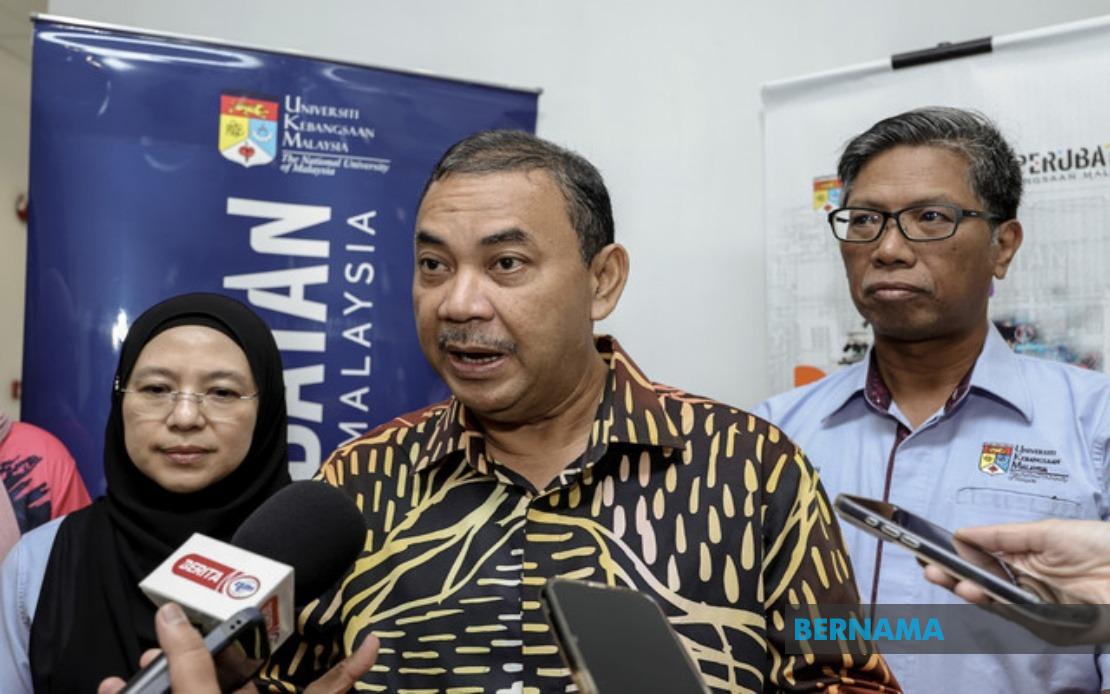
The MADANI Government under Prime Minister Datuk Seri Anwar Ibrahim has won acclaim from multiple stakeholders for its economic management, investment attraction, and efforts to stabilise the ringgit, according to Datuk Azman Abidin, the Prime Minister's political secretary. Speaking in Kuala Lumpur on August 19, Azman characterised the administration's track record as evidence of strong leadership and grounds for public confidence heading into the next electoral cycle.
Azman's remarks come as political analysts have increasingly noted the government's demonstrated competence across key economic metrics, suggesting that continued administrative stability would allow for completion of the reform agenda initiated since Anwar assumed office. The political secretary framed these accomplishments as particularly significant given the timing, with general elections not yet scheduled but anticipated within the coming years. By emphasising external validation of the government's economic credentials, Azman sought to address public sentiment regarding the administration's effectiveness during a period of broader Malaysian political transitions.
The government intends to maintain momentum through a series of planned announcements and policy initiatives, particularly around the National Day and Malaysia Day observances, as well as the presentation of Budget 2027, according to Azman. These upcoming government communications are expected to showcase additional benefits flowing to various segments of Malaysian society from existing and new programmes. The timing of such announcements is strategically important, as they allow the government to demonstrate tangible progress to voters before the next electoral contest. Azman expressed confidence that Malaysian citizens would weigh the government's demonstrated achievements objectively when making their electoral choice.
Beyond economic messaging, Azman emphasised the administration's commitment to nurturing human capital and technological advancement. He was speaking after officially launching the STEM Exploration 2.0 programme, an initiative coordinated by the Department of Tissue Engineering and Regenerative Medicine at the Faculty of Medicine at Universiti Kebangsaan Malaysia. The programme targets young students with the dual aim of identifying scientific talent and cultivating deeper engagement with mathematics, science, and medical careers among Malaysia's youth.
The current iteration of the STEM initiative engaged two hundred Form Three students drawn from Kuala Lumpur, Selangor, and Negeri Sembilan. Azman envisioned significant expansion of the programme to reach students throughout the country, reflecting a belief that talent identification and early career exposure should not be geographically concentrated. He argued that STEM education must transition from its current status as an optional subject to becoming a foundational educational requirement, essential for preparing Malaysians to navigate technological shifts reshaping the global economy.
During his remarks, Azman appealed to participating students to view their involvement as a beginning rather than a culmination, using the programme as a springboard for sustained intellectual curiosity and ambition. He drew on historical examples to illustrate that transformative figures in statecraft and scientific discovery typically begin their journeys through deliberate, methodical pursuit of knowledge. His framing positioned the STEM programme not merely as a one-day exposure event but as a catalyst for longer trajectories of achievement and contribution to national development.
The programme structure reflected contemporary educational approaches, incorporating hands-on experimental work alongside demonstrations of cutting-edge applications. Students participated in microbiology activities, anatomical instruction focused on immune and circulatory systems, and witnessed three-dimensional printing technology as applied to medical manufacturing and treatment. Such diverse practical exposure is intended to illuminate varied career pathways within scientific and medical fields, moving beyond theoretical classroom instruction to demonstrate real-world relevance and professional opportunity.
From a Malaysian policy perspective, the government's emphasis on STEM education aligns with regional and global imperatives to develop workforces capable of sustaining competitive advantage in technology-driven sectors. Southeast Asian economies, including Malaysia, face pressure to transition from lower-value manufacturing toward higher-skill, knowledge-intensive industries. Investment in youth STEM engagement represents a long-term strategy to build domestic capacity rather than relying solely on foreign expertise and technology transfer. The government's positioning of STEM as foundational rather than optional reflects recognition that technological literacy will define economic participation across most professional domains within the next decade.
For Malaysian readers and policymakers, the government's dual messaging—emphasizing both immediate economic accomplishment and longer-term human capital development—suggests a comprehensive approach to national competitiveness. The political secretary's comments underscore how administrations increasingly link electoral narratives to tangible governance outcomes in areas voters directly experience, whether through currency stability affecting purchasing power or through educational initiatives affecting family aspirations. By showcasing external validation of economic management alongside concrete education programmes, the government seeks to build a multifaceted case for continuity in leadership.
The broader context for these announcements includes Malaysia's ongoing repositioning within global economic structures following pandemic disruptions and regional geopolitical shifts. Economies across Southeast Asia have sought to attract investment and develop technical workforces to capture opportunities in semiconductor manufacturing, digital services, and green technology sectors. Malaysia's emphasis on both foreign investment and domestic STEM talent development reflects awareness that sustainable growth requires external capital alongside homegrown expertise. The government's messaging therefore addresses both investor confidence and citizen welfare, two constituencies critical for political legitimacy and economic performance.

