Prime Minister Datuk Seri Anwar Ibrahim has signalled firm governmental backing for an expansion of Sarawak's state assembly, instructing the Election Commission to deliver an updated report on the proposed redelineation that would add 17 seats to the legislature. The development underscores the administration's determination to move the contentious redistricting exercise forward, even as administrative hurdles remain to be cleared before implementation can commence.
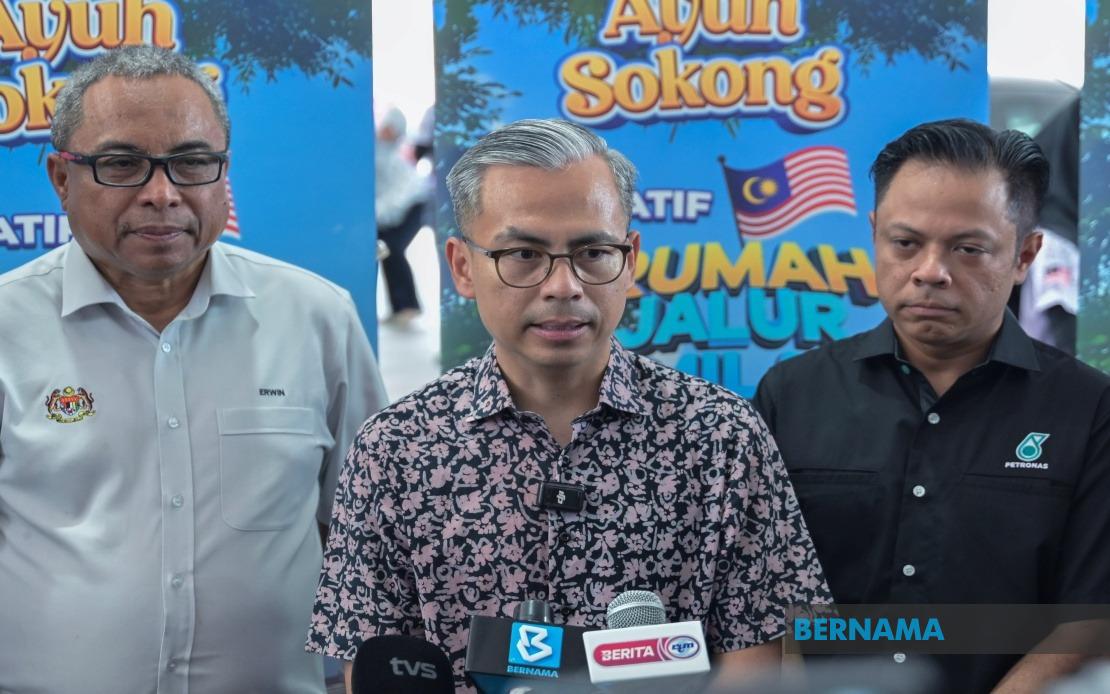
Government spokesman Datuk Seri Fahmi Fadzil disclosed that the Prime Minister raised the matter during a recent Cabinet session, where he emphasised his personal commitment to seeing the initiative through to completion. Fahmi characterised the process as a collaborative effort involving multiple government agencies, with the Election Commission playing a pivotal role in the mechanics of boundary redrawing and seat allocation. The spokesman acknowledged that while the Cabinet has been apprised of the government's intent, no specific timeline for implementation has been communicated to ministers at this stage.
The absence of a concrete implementation date reflects ongoing dependencies on technical inputs from the Election Commission, according to Fahmi's remarks to assembled journalists. He explained that Cabinet members are awaiting several deliverables from the electoral body before the government can proceed to the next phase of the initiative. This staged approach suggests that while political will exists at the highest levels, the administrative machinery responsible for executing such constitutional changes must first complete necessary preparatory work. The iterative process of requesting updated reports from the election authority points to complexities inherent in redistributing parliamentary boundaries, particularly in a state as geographically diverse and demographically varied as Sarawak.
The Sarawak redelineation exercise has garnered backing from multiple government quarters. Minister of Women, Family and Community Development Datuk Seri Nancy Shukri and Minister of Works Datuk Seri Alexander Nanta Linggi both raised the issue during the Cabinet meeting, signalling that support transcends portfolio boundaries and reflects broader coalition consensus. This multi-ministerial endorsement carries significance, as it demonstrates that the initiative enjoys institutional weight beyond the Prime Minister's office alone, potentially smoothing its passage through subsequent legislative procedures.
Legislation to implement the expansion has already been tabled in the Sarawak State Legislative Assembly. The Sarawak State Legislative Assembly (Composition of Membership) Bill 2025 proposes elevating total seats from the current 82 to 99, a substantial restructuring that would reshape the chamber's composition and likely influence electoral dynamics across the state. Such an increase in legislative seats typically corresponds with population growth and serves to enhance representation density, though it can also reflect strategic positioning ahead of state elections. The magnitude of this expansion—adding more than one-fifth to existing seat numbers—suggests that the Sarawak government perceives significant justification for the change, whether grounded in demography, development distribution, or both.
For Malaysian federalism and intergovernmental relations, the Sarawak initiative carries broader implications. As an East Malaysian state with constitutionally distinct autonomy in state-level matters, Sarawak's redelineation process demonstrates how the federal government coordinates with state administrations on boundary questions that touch upon both state and federal electoral architecture. The involvement of the federal Election Commission in providing technical advice and reports to inform state-level boundary decisions illustrates the intricate weave of governance between Kuala Lumpur and Kuching, particularly given that constitutional amendments at state level may interact with federal boundaries or electoral thresholds.
Parallel to these developments, the government is also preparing infrastructure for the upcoming Melaka state election, which operates on a separate timeline. Communications Minister Fahmi indicated that preparations encompass logistical and technological dimensions, including the establishment of media centres and robust internet connectivity at polling stations. This operational focus reveals that the government is managing multiple electoral processes simultaneously across different jurisdictions, each with its own administrative requirements and scheduling pressures.
The Malaysian Communications and Multimedia Commission has been tasked with coordinating with the Election Commission to audit and establish internet capacity at Melaka polling centres. This multi-agency approach draws upon lessons learned from recent elections in Johor and Negeri Sembilan, reflecting an institutional learning process whereby earlier electoral experiences inform preparations for subsequent contests. The attention devoted to digital infrastructure at polling stations underscores modern electoral administration's dependence on reliable connectivity for registration systems, polling management, and real-time coordination, a consideration that extends to states like Sarawak where some constituencies span geographically challenging terrain.
The Sarawak redelineation must also be contextualised within the broader trajectory of Malaysian electoral politics over the past three years. The MADANI government's agenda since 2022 has encompassed various constitutional and electoral reforms intended to strengthen democratic institutions, expand representation, and address historical imbalances. The commitment to Sarawak's seat expansion fits within this reformist narrative, though sceptics might note that expanding opposition-held Sarawak's state assembly could also reflect coalition-building calculations ahead of potential state elections.
Stakeholder expectations around the redelineation timeline remain uncertain. Fahmi's acknowledgment that no implementation date has been conveyed to Cabinet suggests that Election Commission work is ongoing and that dependent decisions—such as finalising boundary delineations, demographic analysis, and consultation processes—remain incomplete. Political economy of redelineation often involves competing pressures: opposition parties typically scrutinise boundary changes for partisan bias, while government voices emphasise demographic necessity and representational equity. The EC's role as an ostensibly neutral arbiter depends on transparent methodology and public engagement throughout the process.
For Sarawak specifically, the expanded assembly could alter legislative dynamics by creating additional seats that reflect demographic shifts, whether in urban centres like Kuching and Sibu or in rapidly developing regions. The state has experienced notable population growth and economic development over recent decades, particularly through resource industries and infrastructure projects. Whether new seats will be concentrated in growth areas or distributed throughout the state remains a crucial design question that the EC's report may address.
As the government pursues these electoral architecture changes, transparency and stakeholder consultation remain critical to legitimacy. The Cabinet's recent affirmation of commitment suggests that top-level political momentum exists, but successful implementation depends on Election Commission diligence, legislative passage, and public acceptance of boundary determinations. For Malaysian voters and political observers, particularly in Sarawak, the coming weeks should clarify the EC's timeline and technical recommendations that will ultimately determine when this redelineation becomes electoral reality.

