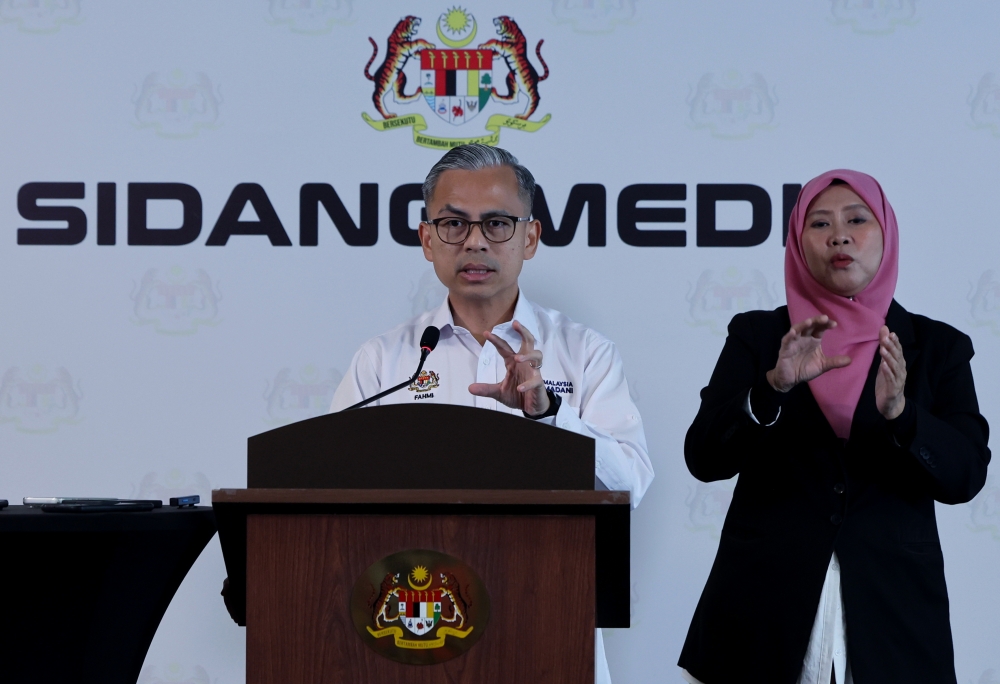
Prime Minister Datuk Seri Anwar Ibrahim has ordered the Ministry of Human Resources to accelerate the approval process for 15,000 outstanding foreign worker visa applications, Communications Minister Fahmi Fadzil announced on Tuesday in Putrajaya. The directive represents a significant effort to resolve mounting backlogs in the immigration system that have been constraining employers across multiple industries seeking to supplement their workforce with international labour.
Fahmi disclosed the decision during a media briefing, emphasising that the Prime Minister views the expedited processing as critical to maintaining Malaysia's economic momentum and competitiveness. The timeframe for completing these applications remains unspecified, though the emphasis on acceleration suggests officials expect material progress within weeks rather than months. This intervention at the highest political level underscores growing anxiety within government about the impact of labour shortages on productivity and growth prospects.
The backlog of foreign worker applications has become an increasingly contentious issue for Malaysia's business community, particularly in manufacturing, construction, hospitality, and plantation sectors where immigrant labour plays a foundational role. Companies have reported operational constraints and rising costs stemming from inability to fill vacancies with approved foreign staff, forcing some to defer expansion plans or redirect investments elsewhere in the region. The administrative delays have effectively created a bottleneck frustrating employers who have completed the formal application procedures and await government approval.
Malaysia's foreign worker framework has long balanced economic pragmatism against social concerns about wage suppression, labour market competition for citizens, and integration challenges. The government has attempted to manage these tensions through regulated quotas, sector-specific allocations, and periodic audits of employer compliance. Yet the current application surge suggests demand significantly outpaces the processing capacity of Kesuma and related agencies, pointing to structural inefficiencies in the bureaucratic machinery.
The decision to prioritise this cohort reflects broader economic pressures facing the Anwar administration. Malaysia faces regional competition for foreign direct investment and must demonstrate policy consistency and operational efficiency to retain investor confidence. Delays in foreign worker approvals send negative signals about government capacity and create uncertainty for multinational corporations considering whether to expand Malaysian operations or shift capacity to Thailand, Vietnam, or other Southeast Asian alternatives with less cumbersome visa regimes.
Sector representatives have increasingly voiced frustration with processing timelines, with some applications reportedly stalled for extended periods despite meeting all technical requirements. The construction industry, in particular, has warned that labour constraints threaten timeline compliance on major infrastructure projects, including urban development initiatives that are central to government growth narratives. Similarly, plantation operators have argued that mechanical constraints on foreign worker recruitment undermine productivity at a time when commodity price volatility already pressures margins.
The Prime Minister's intervention also reflects political calculation. Labour concerns affect multiple constituencies—employers seeking operational flexibility, workers worried about wage competition, and officials concerned about revenue from work permit fees and levies. By demonstrating decisive action to clear the backlog, the government signals responsiveness to business concerns while maintaining the appearance of active management rather than passive administration. This framing allows officials to claim they are addressing economic problems through direct intervention.
Implementing the acceleration directive will require Kesuma to reallocate resources, potentially hiring additional processing staff or establishing task forces focused exclusively on expediting the 15,000 applications. The ministry must balance speed against the compliance and security vetting necessary to ensure foreign workers meet health, criminal background, and skills requirements. Inadequate due diligence during accelerated processing could create downstream problems, including overstaying workers, exploitation cases, or security concerns that ultimately damage Malaysia's international reputation and labour market integrity.
Regionally, Malaysia's approach will be watched by other Southeast Asian economies grappling with similar labour market challenges. Thailand, Singapore, and Indonesia have experimented with various foreign worker policies, and Malaysia's success or failure with expedited processing may influence policy adjustments elsewhere. The implementation results will also signal to Malaysia's own citizens whether government can execute efficiently on high-profile directives, an increasingly important metric for public confidence in institutional capability.
The 15,000 applications represent significant economic value once processed—estimated work permit and related fees alone total substantial sums, while approved workers generate tax revenue and consumption activity. From an efficiency standpoint, clearing this backlog represents low-hanging fruit for demonstrating government capacity and improving business climate metrics that international rankings use to assess competitiveness. How quickly Kesuma implements this directive will be scrutinised by employers, opposition politicians, and international observers as a bellwether of administrative performance under the current administration.

