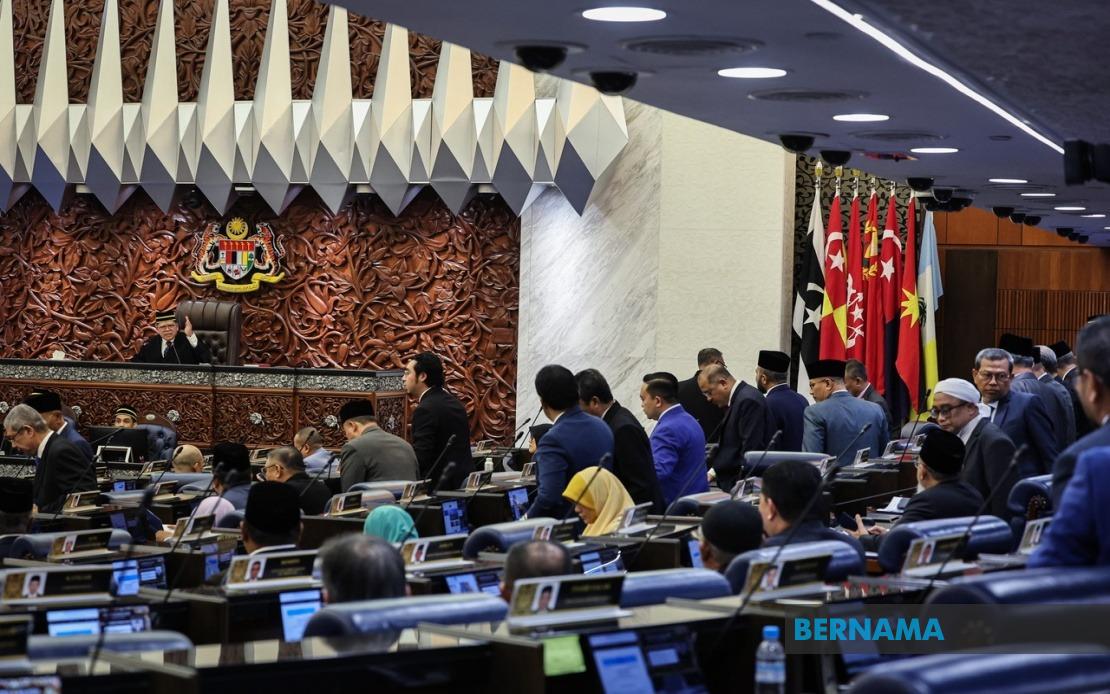
The Prime Minister's decision not to attend a special parliamentary sitting dedicated to discussing the Royal Commission of Inquiry findings on Lembaga Tabung Haji should not serve as justification for lawmakers to disengage from what many consider one of the most significant economic matters facing the Muslim community in Malaysia. This was the central argument put forward by Tengku Datuk Seri Zafrul Tengku Abdul Aziz, who serves as Senior Political Adviser to the Prime Minister, in remarks posted across social media platforms on August 11.
Tengku Zafrul's intervention came in response to several Members of Parliament staging coordinated walkouts during the legislative session where the 211-page RCI report on Tabung Haji was being presented and debated. The report, which had been made public on July 29 following a government decision to grant transparency regarding its findings, examined the management and operational conduct of the institution covering the period from 2014 to 2020. The special sitting represented a rare opportunity for the full chamber to engage with detailed findings about an organization that holds the savings and investments of millions of Malaysians.
Among the prominent figures who departed the chamber were members affiliated with Perikatan Nasional, a significant opposition coalition. Opposition Leader Datuk Seri Hamzah Zainudin was among those who chose not to participate in the proceedings. The walkout also included PN chief whip Datuk Seri Takiyuddin Hassan and PN chairman Datuk Seri Dr Samsuri Mokhtar. Their collective absence from the debate raised questions about opposition engagement with matters of national economic importance, particularly given that Tabung Haji's operational challenges carry implications extending beyond any single political administration.
Tengku Zafrul's critique centered on a fundamental principle of parliamentary responsibility. He pointedly questioned the logic underlying the opposition's decision, asking rhetorically whether the absence of the Prime Minister should translate into an absence of legislative diligence. His statement emphasized that the substance of the debate transcended partisan positioning or executive leadership presence. The core issue at stake involved the financial security and investment returns of ordinary Muslims across various socioeconomic strata, making it a matter that demanded attention regardless of which individual occupied the Prime Minister's chair.
The adviser articulated a vision of parliamentary function rooted in substantive engagement with policy matters. He encouraged lawmakers to leverage the session as a platform for rigorous questioning and fact-based criticism. If MPs harbored concerns about governmental performance or disagreed with specific policy approaches, Tengku Zafrul suggested they should present their objections supported by evidence rather than simply withdrawing from the discussion. He framed disagreement not as inherently problematic but rather as a legitimate aspect of democratic deliberation, provided it remained grounded in factual analysis.
Characterizing the Tabung Haji situation as potentially among the largest economic matters affecting the Malay-Muslim demographic in Malaysian history, Tengku Zafrul underscored the gravity and significance of the moment. The institution at the center of this inquiry functions as a crucial repository for Islamic savings, serving beneficiaries from multiple segments of Malaysian society. The parliamentary examination of how the organization had been managed over a six-year period represented an occasion for representatives to fulfill their constitutional responsibility to scrutinize executive action and demand accountability.
The Minister in the Prime Minister's Department, Religious Affairs, Dr Zulkifli Hasan, had formally tabled the RCI report before Parliament, initiating the debate that triggered the opposition exodus. This presentation marked the culmination of an investigative process designed to examine alleged irregularities and governance failures within Tabung Haji's operations. The decision to make the report public reflected governmental commitment to transparency, though critics might argue that such openness came somewhat tardily given the depth of institutional challenges described within its pages.
From a Malaysian perspective, the incident underscores persistent tensions in how opposition parties approach parliamentary accountability. The walkout strategy, while sometimes employed as a protest tactic, potentially diminishes the opposition's capacity to effectively challenge government positions on substantive matters. In legislative systems, the most potent form of opposition often comes through detailed questioning, alternative proposals backed by evidence, and persistent advocacy within parliamentary chambers where such interventions become part of the official record and shape public discourse.
The Tabung Haji issue carries particular resonance across Southeast Asia given the region's substantial Muslim populations and comparable challenges faced by Islamic financial institutions in various countries. How Malaysia's democratic institutions process such matters carries implications for governance standards across the region. The parliamentary examination of institutional failures and governance breakdowns represents a crucial mechanism through which democracies maintain accountability and prevent the repetition of past mistakes.
Tengku Zafrul's intervention reflects broader concerns within the government about opposition engagement strategies. His framing of the issue as being fundamentally about Muslim savings rather than partisan advantage suggests an attempt to elevate the conversation beyond mere political positioning. Whether such appeals prove effective in reshaping opposition behavior remains uncertain, but they do articulate an increasingly common argument that parliamentary democracy functions optimally when all parties prioritize substantive scrutiny over performative protest.
The special sitting itself represented a significant moment for legislative oversight. The RCI's examination of a six-year management period provided lawmakers with detailed findings about how institutional decisions had affected millions of beneficiaries. The opportunity to engage directly with these findings and pose questions to government representatives constituted a rare occasion for parliamentary accountability, one that became partially compromised by the opposition's absence despite its strategic intentions.

